
Match the building purchase to the teaching capacity your school can actually operate. Explore Texas modular classroom prices with the intended groups, staffing and supporting facilities identified. Additional rooms are useful when they fit the educational plan, not simply because a drawing shows more places to put desks.
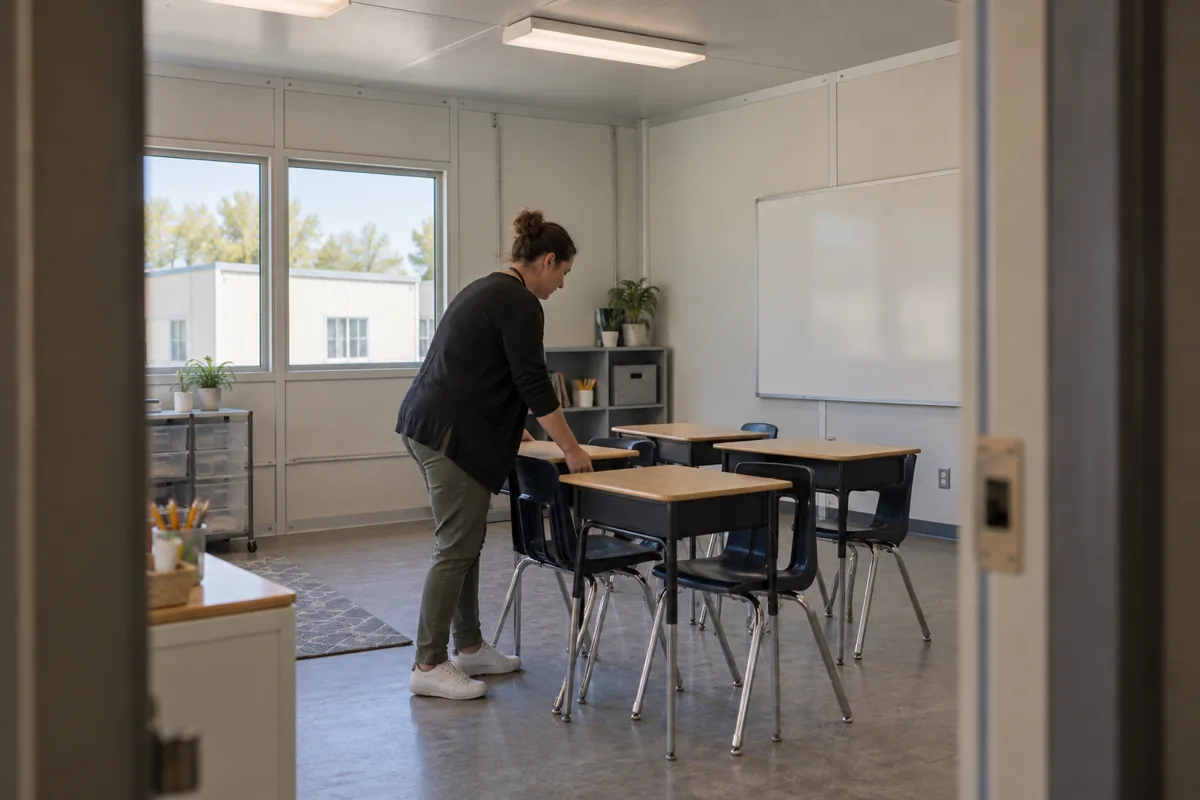
For the wider project picture, explore Texas modular buildings alongside your classroom space plans.
Distinguish room capacity from program capacity
List the teaching groups expected to use the addition and how they fit the timetable. Then check the support each depends on. A new room may need access to specialist instruction, shared resources or other facilities already serving the school. Have the relevant staff identify where additional demand would land rather than assuming the rest of the campus has spare capacity.
This does not mean every expansion needs a larger support building. It means the school should understand its operating arrangement before selecting a room count. Where existing facilities can accommodate the change, record the basis. Where they cannot, ask what adjustment is needed and include it in the decision.
Test a full day instead of a single class period
Review the proposed classroom arrangement through the complete day. A plan may work during instruction but place new pressure on transitions or shared activities. Walk through the moments when several groups need the same support. That is where a capacity claim can be tested against a practical school schedule.
For a Texas education project, keep the confirmed program separate from a possible later expansion. The first building decision should reflect the rooms the school is ready to use and any justified provisions for later needs. Do not count speculative future classes as current demand merely to make a larger purchase appear more economical.
Compare the complete educational addition
Ask providers to price the defined modular school space, with optional capacity shown separately where appropriate. If an alternative changes the room count or mix, take it back through the operating plan. A lower price may be attractive, but the school needs to know whether it changes the number or type of groups it can accommodate.
Keep owner-side support changes visible beside the building proposal. These may involve arrangements rather than construction, but they still need an agreed owner. The school should not approve an addition on the assumption that another team will absorb a demand it has never reviewed.
Choose the offer that meets a credible working plan. That gives the project a clear measure of value: teaching groups with usable rooms and adequate support, rather than a larger area figure that the school cannot yet turn into an effective program.