
Get a classroom proposal that works for the project the school is actually ready to undertake. Explore modular classroom prices for Lubbock with today's requirement separated from possible later additions. Planning ahead is useful, but the first room should not depend on another unconfirmed project before it can serve its intended purpose.
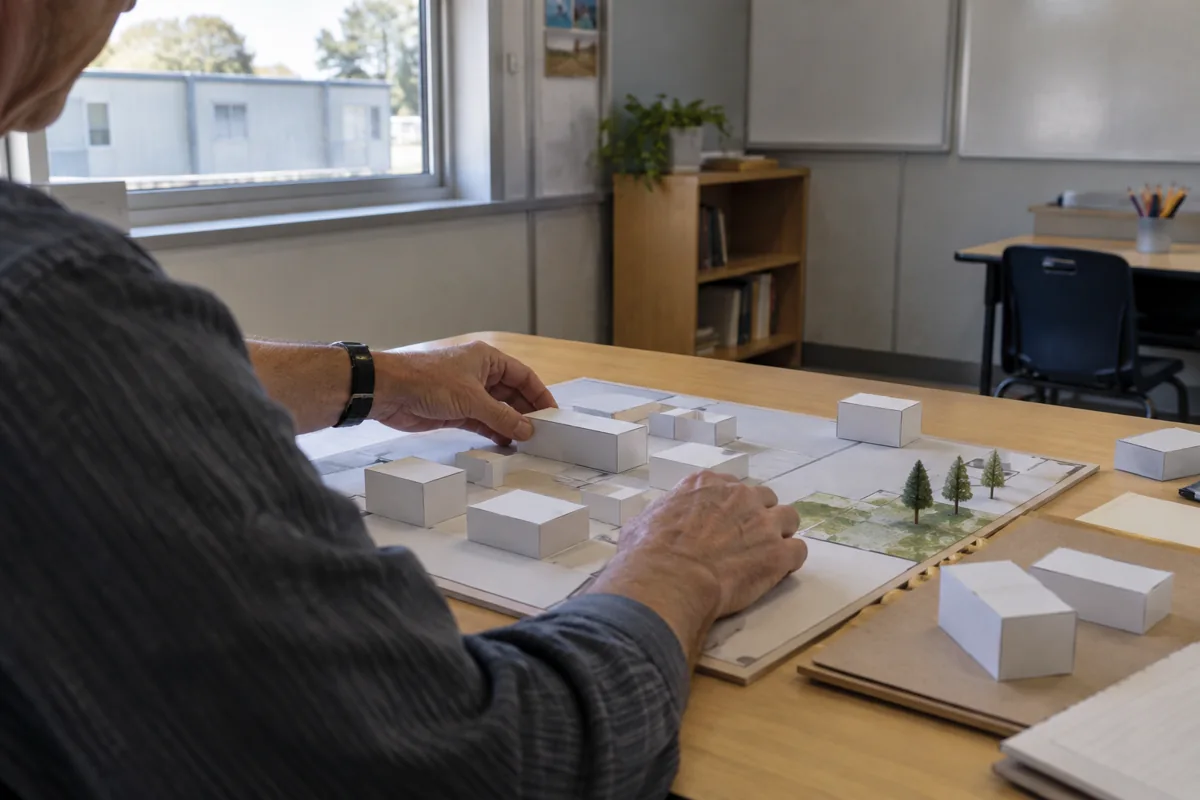
For the wider project picture, explore Texas modular buildings alongside your classroom space plans.
Make the opening arrangement complete enough to use
Explain the teaching activity and the supporting facilities the school intends to rely on when the room opens. If a needed provision belongs to a later phase, identify that dependency clearly. The school should not discover after selecting the building that the usable arrangement assumes work it has not yet decided to undertake.
Appropriate professionals need to assess relevant project requirements. Staff can explain the intended routine and resources, while the supplier identifies what its proposal includes. Keep the discussion attached to the opening use rather than allowing a sketch of the eventual campus to stand in for a workable first project.
Ask what future provision really means
A provider may discuss a feature intended to support a later change. Ask what is actually being supplied now, what that feature does and what would still be required later. Do not interpret a general statement about flexibility as a guarantee that any future classroom addition or alteration will be possible.
Review the classroom layout with those distinctions visible. A space reserved for a possible future purpose still occupies part of today's building. The school can decide whether that is a worthwhile choice, but it should know the effect on the teaching area and current price.
Compare the current scope before the future picture
For example, a school might be considering another teaching room later but currently needs only one. Ask whether a proposed extra provision has a clearly described purpose if that second room never proceeds. Some choices may still benefit the opening arrangement; others may be costs tied entirely to the later idea. That distinction is worth understanding before treating all future-oriented features as essential to today's purchase.
For your Texas school, the building cost guide can help frame the overall questions. Compare the actual first-project offers with included work, school purchases and unresolved matters identified. Keep possible later expenditure separate rather than using it to make an incomplete current proposal look sufficient.
Choose among modular classroom options with a clear account of what the school gains now. If a forward-looking provision has practical value, ask for it to be described and priced. If it only supports an uncertain idea, weigh it accordingly. That lets the school plan sensibly without buying a classroom whose usefulness depends on promises about a second project.