
Room count alone does not show whether a school has enough usable classroom capacity. The schedule matters: two programs may need the same room at once, or a resource may be assigned elsewhere. Before seeking modular classroom prices for Richardson, map the periods of highest overlap and identify the instruction that must fit.
For the wider project picture, explore Texas modular buildings alongside your classroom space plans.
Measure simultaneous demand
Start with class schedules rather than annual enrollment totals. For each period, note the number of students, staff, groups and specialized activities needing a room. A lower school-wide headcount can still create a peak if several courses require dedicated space at once. This helps distinguish a capacity shortage from a scheduling or room-assignment problem.
Identify which existing resources can support the added classroom and when they are available. If a lab cart or technology kit rotates between groups, include travel and reset time. A resource that reaches the new room after the class begins does not solve the capacity need.
Choose a layout around peak use
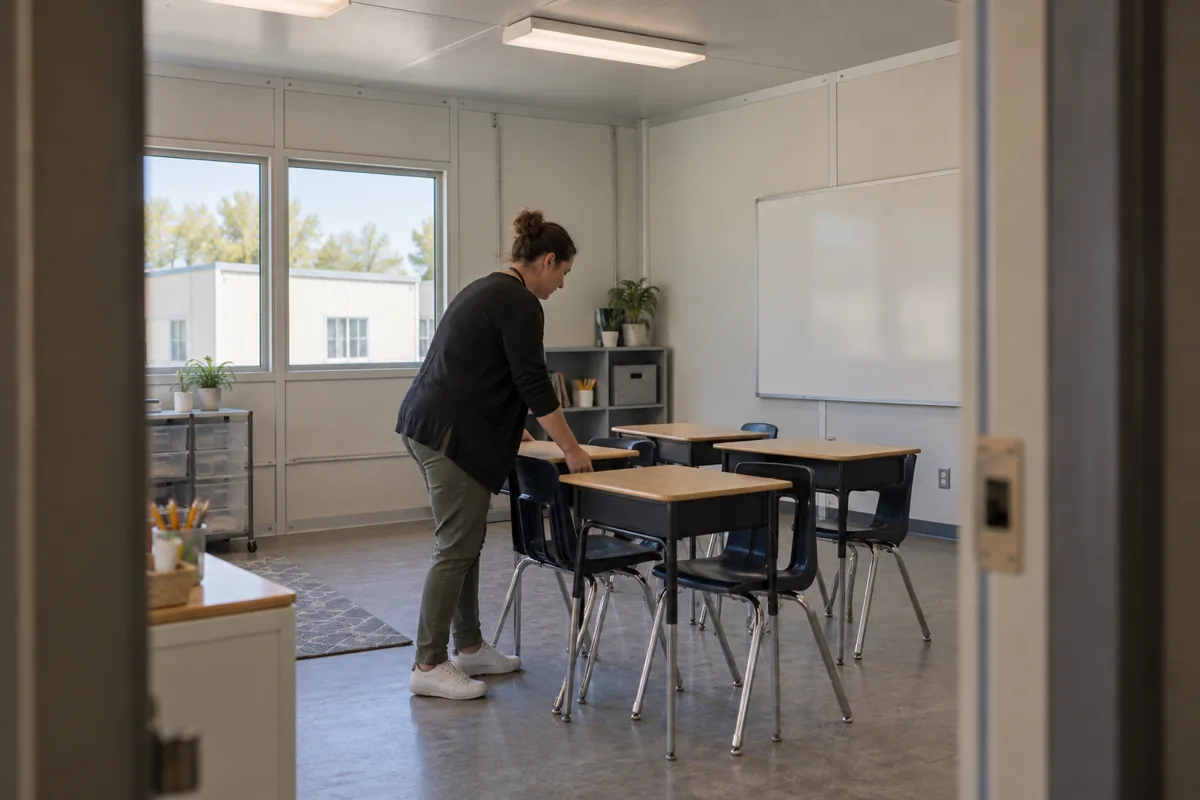
Draw the largest expected class with its actual furniture and teaching equipment. Check how students enter, store materials and whether staff can supervise group work. Then compare that peak layout with a typical period. If the room only works at peak when everyday teaching surfaces are displaced, discuss whether a different room program is warranted.
The classroom layout guide can help compare arrangements. Keep class count, furniture and activity consistent across options so price differences reflect design rather than changed assumptions.
Request prices against the schedule
Ask providers to price the agreed room program and clarify the building, foundation, delivery, utility connections and installation. The modular building cost guide helps organize work outside the shell. List unresolved site assumptions separately from confirmed scope.
Richardson school leaders can then decide whether proposed capacity covers the periods that need it, rather than paying for a room sized from a broad enrollment number alone.
Separate decisions that can move at different speeds
A school may settle its teaching plan before it has resolved every site or utility detail. Keep the classroom program, preferred layout, finish choices and unresolved site inputs on separate lines in the decision log. That way a pending facilities review does not blur the choices teachers have already made. When a proposal changes, note whether it affects the building price, a school-managed task, or both. This is especially helpful when administrators need to compare alternatives in stages: they can see what is firm today and what still depends on later verification instead of treating an early estimate as a final project total.