
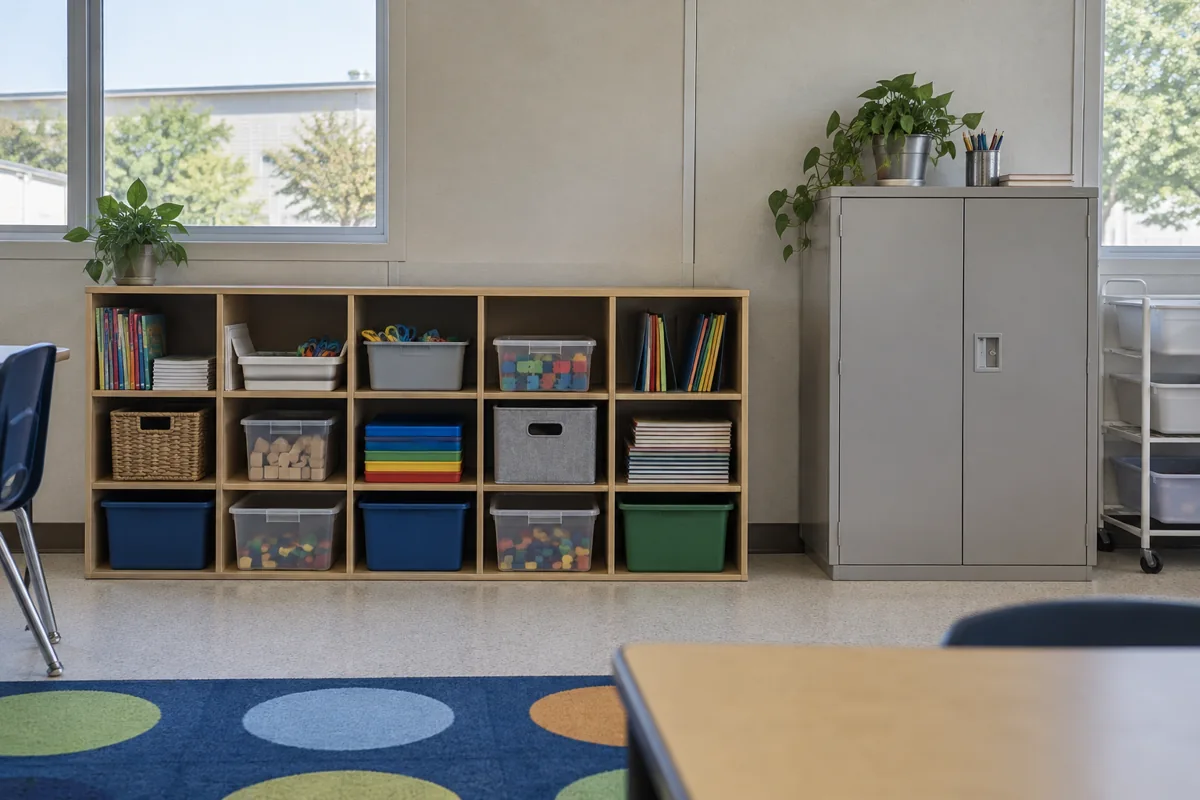
Choose classroom size from a teaching arrangement you understand, not a guess at square footage. Explore San Antonio modular classroom prices with the furniture, resources and activities shown. That gives your school a practical way to consider a smaller or larger option without losing track of what the room needs to do.
For the wider project picture, explore Texas modular buildings alongside your classroom space plans.
Start with the furniture you intend to use
Provide actual dimensions where they are available. Desks, tables, storage and teaching equipment all occupy space differently, and a generic symbol on a sketch may not represent the item the school owns or plans to buy. Mark anything still undecided so the design team knows where an assumption remains.
Review the classroom floor plan with the teaching position and ordinary movement included. The object is not to pack the outline as tightly as possible. It is to understand whether staff and students can carry out the planned activities in the arrangement proposed. Have the responsible professionals assess applicable requirements rather than inferring approval from a furniture fit.
Test the difference between two sizes
If providers offer alternative dimensions, ask for the same intended setup to be considered in each. Identify what changes: a resource may move, a group activity may use a different arrangement or the room may gain a more useful supporting area. Those differences help the school judge whether additional cost buys a practical benefit.
For a San Antonio project within your Texas school plan, include any reliance on adjacent facilities. A room that appears sufficient only because storage or preparation is placed elsewhere needs that supporting space to be genuinely available. Do not allow a size comparison to hide a second requirement outside the new building.
Check the final selection against the price
When reviewing modular classroom offers, confirm which arrangement the figure represents. A revised price may follow a changed plan, and the school should see both together. Keep school-supplied furnishings and setup work in the overall budget so the chosen room can be prepared as intended.
Ask staff to review the selected arrangement once more before major decisions are fixed. If an important item has changed since the initial brief, tell the project team. It is better to assess that change openly than to discover at move-in that the furniture no longer matches the plan everyone approved.
The right size is the one that supports the defined class with its necessary resources and assessed circulation. Compare prices for that working arrangement, and your school can avoid buying excess area or accepting a smaller room that quietly changes the lesson.