
Adaptive physical education moves from equipment selection and individual instruction to small-group movement, rest, progress notes and room reset. The modular room needs a generous accessible activity floor plus quiet instruction and seated participation nearby.
For the wider project picture, explore Texas modular buildings alongside your classroom space plans.
Describe the participant range, supervision model and intended activities before requesting prices. The program controls individual plans and equipment choices; Texas building, accessibility and life-safety requirements still need qualified local review.
Protect movement space without losing quiet support
Place soft balls, floor markers, mats, resistance bands, balance aids and height-adjustable tables at working size. Test the plan for individual coaching, small-group activity and a rest period. Staff should be able to reach every participant without equipment bins, spectators or unused stations narrowing the movement area.
Compare adaptive physical education classroom layouts at full attendance. Transfer clearances must remain open after equipment is deployed, and participants need meaningful choices rather than one required movement pattern. Quiet seating should be part of the instructional plan, not an isolated holding area.
Store adapted equipment by use and condition
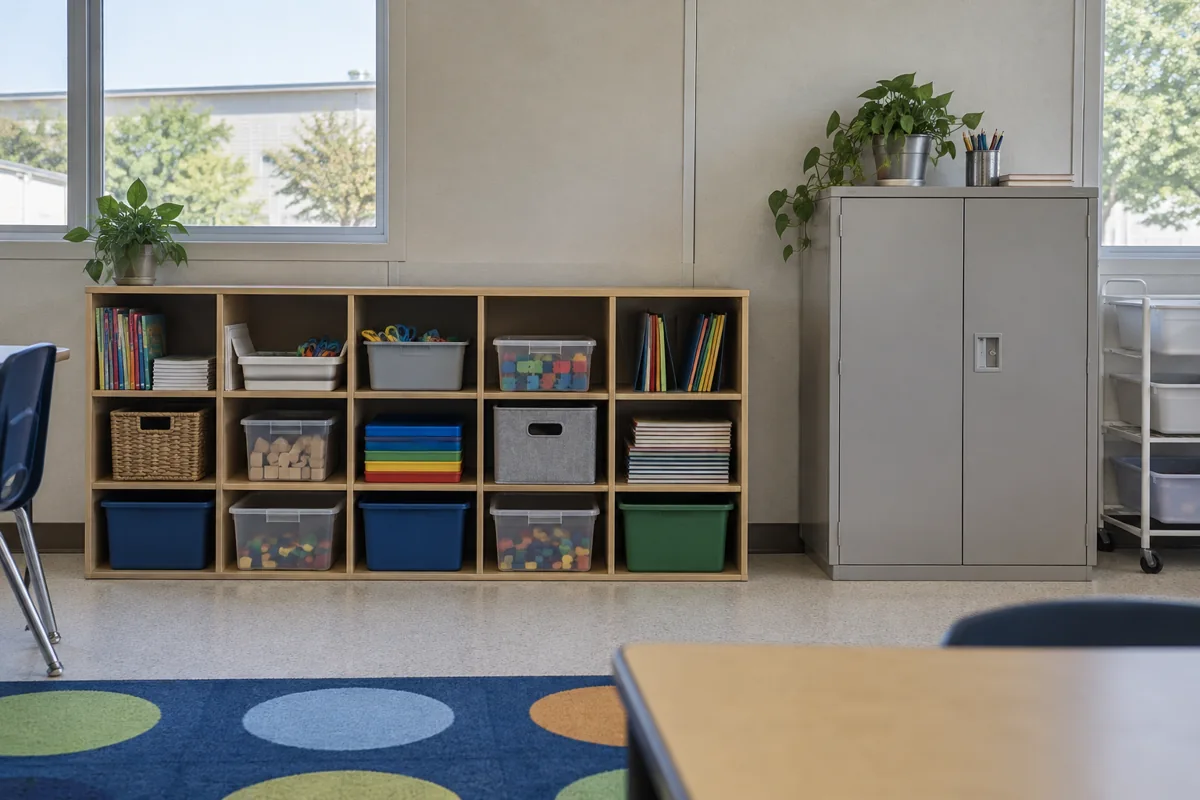
Keep frequent equipment within an accessible reach range and separate ready items from those awaiting cleaning or inspection. Size storage from the actual mats, aids and bins; oversized equipment left in a circulation route defeats an otherwise usable plan. Personal records should remain in controlled staff storage.
A worn resistance band, unstable aid or unsuitable activity goes to instructor review before participation continues. A visible reset position lets staff count equipment, inspect high-use items and prepare the next lesson without disclosing personal plan information. The room should support safe choice, not depend on a last-minute search for alternatives.
Resolve floor performance and equipment suitability
Supervision, individual plans, floor performance, equipment suitability and accessibility require qualified professional review. Document the intended activities, impact level, staff positions and any charging or data needs. Higher-risk movement or specialized equipment should stay outside the room unless separately designed and approved.
Give every provider the same operating description and identify the decisions reserved for local officials or specialists. Modular construction does not bypass accessibility or life-safety duties. A clear brief helps the building support the program while leaving participant-specific decisions with qualified staff.
Compare prices from equipment selection through reset
Give providers the participant range, activity-floor dimensions, transfer clearances, equipment sets, rest areas and staff positions. Ask for separate values for design, fabrication, freight, foundations, utilities, installation, permits and closeout. The adaptive physical education classroom cost guide helps keep scope differences visible.
Confirm whether furniture, adapted equipment, storage, data work and staff orientation are included. A North Richland Hills modular adaptive physical education classroom request should describe the complete lesson and reset cycle. That gives buyers a functional price comparison without making promises about individual outcomes.