
Pharmacy technician education may combine calculations, workflow simulation, inventory exercises and documentation. A Temple modular classroom should state clearly that classroom training materials are separate from real medication and patient services.
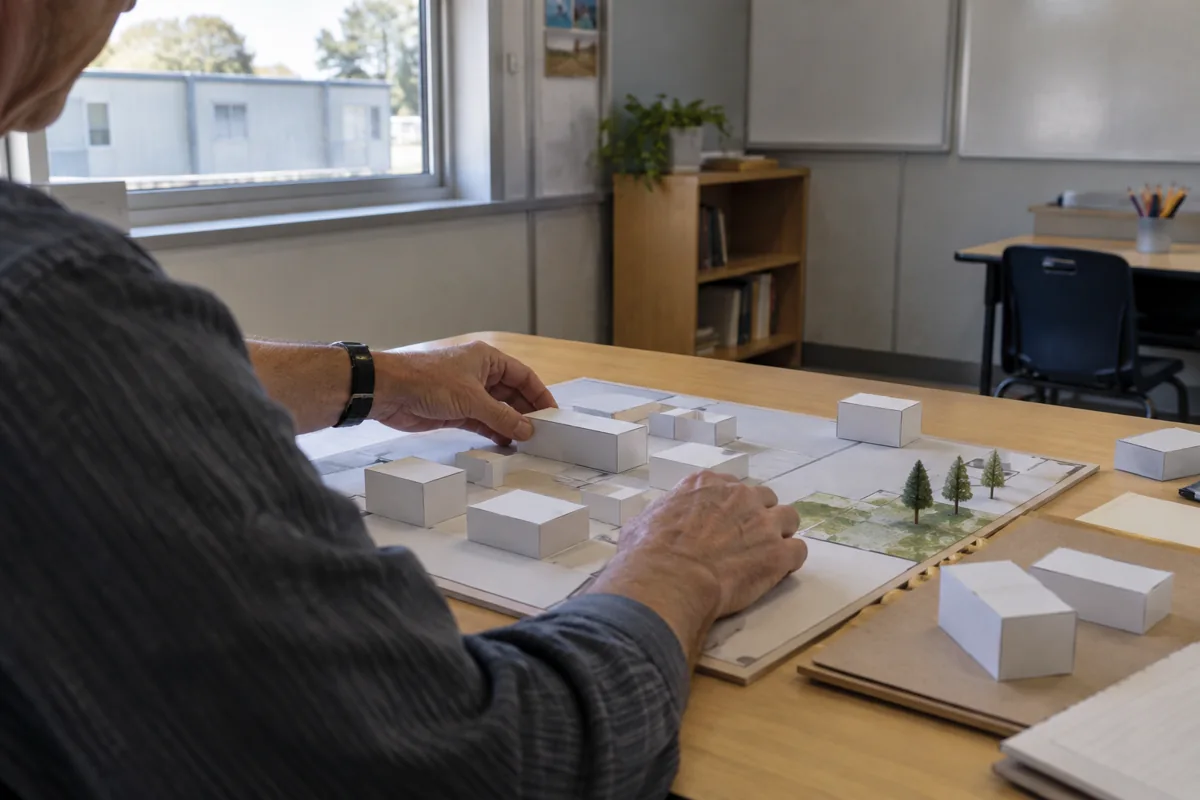
For the wider project picture, explore Texas modular buildings alongside your classroom space plans.
Texas requirements and the operator’s curriculum, credentials, training supplies and data practices need qualified review. The operator controls authorization, supervision and claims about participant readiness.
Use one complete classroom scenario to test capacity: calculation, label preparation, simulated selection, reconciliation and instructor feedback. Every station and storage decision should support that sequence.
Connect calculation desks to simulation benches
Learners need a clean surface for math, references and records before entering a mock workflow. Simulation benches should fit approved containers, labels and devices without using the aisle as overflow. Instructor sightlines should cover both zones.
Study pharmacy classroom layouts with full counter depth and accessible participation. A learner should move from calculation to practice without crossing another team’s station.
Keep training inventory unmistakably controlled
Use only the operator’s approved simulation materials and identify them clearly. Ready sets, active exercises, returned items and incomplete kits need different storage status. Open shelves should not expose controlled records or staff-only supplies.
Provide an inspection counter where labels, quantities and accessories can be reconciled. A mismatch stays there for instructor review rather than returning to the next group’s practice inventory.
Separate blank labels, completed exercises and reusable containers so a student cannot mistake yesterday’s scenario for current stock. Each team needs a tray or bin that preserves its assigned quantities through the exercise. Staff should be able to count and reset a kit without occupying the calculation desks.
Protect records and private feedback
Printed exercises, completed work and student records require separate handling. A small room can support private coaching or assessment if its acoustics and supervision arrangements are suitable. Data and device use should follow documented practices.
Temple and Texas authorities establish property-use, accessibility, construction and life-safety duties. Electrical service, sinks if any, casework and room systems should be evaluated from the actual educational program.
Compare prices using one simulated workflow
Give providers class size, calculation desks, simulation stations, approved inventory, devices, secure storage, hours and property conditions. Ask for itemized planning, unit construction, hauling, foundations, placement, services, exterior access, permits and handover records. The training lab price guide supports scope review.
Clarify whether counters, mock shelving, locking cabinets, data and private-room assemblies are included. A Temple modular pharmacy classroom request should follow calculation, simulation, reconciliation and feedback so the price reflects a complete instructional flow.