
Make useful existing furnishings part of the classroom plan before buying replacements by default. Explore Washington modular classroom prices with an honest inventory of what your school can carry into the new space. Reuse can be a sensible purchasing choice, but only when the items fit the room and remain suitable for their intended work.
For the wider project picture, explore Washington modular buildings alongside your classroom space plans.
Inspect the inventory before promising the saving
Confirm which items are actually available, their condition and the dimensions the design team needs. Something still required in an existing class is not spare furniture simply because it appears on an inventory. Mark the intended destination and keep any uncertain items separate from those the school has committed to reuse.
Ask the staff who use the furnishings whether they still serve the program. Retaining an awkward item can preserve a problem as well as avoid a purchase. The decision should consider its practical role, not just the fact that it is already owned. Where suitability needs specialist assessment, obtain that rather than relying on a general assumption.
Draw the real items into the proposed room
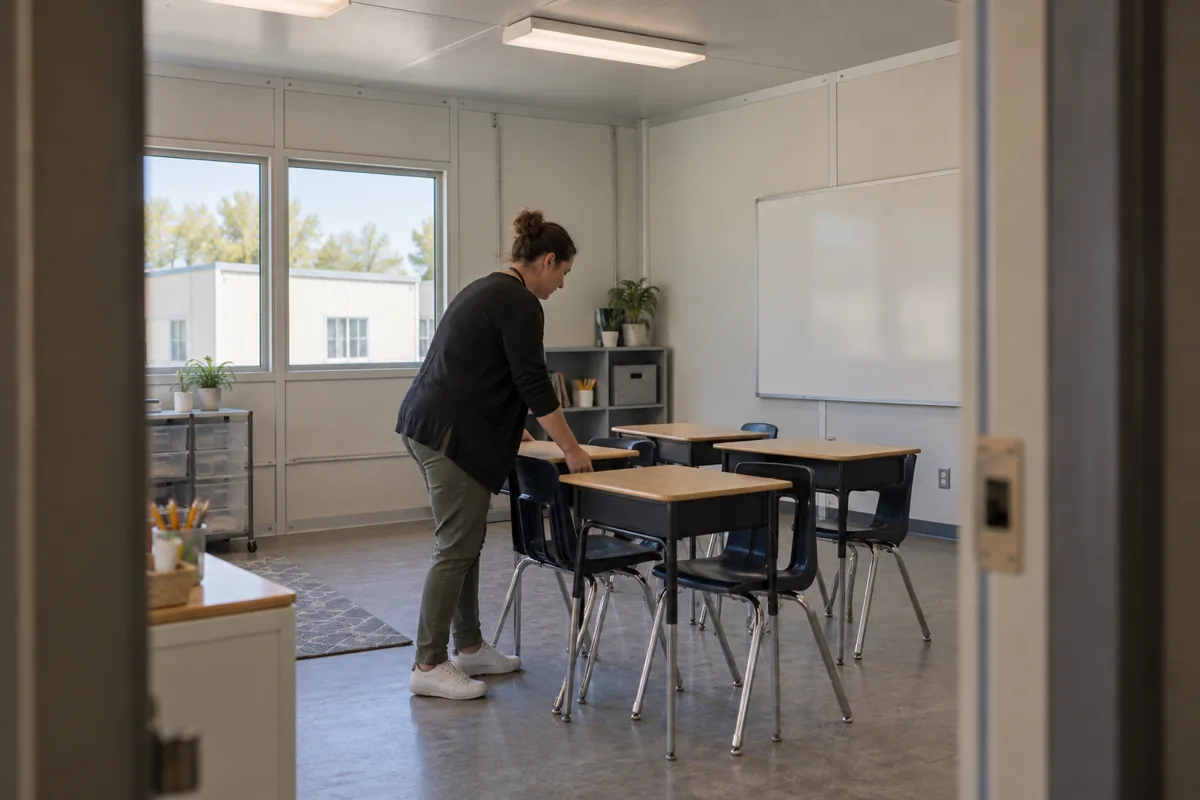
Use classroom design planning to test the retained furniture in context. Include storage openings, teaching surfaces and the routes people use. A collection that fits by total area may still create an inconvenient arrangement. Ask whether a different combination of retained and new items would work more coherently.
For a Washington school project, give the provider reliable information about equipment that affects connections or installation. Owner-supplied does not mean irrelevant to the building scope. Keep those requirements in the brief so the final classroom is not designed around a different assumed furnishing package.
Include the work needed to reuse it
Identify handling, preparation and any required setup associated with the retained items. Those tasks may belong to the school or another supplier, but they still need an owner. Keep them visible when comparing the building offer with a more furnished alternative. A useful price comparison accounts for what must happen before the room can be taught in.
The whole-project budget helps keep these owner contributions alongside the factory and site work. If an item cannot be reused as expected, identify the replacement decision early enough to understand its effect. Do not treat a potential saving as confirmed until the relevant assumptions have been checked.
The aim is selective reuse, not keeping everything or replacing everything. Your school can put its resources toward the items that genuinely need changing while choosing a classroom building that accommodates the useful things it already has.