
Crop science instruction moves from seed and plant-sample receipt to observation, microscopy, comparison, recording and cleanup. The modular room needs to separate dry teaching tables from sample preparation, magnification and the cleanup route.
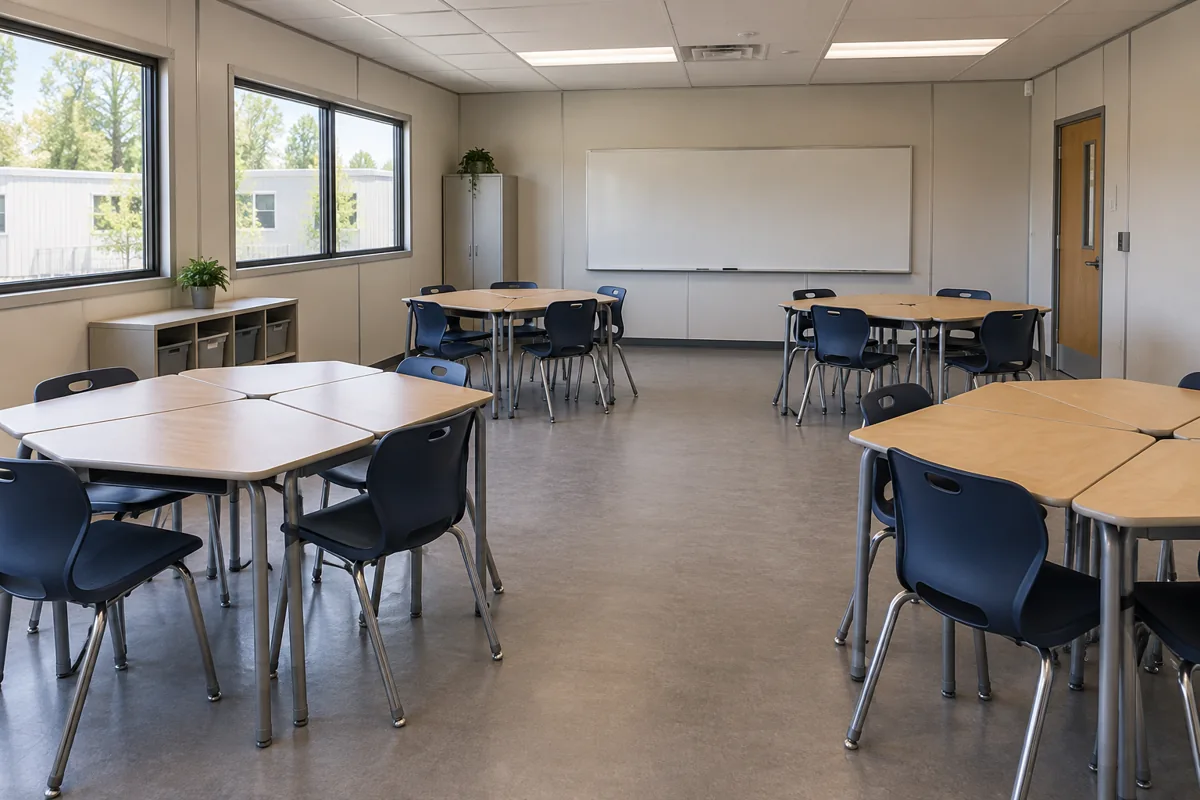
For the wider project picture, explore Washington modular buildings alongside your classroom space plans.
Define the samples, equipment and intended level of biological work before requesting prices. The program controls its protocols and records, while Washington building, accessibility, water and life-safety requirements need review by qualified local professionals.
Arrange sample and observation stations around the teaching sequence
Place microscopes, sample trays, balances, hand lenses, a sink and sealed supply cabinets at their real dimensions. Trace a specimen from receipt through observation, comparison, recording and cleanup. The instructor should be able to supervise each bench, while learners can reach magnification and washing areas without carrying samples across dry device tables.
Compare crop science classroom layouts at full attendance. Soil and plant material should remain inside the work zone, and clean tools need a return point separate from used trays. Accessible stations should support the same observation and documentation tasks as the other benches.
Control specimens, tools and cleanup supplies between classes
Storage should distinguish unopened supplies, identified specimens, active trays and material awaiting approved disposal. Size cabinets from actual container dimensions and expected daily volume. Frequently used tools belong near the observation benches, while restricted materials and uncertain samples need staff-controlled locations.
An unlabeled specimen or leaking container stays in a marked hold area and never returns to the teaching shelf. A visible reset station gives staff one place to reconcile tools, labels and records before the next class. It also keeps cleaned equipment from being mixed with trays that have not completed the program's handling procedure.
Resolve biological material separation before installation
Biological materials, allergens, water service, ventilation and disposal methods require qualified review. Use the documented lesson plan to identify sink locations, washable surfaces, power and data needs, storage controls and any environmental limits. Higher-risk biological or chemical work should remain outside the room unless separately designed and approved.
Give every provider the same operating description and note which questions belong to local officials or technical professionals. Modular construction does not bypass those requirements. Defining the training boundary early keeps a basic crop science classroom from being mistaken for a research laboratory.
Compare prices for sample receipt through approved cleanup
Give providers the class size, sample volume, microscope-station count, sink requirements, drying space, cabinet needs and disposal boundary. Request separate amounts for design, fabrication, freight, foundations, utility connections, installation, permits and closeout. The crop science classroom cost guide helps keep those scope differences visible.
Confirm whether furniture, microscopes, storage, data work, sinks and staff orientation are included. A Pasco modular crop science classroom request should describe the full workflow from sample receipt through cleanup. Providers can then price the same practical teaching room rather than filling gaps with different laboratory assumptions.