
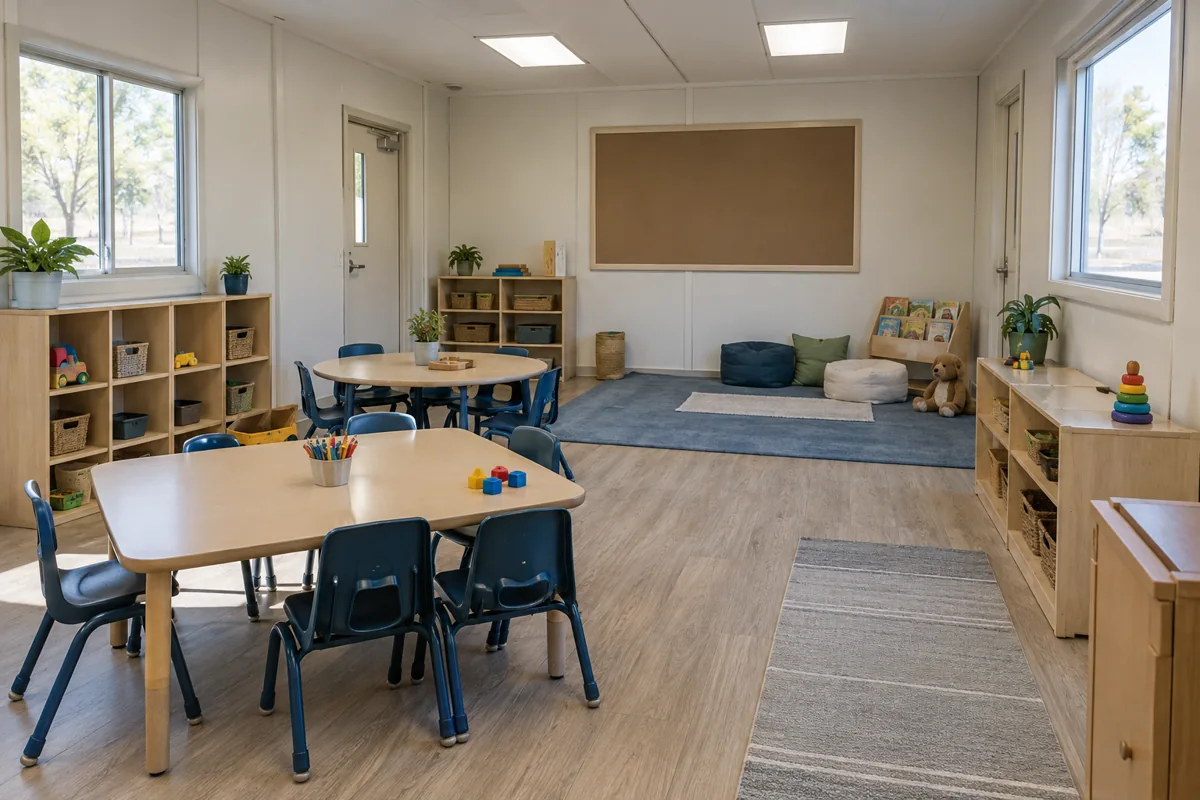
A hands-on math classroom moves between explanation, modeling, group problem solving, physical manipulatives, individual practice, and discussion. A Sammamish modular classroom should make each change quick enough to protect teaching time. The goal is not a room filled with specialty objects; it is a clear learning environment where tools appear when they help and disappear when they do not.
For the wider project picture, explore Washington modular buildings alongside your classroom space plans.
Keep every teaching surface connected
Place writable walls, the primary display, document camera where selected, group tables, accessible seats, and instructor movement at occupied scale. Students should be able to compare work without turning away from their materials or carrying them across the room.
The classroom layout resource can help test furniture, sightlines, storage, and routes. Actual lesson formats should determine how much wall and floor area each teaching mode receives.
Organize manipulatives by lesson speed
Frequently used items belong close to student work, while staff-controlled sets and assessment materials need separate storage. Shallow labeled bins may be more useful than deep cabinets that hold a lot but hide what is missing. Plan where complete sets are checked and replenished.
Oversized models need a safe display or storage position that does not consume the accessible route. Student work awaiting discussion should have a temporary home rather than covering every horizontal surface.
Support productive talk and quiet thinking
Group problem solving creates movement and conversation; individual practice needs fewer distractions. Furniture orientation, partial zoning, and classroom routines can help both occur without building many small rooms. A lower-distraction seat should remain part of the class, not become an isolated afterthought.
Plan where teams present partial work, not only final answers. A document camera, magnetic surface, or movable board can make reasoning visible while leaving the main teaching wall available for the next step.
Washington and local requirements for occupancy, accessibility, technology, acoustics where applicable, fire and life safety, site access, and education facilities require project-specific confirmation by qualified professionals and authorities. No learning result is implied.
Leave room for the next lesson. Math materials change by grade and unit. Allow a clear reset surface for sorting manipulatives, posting a worked example, or staging the next set without hiding emergency equipment or accessible routes. A room that can be reset in ordinary preparation time is more useful than one that only looks organized at opening.
Compare prices for the full lesson cycle
Writable surfaces, displays, storage, furniture, devices, charging, acoustic treatment where selected, commissioning, and site work may be included differently. Use the complete modular cost guide to align scope.
Sammamish buyers can request current classroom prices with enrollment, teaching formats, and the materials already known. A clear scope lets buyers compare what is included, what remains owner-furnished, and which choices can wait for a later lesson review.