
Energy audit instruction should connect a defined building scope, physical observations, operating schedules, utility data, assumptions, and improvement scenarios. A Leominster modular classroom can support plan review, safe instrument concepts, data analysis, measure comparison, and reporting without being described as a certified audit facility.
For the wider project picture, explore Massachusetts modular buildings alongside your classroom space plans.
Define the boundary before collecting numbers
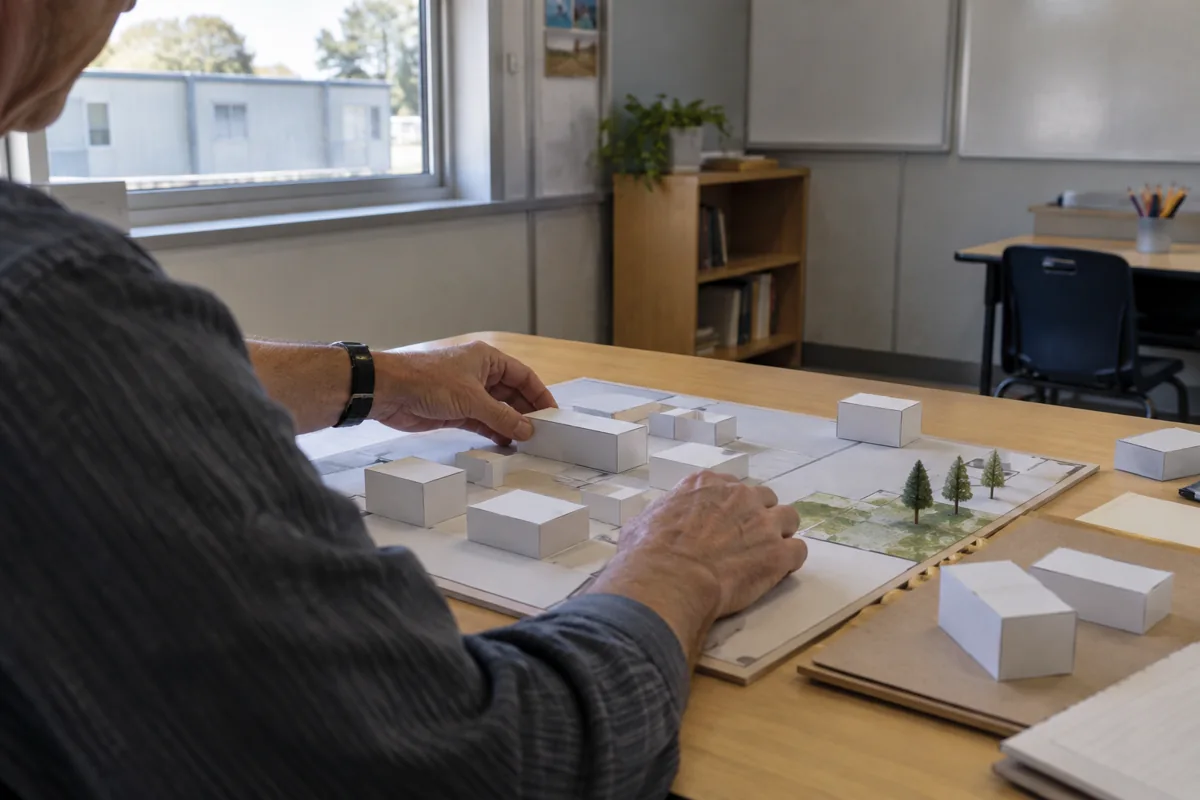
Teams need a visible scope showing fictional building area, systems included, study period, occupancy, schedule, weather basis, and missing records. Plan tables and envelope detail models help connect data to physical assemblies. Every dataset should identify source, units, date range, and adjustments.
Use the modular classroom layout resource to test plan review, model demonstrations, team calculations, utility-data comparison, report critique, and accessible circulation.
Teach observation without unsafe access
Prepared photographs, diagrams, component models, and approved training meters can support inspection logic. Students should distinguish observation, measured value, reported condition, and inference. Live electrical panels, roofs, confined spaces, mechanical interiors, and energized equipment are outside ordinary classroom activity.
Instruments need known status, checkout, and return. A value from a demonstration device should not be applied to a real building unless collected and interpreted under a qualified project procedure.
Rank measures with assumptions attached
Improvement scenarios may compare estimated energy, cost, comfort, maintenance, operational disruption, and uncertainty. Students should preserve baseline assumptions and identify interactions between measures. A recommendation board should separate immediate operational ideas, capital concepts, and items needing further investigation.
Massachusetts and local requirements for occupancy, accessibility, electrical work, energy, fire and life safety, and education facilities require project-specific confirmation by qualified professionals and authorities. No savings, audit certification, engineering conclusion, code approval, or academic outcome is implied.
Price the evidence-to-report workflow
Plan tables, training instruments, data workstations, displays, component models, secure files, commissioning, and site work can be divided differently across proposals. The installed classroom cost guide helps align bids.
Leominster buyers can request current classroom prices with enrollment, teaching format, and known training equipment. Open questions can be addressed during scoping. Ask providers to demonstrate data intake, safe observation review, scenario comparison, assumption challenge, report presentation, and instrument return.
Acceptance should include a utility dataset with one missing month and a measure whose savings depend on an unsupported schedule. The room should help learners flag both, revise the analysis, and explain the remaining limitation. At closeout, retain the cited case record while clearing credentials, personal information, and temporary calculations.