
Schools comparing classroom proposals can miss an important distinction: a room may be priced as a structure, while the school is budgeting for a complete teaching setup. For Green Bay, describe the instruction and schedule first, then request modular classroom prices against that same use. The goal is to understand what students can do in the delivered space, not to treat every line item as interchangeable.
For the wider project picture, explore Wisconsin modular buildings alongside your classroom space plans.
Describe the learning function behind each feature
Instead of listing furniture alone, explain how it will be used. A worktable might support small-group projects, while lockable storage may keep shared materials ready between sessions. That purpose helps the project team distinguish essential fittings from optional choices. It also gives school leaders a sound basis for discussing whether a feature is included, supplied separately or still undecided.
Check which school-owned items are genuinely available for the new room. Verify dimensions, condition, storage needs and who is responsible for moving or installing them. An item listed in an inventory may already serve another class or require preparation. Keep dependencies visible so the classroom plan does not rely on equipment that cannot be there when instruction begins.
Review the arrangement as a teaching team
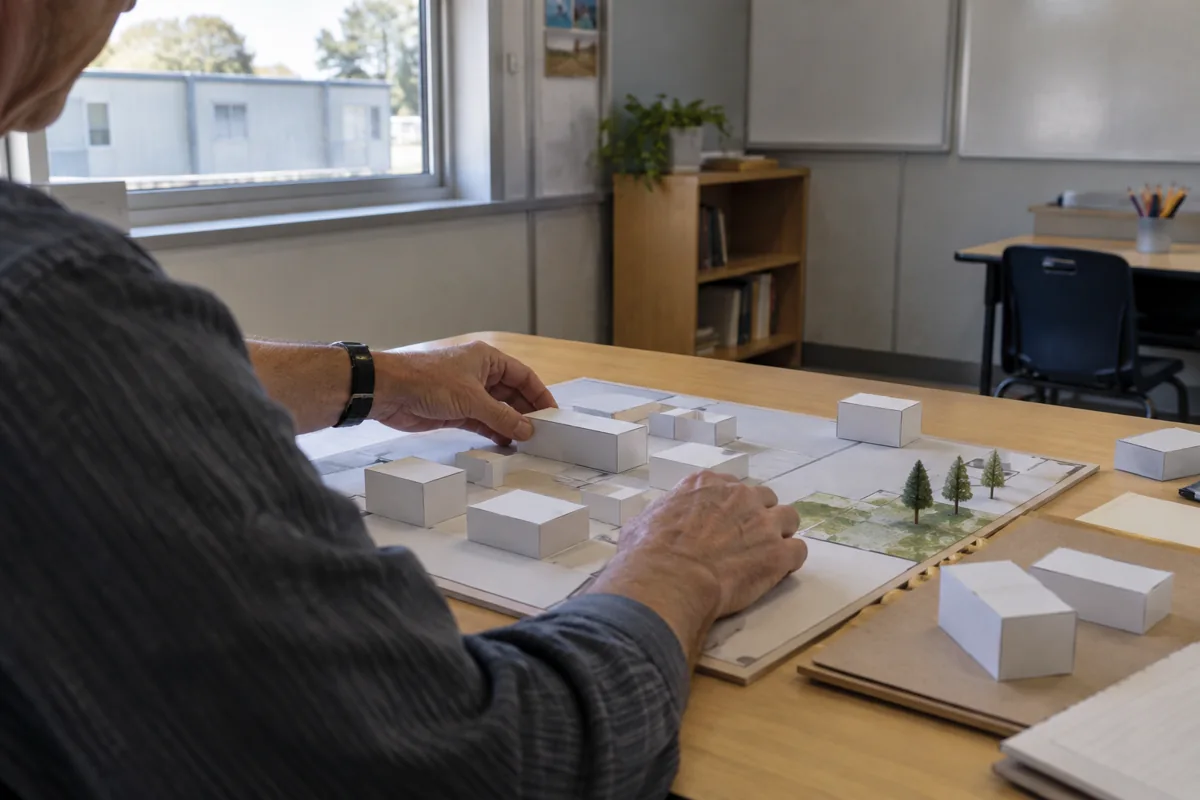
Put the teacher’s position, student work areas, storage and equipment on a measured drawing. Ask teachers to test the layout against one lesson: where does the group gather, where do students work independently and how do materials return to storage? If a choice changes supervision or student movement, record that tradeoff rather than comparing only room area.
The classroom layout guide can help structure the review. Consider whether a flexible surface genuinely supports multiple activities or requires frequent resets. A choice that looks adaptable on paper may consume teaching time if students must move heavy furniture between periods.
Compare the delivered scope
Ask providers to distinguish the building and included finishes from delivery, foundation, utility connections, installation and school-managed work. The modular building cost guide helps frame these questions. Keep confirmed figures separate from estimates and unresolved site details.
With the instructional brief, selected layout and responsibility list together, Green Bay decision-makers can compare current prices on a consistent basis. That keeps the classroom’s teaching purpose attached to the purchase and makes unresolved scope easier to spot.
Make the handoff workable
Before a preferred configuration is approved, identify who will confirm room contents, who can answer questions about daily use, and who signs off on the final drawing. A short review with facilities staff can catch practical matters such as where deliveries can be staged and whether the planned route to the room stays clear. The project team should verify these details against the selected site.
Record decisions in a simple schedule: item or feature, intended use, included party, decision owner and open question. If the school changes a selection later, update the same schedule and ask whether price, layout or delivery assumptions also change. That gives administrators a clean comparison and helps teachers see what they will actually receive.