
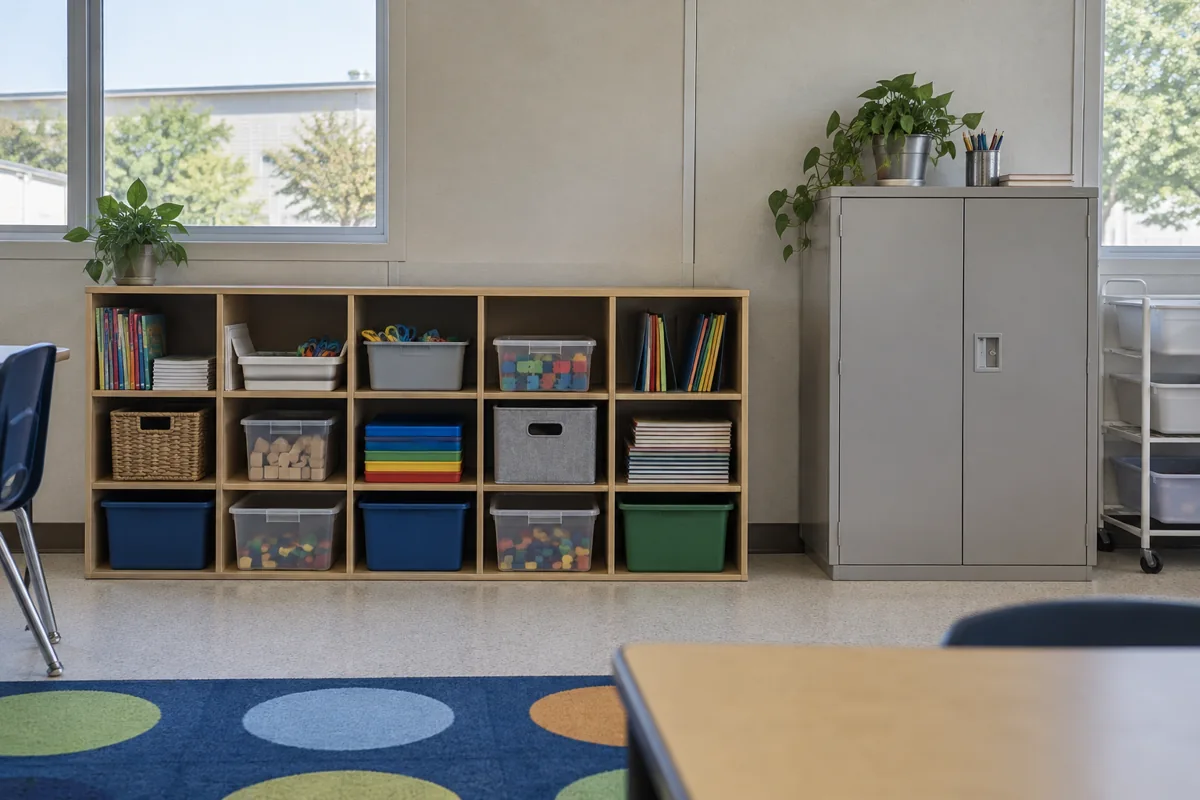
Keep teaching space for teaching while giving the resources a sensible home. Get modular classroom prices for Madison with the school's real storage needs identified. Too little provision creates daily clutter; adding cupboards everywhere can consume the room without solving the underlying problem. The useful answer starts with what the class actually keeps and uses.
For the wider project picture, explore Wisconsin modular buildings alongside your classroom space plans.
Separate daily resources from the rest
Ask staff which materials are used frequently, which are kept for occasional lessons and which do not need to remain in the classroom. That is more useful than a broad request for plenty of storage. A provider can discuss suitable provisions when the school explains what they are meant to hold and how they are accessed.
Identify any resources needing particular conditions or handling, and obtain appropriate advice rather than assuming an ordinary cupboard is suitable. Keep those requirements distinct from routine classroom supplies. The purpose of the brief is to make the real need visible, not turn every stored item into a specialist building feature.
Look at storage while it is being used
On the classroom plan, show substantial proposed units and consider their operation. A unit may fit against a wall but still need space for access. Staff should be able to explain how materials are collected without relying on a permanently empty patch of teaching area that is occupied during lessons.
Have the relevant arrangement checked for applicable requirements. A tidy drawing does not establish safe or suitable use. If the school proposes its own furniture, supply accurate dimensions and ask whether any building provisions need to account for it. Don't assume a generic fitted unit on an illustration matches the item the school will bring.
Compare the supplied provision honestly
Consider a proposed bank of fixed cupboards where the school mostly stores bulky teaching kits used once a month. A smaller daily-resource provision might serve the class if the occasional kits have another suitable home. On the other hand, moving frequently used materials elsewhere may save a little fit-out cost while creating repeated trips. Staff should explain that tradeoff before the school selects the arrangement.
Your Wisconsin school can ask each provider to identify which fittings are included and which are optional or school-supplied. The cost planning guide gives broader context, while the actual proposal should explain this room. A lower building price may still leave a necessary furniture purchase, and a fitted package may include more than the school needs.
Compare modular classroom options with the teaching area and resource provision considered together. The goal isn't the greatest storage capacity or the fewest cupboards. It is a practical balance that gives staff access to the materials they use while preserving the classroom space the school is paying to gain.