
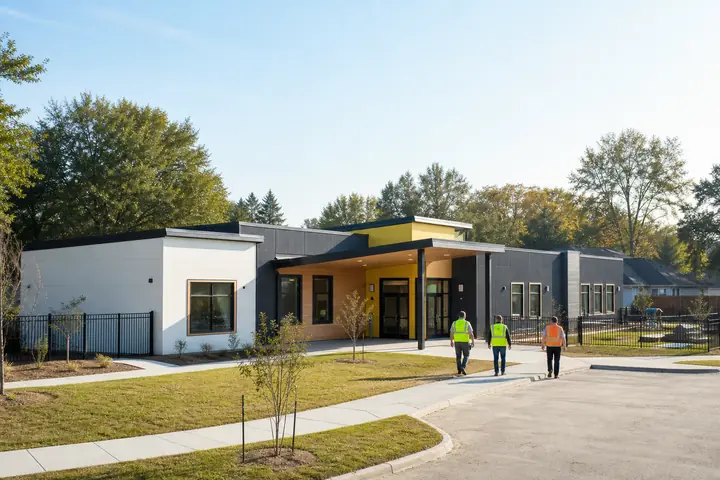
Moving everyone at once may be simple on a calendar and difficult in practice. A phased move lets an organization test systems, room setup and circulation with a smaller group before transferring critical work. A Blaine modular project should connect each move wave to verified readiness rather than a hopeful completion date.
Minnesota choices offer broad context. The Blaine move sequence must reflect the actual departments, property and services that cannot be interrupted.
Define readiness for each group
List the rooms, furniture, technology, records, supplies, access and utility functions each team needs on its first day. Separate building completion from operational readiness. A finished room without connectivity or secure storage may not support work.
Test the furnished modular building layout with a pilot group where practical. Record problems with door operation, controls, signage, sound or equipment placement and correct them before the next wave.
Protect information and customer service
Assign packing, chain of custody, key or credential changes and verification of sensitive material. Tell customers and vendors where services occur during each phase. Keep old and new contact or delivery instructions from conflicting.
Create a move inventory by destination rather than by current room. Label furniture, equipment, records and supplies with the new location and sequence, then identify items that require a technician, secure handling or special access. Confirm elevator, door and corridor constraints where they apply, and keep the installation route separate from occupied work. A department should not move until its manager, facilities and technology owners agree that the receiving rooms are ready. This makes the decision visible and prevents one team from assuming another performed the final check.
Plan temporary support for the first operating period. A small response team can solve access, furniture or technology problems before they become workarounds repeated by every occupant.
Maintain accessible and emergency routes while furniture and materials move. A move corridor should not become uncontrolled storage, even for a short period.
Close one phase before opening the next
Review issues with facilities, technology and operations. Confirm that corrections are complete or deliberately carried with an owner. Update the remaining sequence when one group reveals a dependency the plan missed.
Include move and handoff expectations when you compare modular building prices. A successful Blaine transition creates usable space in controlled steps and preserves the organization’s daily work while the new building becomes fully occupied.