
Growth planning is useful when it protects choices, not when it turns every possibility into square footage purchased today. An Eden Prairie organization should solve the current need completely, identify a few credible changes and reserve practical paths for the ones that matter. That creates adaptability without burdening the first phase with unsupported forecasts.
Minnesota choices provide statewide context, while the Eden Prairie growth plan must come from the organization’s own capacity data, property and decision triggers.
Define the first constraint likely to fail
Look at staff, customers, programs, equipment and storage separately. A future problem may be one meeting room, a crowded entrance or insufficient utility capacity rather than a need to duplicate the whole building. State the trigger in measurable operating terms and distinguish it from general optimism.
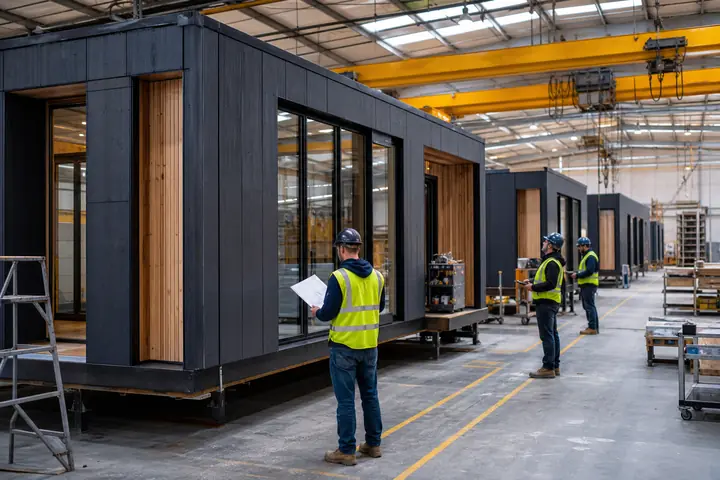
Test modular building layouts against today’s busy period and the first credible growth case. The initial plan should keep circulation, accessibility and support functions complete even if no later phase occurs.
Protect expansion without designing fiction
Consider a logical connection point, utility strategy, site access and room adjacency that could support an addition. Avoid placing permanent features where they unnecessarily block that path. Price enabling work separately and document its purpose.
Qualified professionals need to confirm structural, system, site and approval implications. A conceptual future phase is not a promise of feasibility. The property may also need parking, drainage, service and emergency circulation adjustments as capacity changes.
Keep a short record of the assumptions behind the growth diagram. Future teams should know the occupancy, equipment and site conditions that made the concept reasonable. If those inputs change, they can reconsider the plan instead of treating an old arrow as a permanent design instruction.
Use triggers to time the next investment
Assign someone to monitor the capacity measure and start planning before the operation reaches failure. Compare an addition with scheduling, renovation, rental or other targeted responses. The portable building rental path may provide temporary capacity while a longer decision develops.
Set a review cadence appropriate to the business rather than a fixed date copied from another project. The trigger should give enough time for investigation, budgeting and approvals before crowded rooms or failing support functions force an emergency purchase.
For the current phase, get modular building prices using a complete installed scope and separately listed growth provisions. The Eden Prairie project should work confidently now and preserve sensible choices later—without paying for rooms that exist only in a hopeful projection.