
Classroom comfort is not determined by one thermostat or a larger mechanical unit. Occupancy, fresh-air needs, doors, glazing, envelope details, schedules, controls, and maintenance all interact. A Sarasota modular classroom comparison should ask how those parts work together and who verifies performance for the actual building, site, and school routine.
For the wider project picture, explore Florida modular buildings alongside your classroom space plans.
Give the design team a realistic operating profile
Record normal and maximum occupancy, hours, technology loads, lighting, door-opening patterns, after-hours events, and periods when the room sits unused. Identify spaces with different conditions, such as computer rooms, art areas, storage, restrooms, or frequently occupied small-group rooms. A single broad classroom assumption can miss those differences.
Entries and circulation affect indoor conditions. A vestibule or revised door location may reduce repeated outdoor-air loads near teaching areas, while shades and glazing choices influence heat and glare. Use the classroom design guide to compare room relationships, then coordinate them with the mechanical and envelope strategy.
Test operation during partial use. A school may open one room for tutoring or an evening event while the rest of the addition is empty. Zoning and controls should support that condition without conditioning every room unnecessarily or leaving occupied support spaces outside the active zone. Record who can change schedules and how unusual operation returns to normal.
Review water management as a continuous path
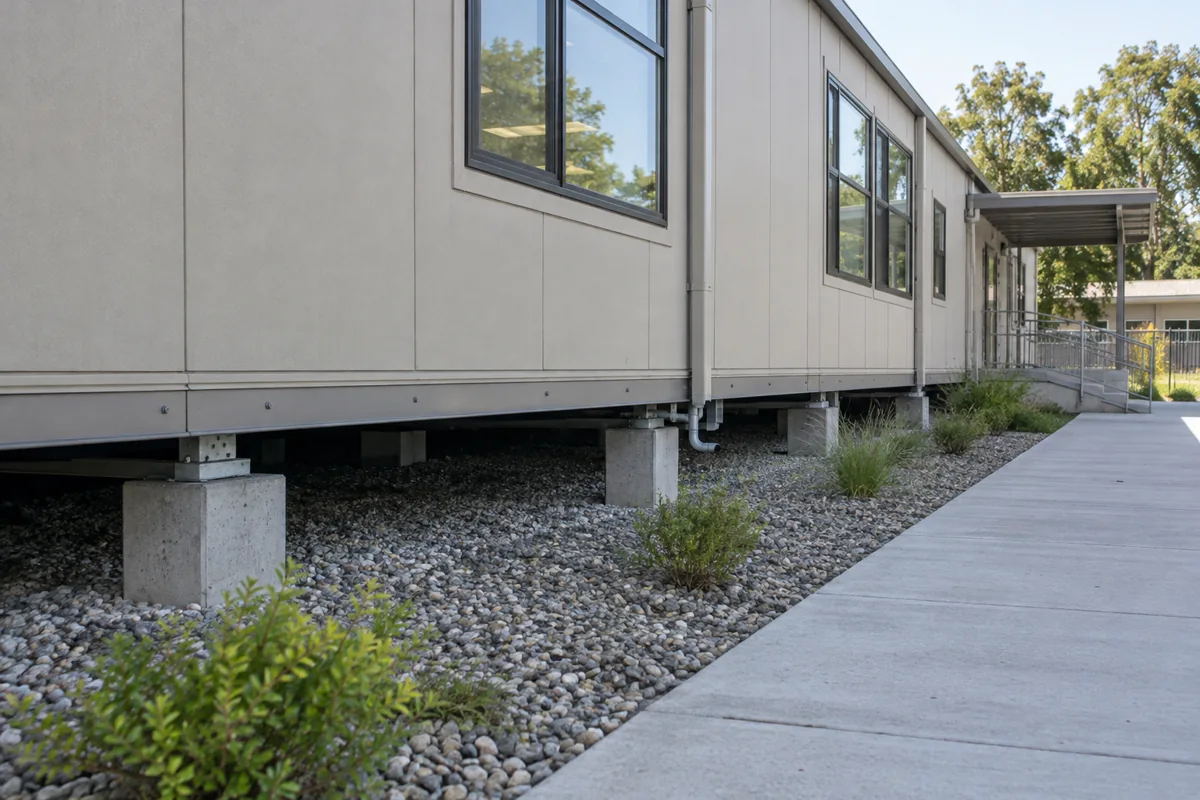
Roof drainage, wall transitions, windows, doors, utility penetrations, foundations, grading, and condensate disposal should direct water intentionally. Ask how concealed assemblies can dry and how staff reach filters, drains, controls, and equipment for routine service. Maintenance access is part of durable moisture management.
Florida and local requirements for energy, ventilation, structural design, moisture control, accessibility, and school facilities require project-specific confirmation by qualified professionals and authorities. No equipment selection or performance result should be assumed from location alone.
Compare controls and commissioning with the equipment
Mechanical systems, controls, sensors, test-and-balance work, commissioning, shades, envelope details, drainage, and staff training may be carried differently. Add them to the installed project cost framework beside foundation, delivery, utilities, and site work. Ask who responds if measured operation differs from the documented design intent.
When Sarasota buyers have a realistic operating profile and clear performance criteria from their professionals, they can compare modular classroom prices. Evaluate the explanation, controls, and maintenance plan as closely as the equipment label. A comfortable classroom is the result of coordinated decisions that remain understandable after turnover.