
Stormwater instruction can connect watershed maps, rainfall assumptions, land cover, conveyance, storage, water-quality context, maintenance, and alternative plans. A Cutler Bay modular classroom should support that analysis without presenting student work as engineering, current emergency information, or an approved public project. Sources and model limits stay visible.
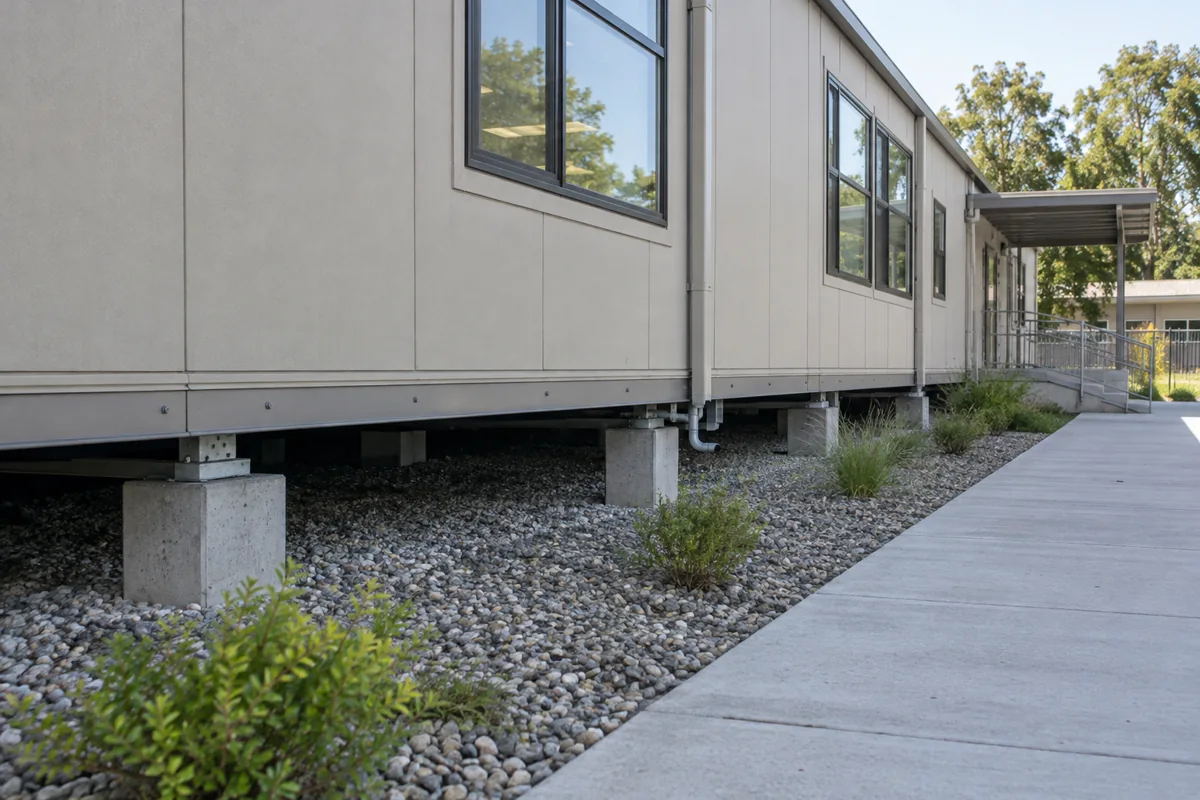
For the wider project picture, explore Florida modular buildings alongside your classroom space plans.
Keep rainfall and land assumptions beside the map
Each scenario needs geography, scale, time period, source, units, surface assumptions, and known limitations. Teams should preserve the baseline while testing alternatives. Large tables and overlays can keep flow paths traceable.
The modular classroom planning guide can test map study, model review, data work, team alternatives, presentation, and accessible participation.
Model storage and movement with visible limits
Physical or digital models can simplify inlets, pipes, channels, storage, infiltration, and overflow. Label what is omitted and which scenario is shown. Water demonstrations, if any, require owner-approved containment and cleanup rather than improvised use near maps or devices.
Owner policy governs maps, utility information, water-quality data, locations, accounts, files, and publication. Current warnings and operational instructions remain separate from teaching displays.
Make maintenance part of the alternative
Students should consider access, inspection, sediment, debris, vegetation, repair, and responsible ownership alongside capacity concepts. A proposal needs a stated maintenance assumption. Preserve tradeoffs and unresolved questions through critique.
Florida and local requirements for occupancy, accessibility, sanitation, structural design, electrical systems, fire and life safety, and education facilities require project-specific confirmation by professionals and authorities. No engineering, drainage, flood, water-quality, safety, or academic outcome is implied.
Compare prices for maps, models, and data
Map tables, model storage, displays, durable surfaces, technology, cleanup provisions, secure records, commissioning, and site work may cross budgets. Use the complete project cost guide.
Cutler Bay buyers can request current classroom prices with enrollment, source formats, and known equipment. More detail can follow. Ask providers to show baseline review, model comparison, maintenance discussion, presentation, revision, and reset.
Closeout should clear temporary warning symbols, return maps and model pieces, dry approved demonstration items, and archive assumptions with each alternative. Shared rainfall data needs a review date. An old classroom scenario should never resemble a current alert.
Overlay sets should keep legends, scale bars, flow arrows, and scenario dates together. If a piece is missing, hold the set for review rather than rebuilding an interpretation from memory. That check protects both the next lesson and the model’s stated limitations.