
Add classroom space with a clear role in the school's day. Request modular classroom prices for Clearwater and describe the resources the class needs inside and those it will use elsewhere. A useful addition should fit the teaching arrangement and the campus support around it, not leave essential everyday questions until after purchase.
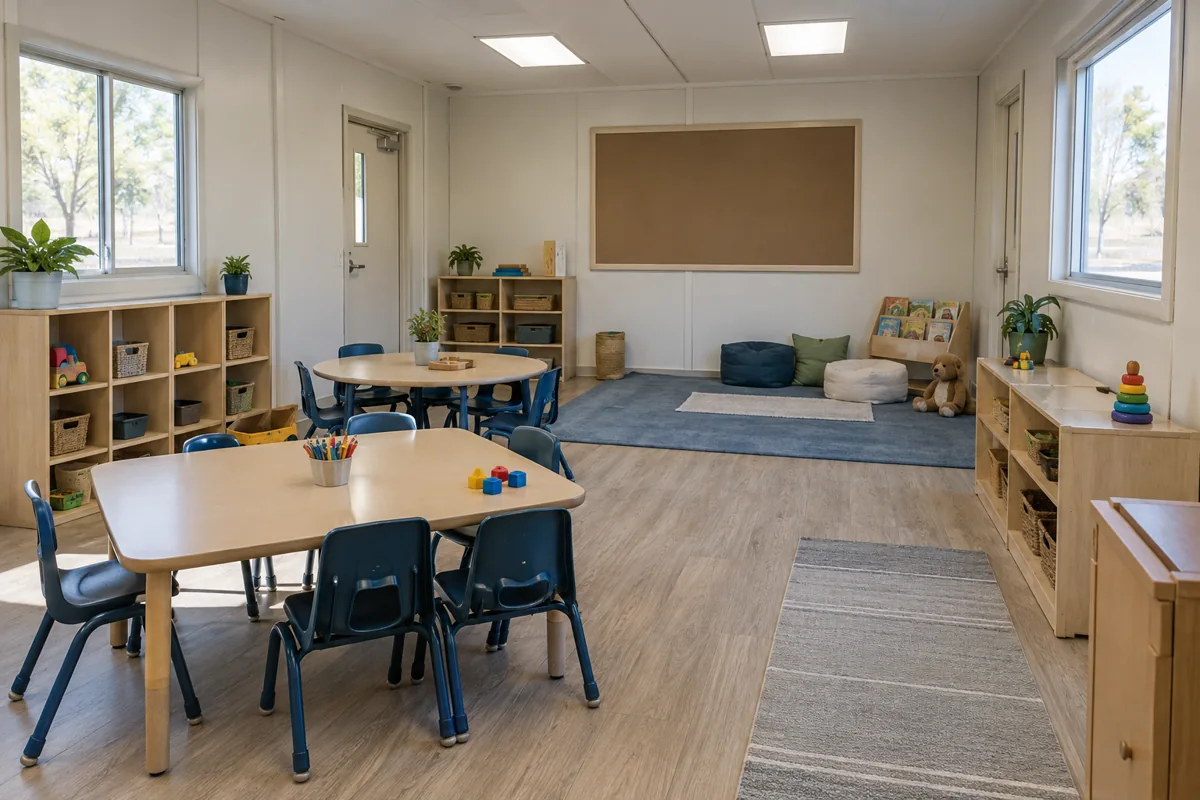
For the wider project picture, explore Florida modular buildings alongside your classroom space plans.
Define what the room must provide
Identify significant furniture, teaching materials and equipment. Confirm which school-owned resources are available rather than simply listed on an inventory. Something still serving another class needs an explicit decision before it becomes part of the new room.
Review classroom layout options with those items represented. Staff should be able to discuss an ordinary lesson, including what remains ready and what moves between activities. An empty plan may conceal the space needed for the actual resources.
For example, materials collected from a shared store may need a different arrangement after the class moves. Decide whether that support remains practical or belongs inside the addition. The choice affects both the furnishings and the room the school is asking providers to price.
Confirm the support outside its walls
Ask which existing facilities and resources the class will rely on. Check their availability for the intended use. Proximity alone does not establish that another group isn't using the same provision when the new classroom needs it.
Your Florida school can compare modular classroom choices with these relationships explained. An option that brings a resource into the room may be helpful, but ask what changes in the layout and budget. It isn't automatically necessary simply because the building is separate.
Keep any dependency on future work visible. If an essential resource is part of a later project, establish how the current class operates until then. A planned improvement should not be treated as available support without confirmation.
Relevant site, access and technical matters need appropriate assessment. Give the project team an accurate intended-use description and ask what further information is needed, rather than relying on an informal campus sketch.
Compare the working addition
Identify what the provider supplies and what the school or another party arranges. The building cost guide offers wider questions to consider, but actual information should establish the project's scope and costs.
Keep essential separate purchases beside the building figure even when another department handles them. An item doesn't stop being necessary because it appears in a different budget.
Choose classroom space whose resources, responsibilities and support are understood. That gives competitive prices a useful purpose: obtaining a practical addition the school can use, rather than a building whose everyday connections still need to be worked out.