
Adult diploma-preparation programs may combine direct teaching, independent study, tutoring, assessment, advising, technology, and evening schedules. A Middletown modular classroom should support those modes without promising eligibility, completion, test results, credentials, or program availability.
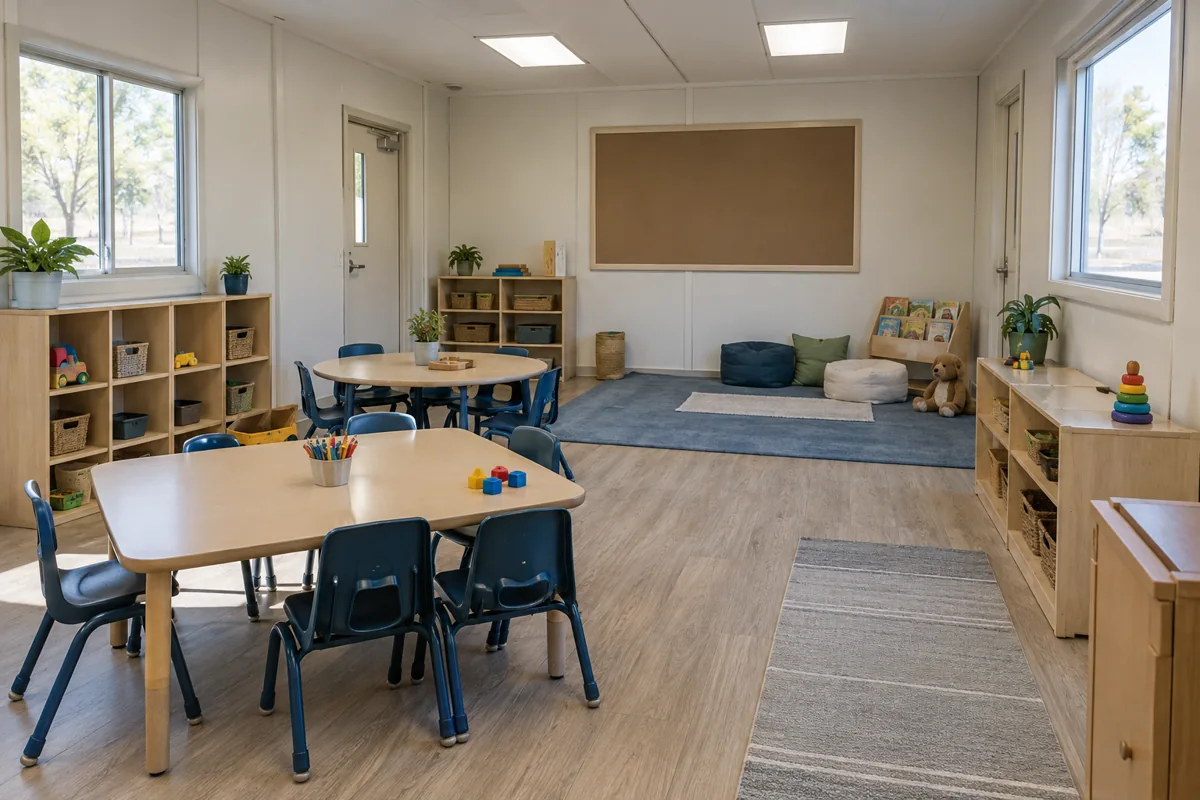
For the wider project picture, explore Connecticut modular buildings alongside your classroom space plans.
Make evening arrival complete and controlled
Trace parking or drop-off, lighting, entry, check-in, accessible restroom, classroom, and exit. Late arrivals should reach a seat without crossing private advising or quiet assessment. Staff need sightlines to the door.
The classroom planning resource can support entry and room zones. Actual schedules and enrollment should test capacity.
Support several subjects without losing order
Adult learners may work on different material while an instructor teaches a small group. Provide quiet positions, tutoring tables, shared displays, power, data, and labelled resource storage. Unfinished work and devices need secure homes.
Keep ordinary reference material separate from assessments and protected records.
Protect advising and assessment conditions
A small meeting room may support advising when its privacy, visibility, and booking work. Testing needs owner-defined seating, materials, technology, and procedures. The room itself cannot make an assessment approved or secure.
Connecticut and local requirements for occupancy, accessibility, privacy, exterior access, technology, fire and life safety, and education facilities require project-specific confirmation by professionals and authorities. No diploma result is implied.
Price the complete evening learning session
Access controls, exterior lighting, furniture, technology, secure storage, meeting space, extended-hour utilities, cleaning, commissioning, and site work may cross budgets. Use the complete project cost guide.
Middletown buyers can request current classroom prices with enrollment, hours, and known site. Program details can follow. Ask providers to show instruction, tutoring, assessment, advising, and secure closing in one evening.
Adult learners may arrive from work, leave at different times, or need a short break before resuming study. Provide a supervised waiting point that does not interrupt testing or advising. Staff need a closing sequence for devices, printed work, confidential notes, reference materials, lost property, and tomorrow’s schedule.
Different subjects need labelled reference sets, calculators, headphones, and practice tests. A preparation counter and return shelf keep incomplete materials out of ready storage.
Zoning matters when one learner is taking a quiet practice assessment while another receives tutoring. Furniture placement and staff sightlines should support both without treating either activity as an afterthought. Evening support also needs a clear last-entry policy, a way to communicate schedule changes, and a closing check that no learner is left waiting outside an already secured room.