
Choose the right mix of supplied features and school furniture for the classroom you intend to use. Get modular classroom prices for New Haven and explain the important resources. A room with more built-in fittings is not automatically a better fit, and an empty arrangement is not automatically more flexible.
For the wider project picture, explore Connecticut modular buildings alongside your classroom space plans.
Identify which features need a settled position
Ask staff how significant resources are used. A teaching surface or frequently used storage area may benefit from a clear place in the room. Other resources may move with activities. The useful distinction comes from the lesson, not a general preference for fixed or movable furniture.
Provide reliable details for school-owned items. An existing cabinet or teaching station can influence the proposed arrangement, so it should not be represented by a generic smaller item on the plan.
For example, the school may have suitable storage available but prefer a different position from the provider's standard layout. Discuss that actual choice before treating included cabinets as either a saving or an unnecessary addition.
Review the furnished alternatives
Use classroom plans with the same resources represented. Ask what changes between activities and where movable items go. A plan should not depend on an unconfirmed nearby room to make everyday instruction work.
If a supplied fitting occupies an important area, compare the practical alternatives. Its inclusion may be useful, but the school should understand what it replaces or affects elsewhere in the room.
Do not assume a fixed feature can easily be altered later. If a future change matters, ask for appropriate assessment. Relevant technical and installation requirements need review for the actual proposal rather than a general promise of adaptability.
Connect the selected arrangement to the budget
Ask whether an alternative fitting replaces a standard item or is priced as an addition. The school should understand that relationship before comparing the option with a separate furniture purchase of its own.
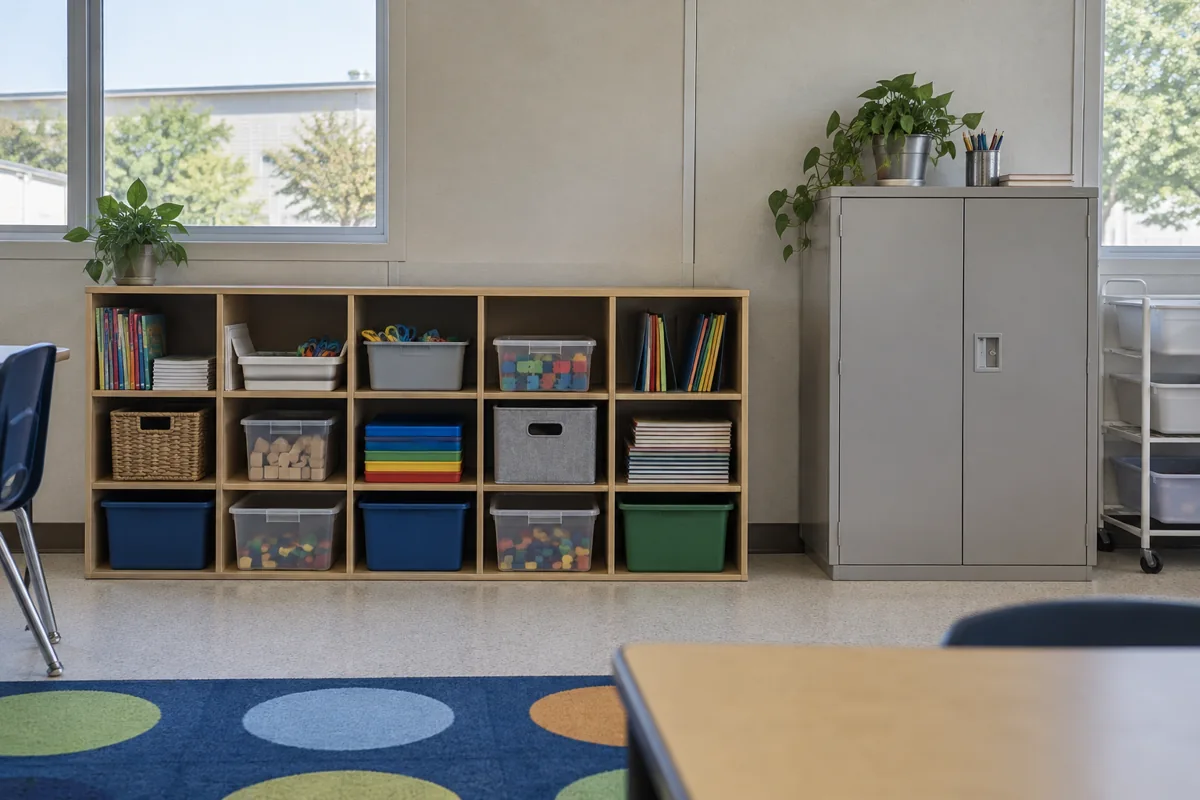
Your Connecticut school can evaluate modular classroom buildings with supplied items and separate purchases clearly identified. A furnished illustration does not establish that all visible furniture comes with the building.
The building cost guide frames broader questions. If one option requires a new school purchase or additional installation work, keep that consequence beside the building price rather than judge only the package total.
Check that the final school furniture order matches the selected plan. A resource chosen independently after the layout is agreed may introduce a mismatch that the original discussion never considered.
Choose the arrangement whose use and scope the team can explain. The aim is a practical classroom at an understood price, not the maximum number of fittings or the largest empty area. Clear choices let the school spend on what the lesson actually needs.