
Give the school a classroom option it can judge in practical terms. Request modular classroom prices for Pomona and describe the instruction, resources and furnishings that need to fit. The useful offer is more than a building size: it shows what the room provides and what the school still needs to arrange.
For the wider project picture, explore California modular buildings alongside your classroom space plans.
Explain what the room must make possible
Identify the class or activity needing space and the reason for the addition. If the room releases another school area, include that in the brief. If it accommodates an additional group, describe the actual use rather than relying on a general room label.
Ask staff which resources remain available during lessons. A teaching station or substantial cabinet can shape the arrangement even if it is supplied by the school. Confirm the item's size and availability before assuming it belongs in the new classroom.
For example, furniture currently shared by two activities may not be free to move. Resolve that allocation so the price comparison does not rest on an item another class still needs. A sensible reuse plan requires more than knowing the school owns it.
Review the proposed arrangement with the furniture included
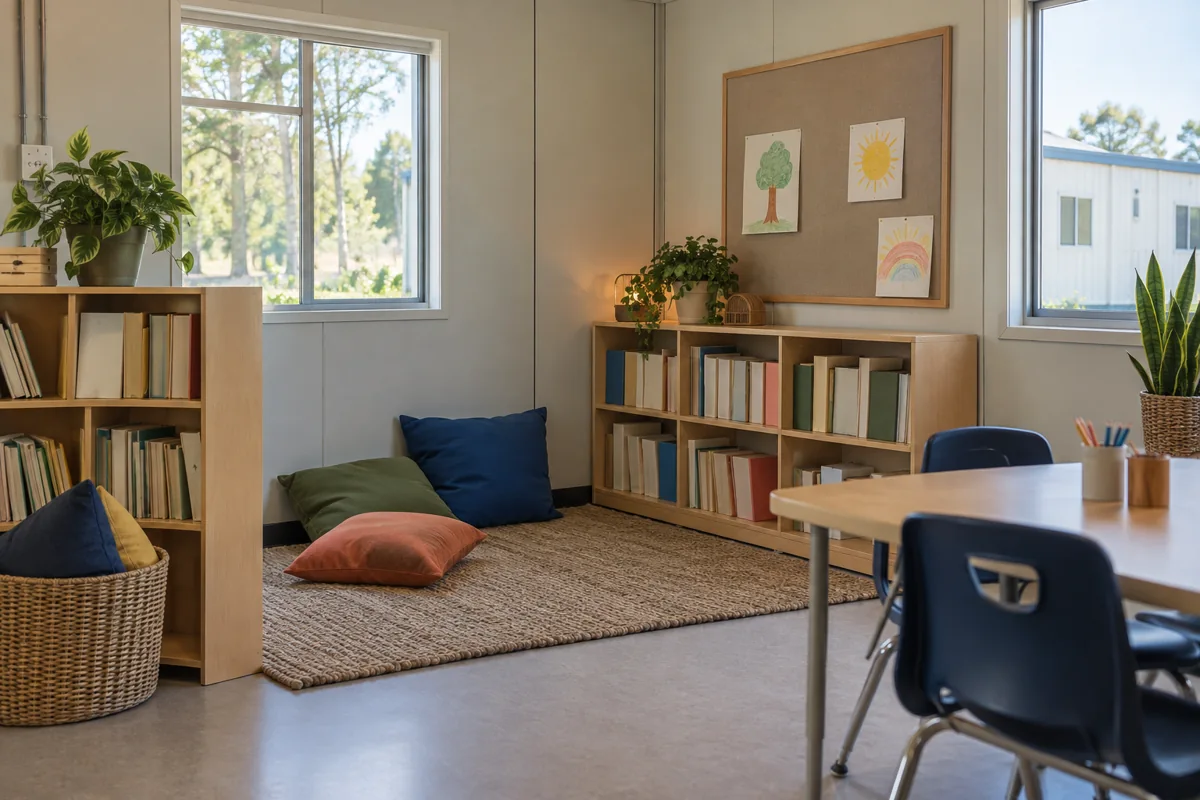
Use modular classroom layout options to compare how staff and students use the room. Show the important resources consistently across proposals. One plan should not appear more spacious simply because it leaves out necessary equipment.
If the provider suggests a different configuration, ask what it changes in the lesson. It may be a useful alternative, but the school should understand the tradeoff. A lower figure for a different use is not automatically a saving on the original requirement.
Keep relevant technical and building requirements with the appropriate assessment. The school's furnished review communicates intended use; it does not establish every condition needed for the project.
Choose a price connected to the whole purchase
Where an offer leaves a task to the school, name the person arranging it. An exclusion may be manageable, but it should not disappear simply because it sits outside the building contract.
Your California school can compare modular classroom buildings with supplied features clearly identified. Ask which items shown in an illustration are included, optional or school-provided. Keep the selected version with the figure being considered.
The building cost guide can frame questions about supporting work and separate purchases. Obtain actual information where available, and identify what remains unresolved instead of assuming an unexplained item is cost-free.
Give the decision-makers one current description of the room. If furnishings or selected features change, check the affected proposal before proceeding. That keeps the purchase straightforward: a classroom the school can use, with an understood scope and a price worth comparing—not a collection of disconnected promises.