
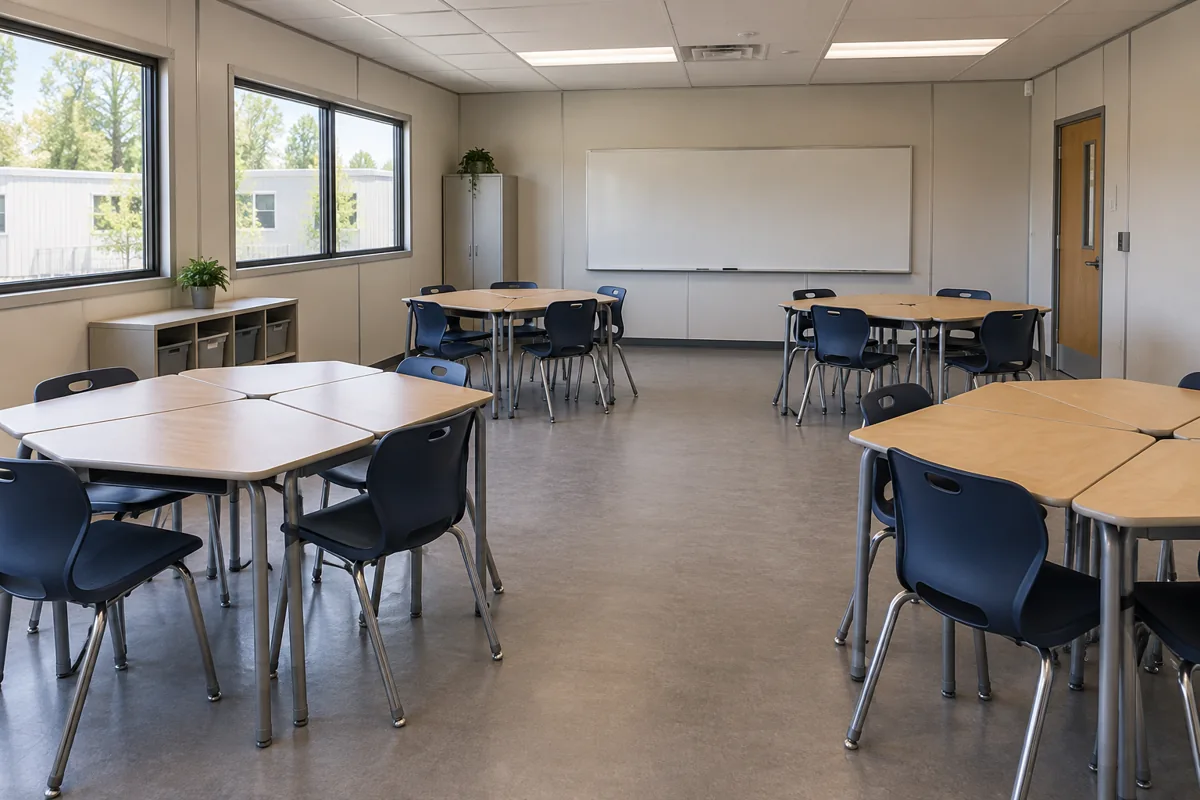
Find classroom space that works with the resources your staff actually use. Request modular classroom prices for Escondido and compare the furnished room, not only its dimensions. Teaching surfaces, storage and student furniture should make sense together before the school chooses an offer.
For the wider project picture, explore California modular buildings alongside your classroom space plans.
Show the lesson on the plan
Identify the main teaching position and significant resources. Provide relevant dimensions for school-owned items so a sample layout does not stand in for the actual setup. A room can look quite different once a large cabinet or teaching unit is represented accurately.
Use classroom design options to discuss the ordinary routine with staff. Ask where students work and which materials remain available. If the room changes between activities, identify what moves and where it goes.
For example, a resource table used during lessons cannot be ignored merely because it complicates the seating arrangement. Keep it in the comparison and ask about alternatives. Omitting the item does not solve the school's need.
Check how supplied features affect the room
A fitting included in the offer may be useful, but its position matters. Ask whether it competes with an area planned for another resource or duplicates suitable school furniture. Judge the feature in this classroom rather than assume inclusion always equals value.
If a change is proposed, review the arrangement again as a whole. Moving one item may affect another part of the room. Relevant technical and installation questions need appropriate assessment rather than assumptions based on a simple drawing change.
Keep important requirements distinguishable from preferences. Staff can explain the intended use, while the appropriate professionals assess the project. The school's practical review should support that process, not substitute for it.
Compare the chosen configuration at a clear price
When the school chooses an optional fitting, record the practical reason for it. That helps purchasing staff retain the useful feature if later discussions change the specification or introduce another alternative.
Your California school can evaluate modular classroom offers with selected features and school resources identified. If an option requires new furnishings, make that visible alongside the building figure.
The building cost guide helps organize wider questions about supporting work and separate purchases. Ask what the proposal includes and what remains for the school to arrange. Keep unconfirmed costs visible while the details are resolved.
Before separate equipment is ordered, check it against the current plan. An earlier conversation may have used another item or position. Keeping that information together helps avoid a mismatch.
Choose the room whose everyday use the team can explain. A useful furnished arrangement turns classroom prices into a practical choice, with the scope and resources understood—not a promising building outline that leaves the real lesson to be fitted in later.