
Color education needs more than a wall of attractive samples. Students must compare context, light, material, adjacent colors, reproduction, contrast, and audience. A Brea modular classroom can support controlled viewing, palette studies, mock applications, accessibility checks, and critique without promising identical appearance across every device or material.
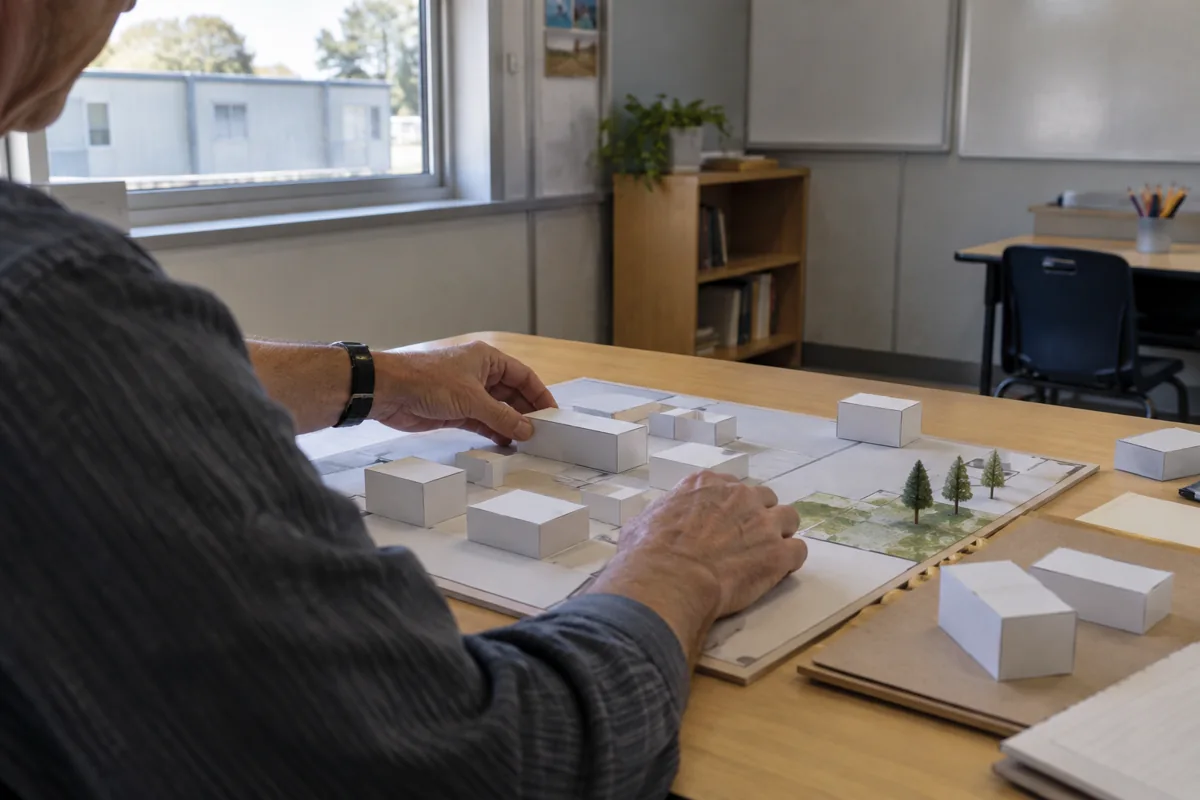
For the wider project picture, explore California modular buildings alongside your classroom space plans.
Record the viewing condition with the sample
Sample labels should identify source, material, finish, batch or version when relevant, and the light used for review. A neutral wall and controllable demonstration area help students see how surroundings influence perception. Daylight comparisons need a stated time and condition.
Use the modular classroom layout resource to test sample tables, instructor demonstrations, individual studies, group critique, digital review, and accessible viewing positions.
Build relationships instead of isolated swatches
Large tables let teams compare dominant, supporting, accent, background, and information colors in proportion. Mock applications reveal hierarchy that tiny chips conceal. Sample storage should protect identifiers and keep approved, experimental, faded, and damaged pieces separate.
Digital tools may support comparison, but screens require known settings and should not be treated as proof of print, paint, textile, or product appearance.
Include contrast and access in the critique
Students should review text, icons, state changes, patterns, and information that cannot depend on color alone. Tool results require context and human judgment. Private feedback and accommodations do not belong on the public palette wall.
California and local requirements for occupancy, accessibility, electrical work, lighting, fire and life safety, and education facilities require project-specific confirmation by qualified professionals and authorities. No color accuracy, accessibility compliance, product match, code approval, or academic outcome is implied.
Price the viewing environment and library
Lighting controls, neutral finishes, sample cabinets, displays, durable tables, selected printing tools, commissioning, and site work can shift installed scope. The installed classroom cost guide helps buyers compare them.
Brea buyers may request current classroom prices with enrollment, project formats, and known equipment. Providers can help refine open questions. Ask them to demonstrate controlled review, mockup critique, lighting reset, damaged-sample isolation, and a complete library return.
A useful readiness check places the same palette under two approved viewing conditions and on two materials. Students should document the change, revise without erasing the original decision, and explain limits. The final reset returns every sample and light setting to a named baseline.
Photographing the comparison is useful only when the camera, light, file, and display limits remain attached to the image record.