
A useful robotics room lets a project move from loose components to a controlled demonstration without turning every table into a storage shelf. Bell Gardens buyers can compare modular classroom options around the actual sequence: issue parts, assemble, program, test, diagnose, present, and reset. That sequence clarifies which features earn their space.
For the wider project picture, explore California modular buildings alongside your classroom space plans.
Separate building from motion testing
Benches need good task lighting, protected power, comfortable reach, and room for laptops beside small assemblies. A distinct test lane keeps moving devices away from tools, stools, open kits, and the next team’s project. Sightlines should let one instructor oversee both zones.
The modular classroom layout resource can help test bench depth, aisle width, instruction positions, storage, and a demonstration route before equipment locations become fixed.
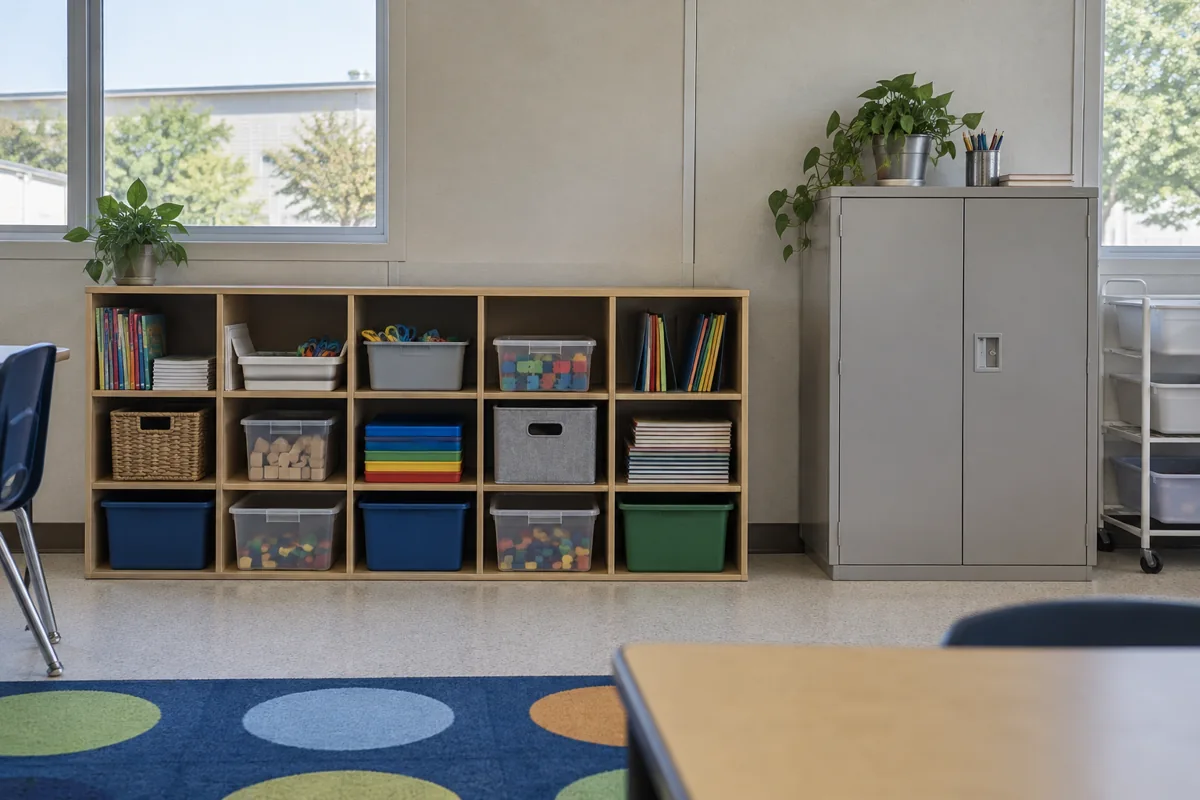
Give every component a return address
Motors, sensors, fasteners, batteries, controllers, and cables become instruction time lost when they are mixed together. Numbered bins, kit shelves, incomplete-project bays, and a quarantine spot for damaged parts make responsibility visible. Charging equipment needs a deliberately selected location and operating procedure, not an improvised extension-cord corner.
Tool access should match age, curriculum, supervision, and owner policy. A robotics classroom is not automatically suitable for fabrication, soldering, battery repair, or any other activity that adds ventilation, fire, electrical, or guarding requirements.
Make debugging evidence part of the room
Students learn more when they can connect a behavior to a code change, wiring decision, or mechanical adjustment. Provide a place for test notes, version labels, wiring sketches, and instructor checkpoints without exposing student records. A small fault-review position can keep a stalled project from blocking the main testing lane.
California and local requirements for occupancy, accessibility, electrical work, fire and life safety, equipment use, ventilation where applicable, and education facilities require project-specific confirmation by qualified professionals and authorities. No performance, safety certification, code approval, competition result, or learning outcome is implied.
Price the complete robotics workflow
Tables, floor protection, power distribution, data, selected ventilation, storage, charging provisions, displays, commissioning, and site work may appear in different proposal sections. The installed classroom cost guide helps buyers compare scope rather than a building shell alone.
You can request current classroom prices with the class size, typical robot scale, and known equipment. More detail can follow. Ask each provider to show where projects wait safely, how a disabled device leaves the test lane, and how all kits are counted at closeout.
A practical acceptance exercise starts with identical labeled kits and ends with cleared benches, returned tools, charging items placed under the approved procedure, and a fault log retained for the next lesson. If that reset cannot happen within the planned transition, the room needs another storage decision—not a faster cleanup rule.