
A temporary office doesn't necessarily become empty when one project team finishes. Files, furniture and equipment can remain long after the people have moved on. For Tuscaloosa buyers planning to use modular space across successive jobs, the best value may come from a building that can be handed over cleanly—not simply the shortest initial rental. Get temporary office prices with the likely sequence of users in view.
For the wider project picture, explore Alabama modular buildings alongside your office space plans.
You don't have to predict every future project. You do need to distinguish the equipment that belongs to the office from the items each team brings. That makes both the first setup and the next handover easier to price.
Keep the reusable part straightforward
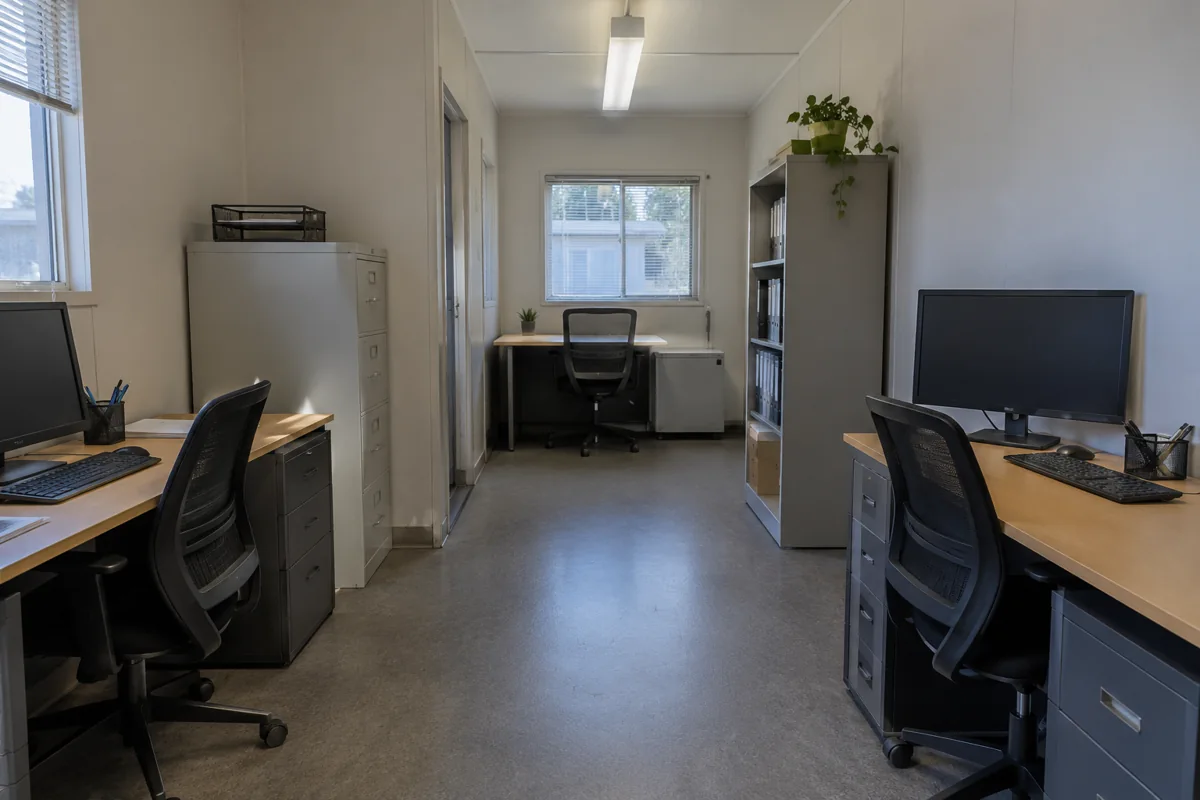
Workstations, a shared discussion area and usable storage may carry across several teams. A highly specialized arrangement may not. Review modular office layouts for the work you reasonably expect, then identify anything that can be handled through furniture rather than a fixed room decision. Ask providers which proposed changes are practical and what they cost; don't assume every partition can be moved later.
Budget for the gap as well as the occupation
An office may still be on hire while one team packs up and another prepares to use it. Discuss those periods when reviewing portable building rentals. Ask how the term, extension arrangements and end-of-use responsibilities are defined in the offer. A cheap initial period can be less useful than a clear arrangement that covers the actual duration you need.
Check what happens to cleaning, minor damage, keys and any equipment supplied with the building. These are not reasons to overcomplicate a temporary office; they are ordinary handover questions that become harder when no one has kept a record. Keep the agreed inventory and scope accessible to the people responsible for each changeover.
Make the next arrival a working handover
For the Alabama location, coordinate the selected site, access and services with the parties responsible before committing to occupation dates. If the building will move between projects, request separate information about that possibility rather than treating relocation as an included service. Work needed at a new site can be different from the first installation.
The building cost guide can help separate the office supply from those additional responsibilities. Comparing provider offers could save up to 30%, provided the offers address the same intended use and scope. Keep any uncertain future move outside the initial comparison unless a provider has actually priced it.
A short handover record is worth including in the operating plan: what stays, what leaves, what needs attention and who receives the keys. The next team should not have to discover that a desk is promised elsewhere or that the only storage cabinet belongs to the previous occupant. Buying a sensible layout and maintaining that continuity are two parts of the same value decision.