
Get more useful classroom space for your Alabama school without buying rooms that leave the real overcrowding problem untouched. ModTech helps you explore modular classroom prices for an expansion, a replacement building or a temporary move. Start with the classes you need to accommodate, not just a square-foot target. A well-chosen arrangement can protect your budget while giving teachers room to teach and students room to settle into their work.
For the wider project picture, explore Alabama modular buildings alongside your classroom space plans.
Count the lessons you cannot currently accommodate
A shortage of two classrooms can mean several different things. Perhaps two full classes need a home all day. Perhaps small-group instruction keeps borrowing space from another subject. Or a room works until materials, equipment and student belongings arrive. Write down when the pressure occurs and what is being displaced. That gives your team a better basis for choosing between ordinary teaching rooms, smaller support rooms and a combination of both.
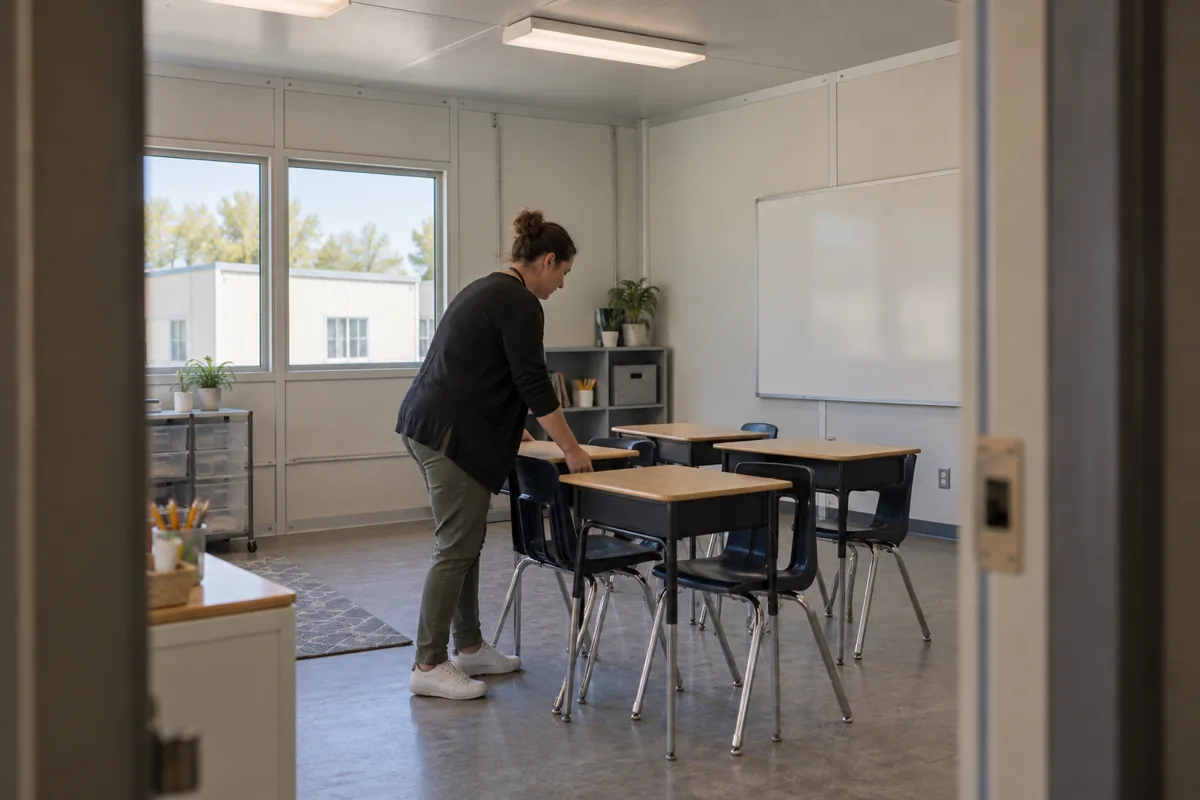
Bring the furniture into that discussion early. On paper, an empty room looks generous; desks, storage and a teaching wall soon tell a different story. Review classroom floor plans against an actual lesson arrangement, including the routes people use to reach their seats. A room that needs constant rearranging may not deliver the capacity you thought you were purchasing. Identify equipment you intend to keep so proposals reflect its space and service needs.
Keep the new rooms connected to the school day
Position matters as much as the room count. Consider how a class reaches restrooms, meals, specialist instruction and the main office. A distant location may look convenient for installation yet create repeated trips that need staff supervision. For an Alabama campus expansion, trace those journeys on the site plan before settling the building position. Ask the project team to address accessible routes and the site's approval requirements rather than assuming an existing path will be sufficient.
The surrounding school still has to function during the work. Separate student circulation from delivery and construction activity, and identify any existing space that must close temporarily. Your installation discussion should include how the school gets that space back. This is especially useful when modular school buildings are one part of a wider improvement program rather than a stand-alone purchase.
Spend on the capacity you will actually use
Once the teaching plan is clear, price the complete arrangement. A smaller building with the right support space may answer your need; alternatively, removing a support room might simply shift its cost back into the existing school. Keep these consequences visible when reviewing alternatives. Use the installed cost guide to organize the work outside the building package, then ask which items remain allowances or owner responsibilities.
Give each provider the same room requirements and property information. That keeps a lower price meaningful: you can see what it buys, what it leaves out and whether it restores the teaching capacity your school needs.