
A larger modular office can be good value when the extra space has a useful job. Cedar Hill businesses can compare building sizes without assuming that the biggest option within reach is the best purchase. Get modular office prices for suitable layouts and potential savings up to 30% through provider comparison.
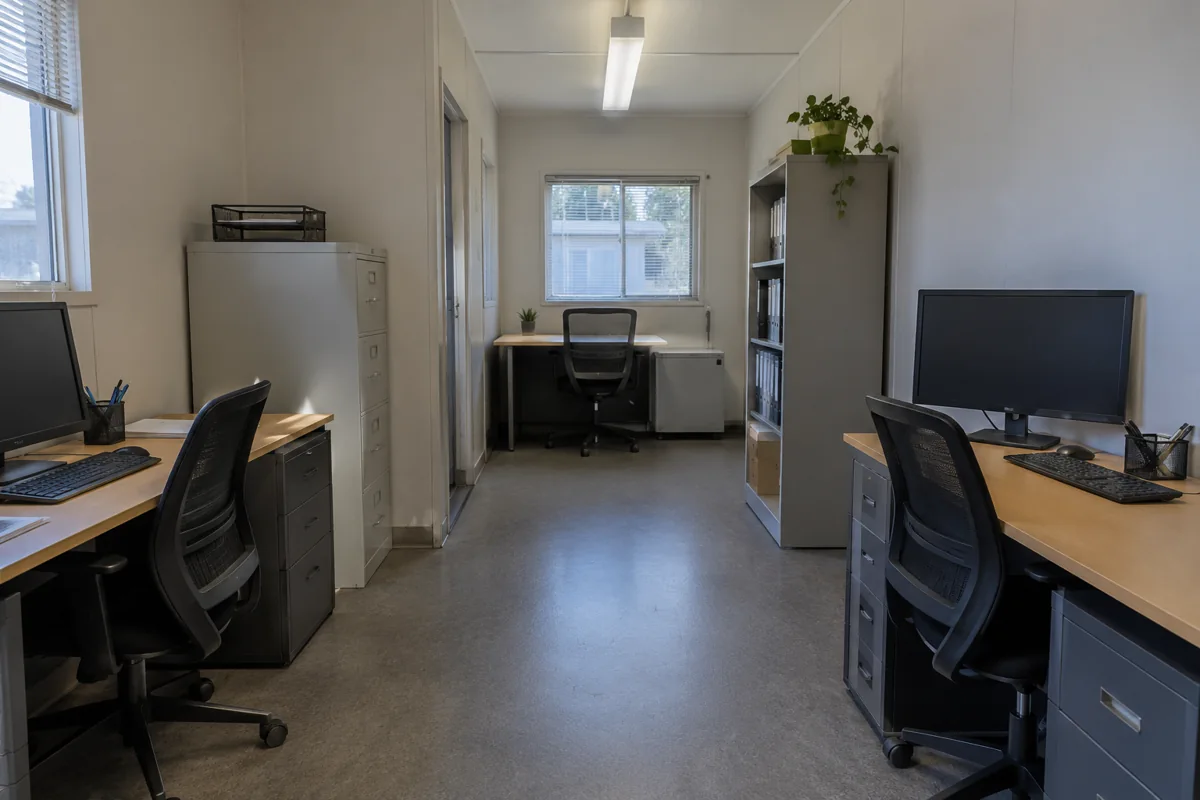
For the wider project picture, explore Texas modular buildings alongside your office space plans.
Name what the larger option adds
Put the two proposed layouts beside one another and identify the practical difference. Does the additional area create a needed room, improve a crowded working position or simply make an already adequate space larger? Those are different benefits and should not be treated as interchangeable.
For example, an appropriate room for regular private discussions may add real value if the smaller arrangement has no suitable place for them. Extra open area without a defined use deserves a different conversation. The example does not establish which size your business needs; it shows why the explanation should go beyond more square footage.
Review office floor plans with furniture represented. Sometimes the apparent improvement disappears once storage and shared resources are included. In another case, a modest change in arrangement may give the smaller building enough usable space.
Include the rest of the choice
Ask the provider what changes in the actual offer besides size. Features, condition or supplied work may differ as well. Compare suitable modular office buildings from their descriptions rather than attribute the entire price difference to added area.
The Texas property also needs appropriate assessment for the actual proposal. Do not assume that a larger alternative has the same installation implications as the first building considered. Have the relevant parties review the Cedar Hill project using the correct information.
Use the project cost guide to keep customer purchases and other work visible. Additional rooms may need furnishings to become useful, and those items should not disappear from the budget simply because the building offer looks competitive.
Choose the benefit, not the size label
Ask the regular users what the extra space would let them do that the smaller option would not. A specific answer makes the upgrade easier to evaluate. A vague feeling that more must be better is less useful, particularly when the business has other necessary project expenses.
If the smaller office genuinely supports the work, it may be the sensible choice. If it leaves an important activity unresolved, acknowledge that limitation instead of defending it only because it costs less.
The right size is the one whose working value you can explain. Buy the additional room when it solves a real problem, and keep the budget focused when it does not. That makes a price comparison about useful offices rather than competing quantities of empty space.