
Add teaching space with its place in the school day understood. Get modular classroom prices for Charleston and describe the class and resources the building needs to support. A useful classroom offer should connect to the campus around it rather than leave the school to work out that relationship after purchase.
For the wider project picture, explore South Carolina modular buildings alongside your classroom space plans.
Identify the resources used inside
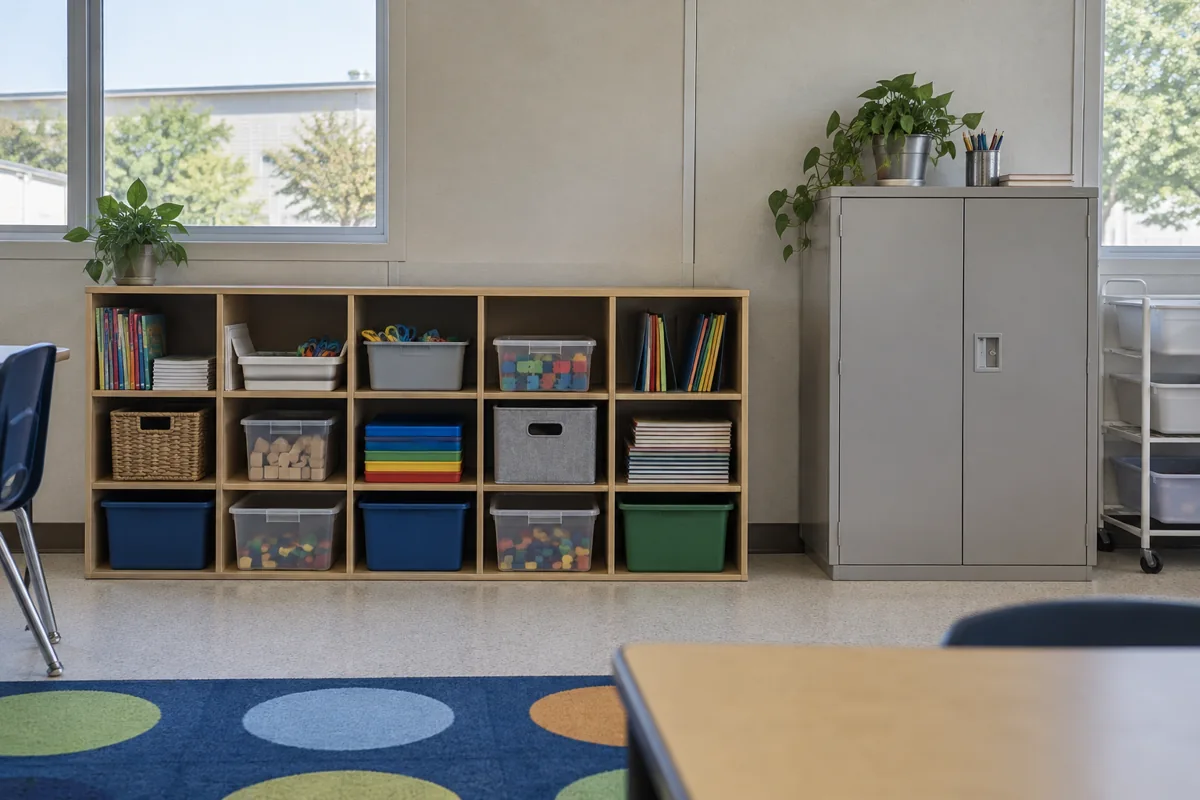
Confirm the significant furniture and materials the class needs. If items are already owned, establish that they are available for this room. A resource still serving another activity cannot automatically be counted in the new setup too.
Use classroom layout options with important items shown. Ask staff how the lesson works and what moves between activities. An empty plan may not represent the real space required once resources are in use.
For example, materials normally collected from another room might need storage inside the addition. Decide whether that shared arrangement remains practical and reflect the answer in the plan. Leaving it open can make the room appear easier to furnish than it is.
Check the support the class shares
Describe the facilities and school resources used elsewhere. Confirm their availability for the intended schedule. A convenient location is not a workable arrangement if another group relies on the same resource at that time.
Keep dependencies on future work visible. An essential supporting item that remains part of an unconfirmed later project should not be treated as already supplied for the classroom.
Relevant site, access and technical requirements need appropriate assessment. Give providers and the project team a clear account of ordinary use rather than assume an informal plan establishes suitability.
Test a normal change between lessons with the people who manage it. If materials travel with the teacher, where are they placed on arrival? If they stay in the room, who uses them next? Those ordinary questions help distinguish useful shared provision from an assumed convenience.
Compare the complete practical arrangement
Your South Carolina school can evaluate modular classroom buildings with supplied features and separate work identified. Ask which tasks the provider handles and what the school arranges. A task can be outside the offer and still be necessary.
The building cost guide helps frame wider budget questions. Obtain actual information where possible and keep unknown costs visible. An unexplained item should not become a saving simply because it has not yet been priced.
If an alternative brings a shared resource into the building, consider the operational effect beside the price difference. It may remove another school task or create a different furnishing requirement.
Choose the classroom whose support, scope and use the team can explain. With those relationships clear, the school can compare prices for a working addition rather than a building whose remaining responsibilities are hidden beyond its walls.