
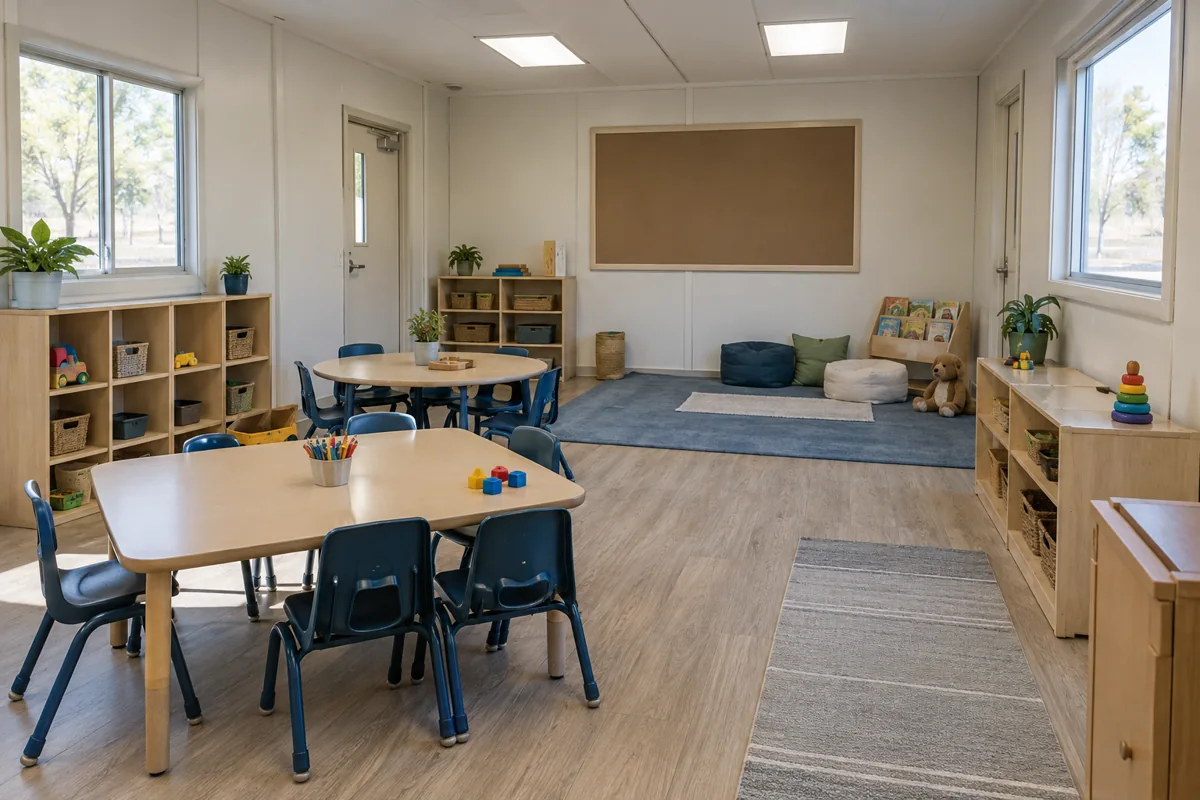
A flexible classroom can support different lessons, but flexibility has to be designed around teachers' daily routines. Before comparing modular classroom options, decide how many students use the room, which activities vary and how much time staff have to change the arrangement. That keeps the design focused on instruction instead of treating movable furniture as a solution by itself.
For the wider project picture, explore South Carolina modular buildings alongside your classroom space plans.
Choose flexibility the staff can manage
List the room's main uses and rank them. A class may need group tables most days and rows for occasional assessment, or it may switch between direct teaching and project work. Put furniture, storage and teaching equipment on separate sketches for those modes. Check whether students can move safely and whether the teacher can supervise each arrangement.
Decide which furniture truly needs to move. Tables on casters can save reset time in some programs, while fixed storage may keep supplies organized. Account for where extra chairs, carts and project materials go when they are not in use. Ask teachers to try the layout against a real lesson sequence rather than approving it from a rendering.
The classroom layout ideas can help structure this review. Keep the final room plan specific about class size, accessible routes and the equipment that must be ready at the start of each day.
Plan for campus climate and movement
Trace student routes to restrooms, arrival, lunch and shared outdoor areas. Consider supervision during class changes and how the room will be reached in heavy rain. Florence's warm, humid conditions make shade, covered entry and water management sensible site questions, but appropriate solutions depend on the actual parcel and local design review.
Ask facilities staff to check delivery access, foundation conditions, utilities, drainage and maintenance routes. Confirm who is responsible for walkways, campus system connections and permits. Local authorities and qualified professionals determine applicable safety, accessibility and occupancy rules; no general classroom page can establish local approval.
If the classroom is meant to support a temporary schedule or building project, identify how students will be reassigned when that period ends. Include the move-out and site restoration plan early.
Compare a complete price and term
Send providers the same class capacity, room modes, furniture, finishes, accessibility and utility requirements. Ask whether delivery, installation, foundations, walkways and campus connections are included. For a temporary use, compare rental term, move costs and return conditions with purchase and future reuse.
The project cost guide helps organize open items. Then request Florence modular classroom prices with the layout and site details attached. This gives the school a fair comparison and leaves approvals to qualified local reviewers.