
Columbus, Ohio
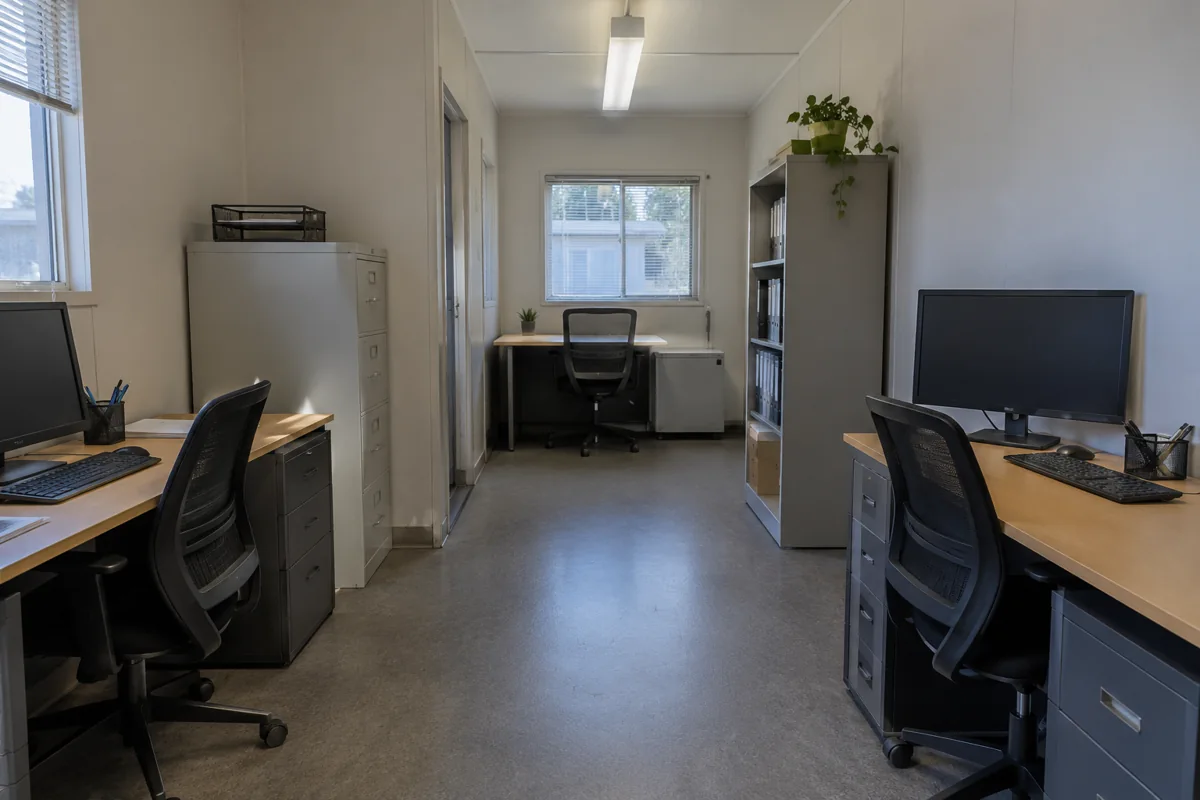
For the wider project picture, explore Ohio modular buildings alongside your office space plans.
A policy can read clearly at a desk and still create confusion when people try to use it. Development teams need quiet writing space, informed stakeholder review and a place to test realistic situations. A Columbus modular office should support those activities without turning every comment into an immediate rewrite.
State the decision the policy governs
Put the purpose, audience and authority for the policy at the top of the working view. Separate mandatory requirements from explanatory guidance and examples. The organization must verify its legal, regulatory and governance obligations with qualified people.
Give writers focused desks with access to approved source material. Keep a current working draft distinct from exploratory language so reviewers know which version they are discussing.
Use stakeholder review to find consequences
Provide a compact review room where operational, technical and affected teams can examine one section at a time. Ask what action the wording requires, what information a person would need and where the rule creates an unintended conflict.
Capture decisions and assigned research separately from general comments. The room should help the team resolve a policy question, not reward the meeting that produces the most annotations.
Test scenarios before approval
Walk several realistic situations through the draft, including an ordinary case, an edge case and a case where two responsibilities meet. Use a shared display so everyone follows the same language and can see where interpretation diverges.
Ask two people in different roles to explain the required next step in their own words. A disagreement may reveal a definition, handoff or exception that the polished draft still leaves unclear.
Record whether the problem belongs in policy language, a procedure or supporting guidance. Keeping those layers distinct can make the rule shorter while giving employees the practical detail they need.
Place the scenario table away from the writing desks. Compare room relationships, display sightlines and protected reference storage with modular office layout guidance.
Request prices from the review method
Describe the number of simultaneous writers, the normal stakeholder group and the periods reserved for scenario testing. Include display, remote-participation and protected reference needs rather than treating the room as a generic conference office.
Ask how the workspace will support revisions after initial approval. Policies evolve, so the durable value lies in a repeatable review setting rather than a one-time drafting campaign.
Submit the Columbus address, writer count, stakeholder group, private-room needs, displays and expected duration with a modular office price request. Evaluate freight, installation, supports, services and access through the complete cost guide. The resulting office should help improve the rule before employees interpret it in practice.