
A new office is worth more when it fixes the things that make the current one frustrating. For a Kettering business, that could mean useful storage, a private conversation space or simply a less awkward arrangement of desks. Get modular office prices for the improvement you need, and compare provider offers for potential savings of up to 30%.
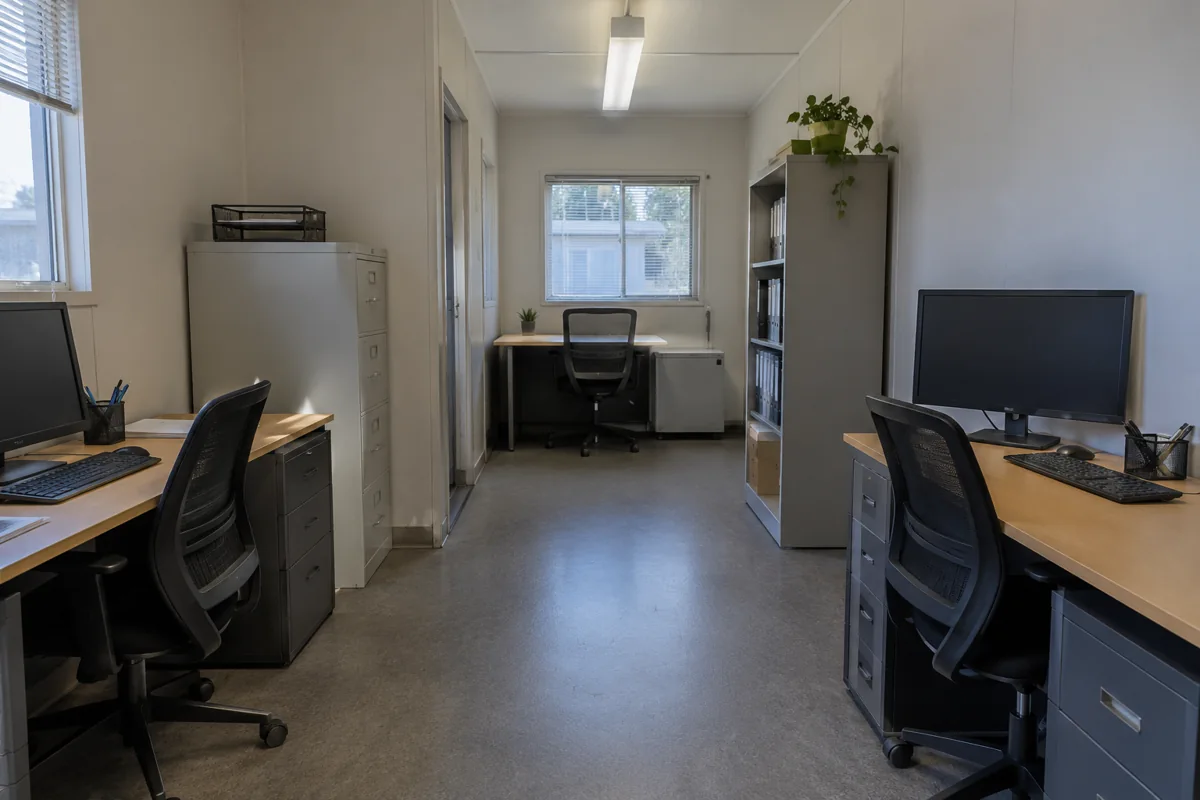
For the wider project picture, explore Ohio modular buildings alongside your office space plans.
Keep what already works
Before replacing your accommodation, identify its useful features as well as its shortcomings. Staff may have easy access to shared equipment or enough room for a particular task even though other parts are cramped. Carry those strengths into the new brief rather than assuming a different building will preserve them automatically.
Ask people to describe specific difficulties. A shortage of secure storage is a clearer requirement than “we need a bigger office.” An interrupted meeting points to a different solution from too little desk space. Those observations help you evaluate modular office options without making size the only measure.
Test the improvement on a drawing
Use office floor plan choices to show the furniture and equipment you expect to bring. Mark frequently used cabinets and shared resources. Check that resolving one problem doesn't create another, such as placing storage where chairs need to move.
If keeping existing furniture would force an awkward or larger layout, consider its effect on the whole purchase. Reusing items can make sense, but their dimensions shouldn't quietly determine the building without a cost comparison. Ask for an alternative arrangement when the fit is questionable.
Budget for the office in place
The Kettering installation address needs its own assessment. Establish who is responsible for reviewing the location, arranging services and dealing with necessary approvals. Don't assume the provisions serving current accommodation will transfer unchanged to its replacement.
The building cost information can help organize a discussion of the supplied office and related work. Separate confirmed items from provisional amounts and identify any tasks you must arrange. If removing or retaining an existing building affects the project, include that relationship in the brief.
Compare the useful outcome
For a defined period of use, ask about rental office arrangements as well as purchase. Review the proposal's start and end costs and terms for an extension instead of judging it by a recurring charge alone.
When the offers arrive, go back to the problems you intended to fix. Can staff store what they need, hold the necessary conversations and use the equipment without constant rearrangement? Select the building that answers those questions at an understood project cost, rather than paying for change that leaves the old frustrations intact.