
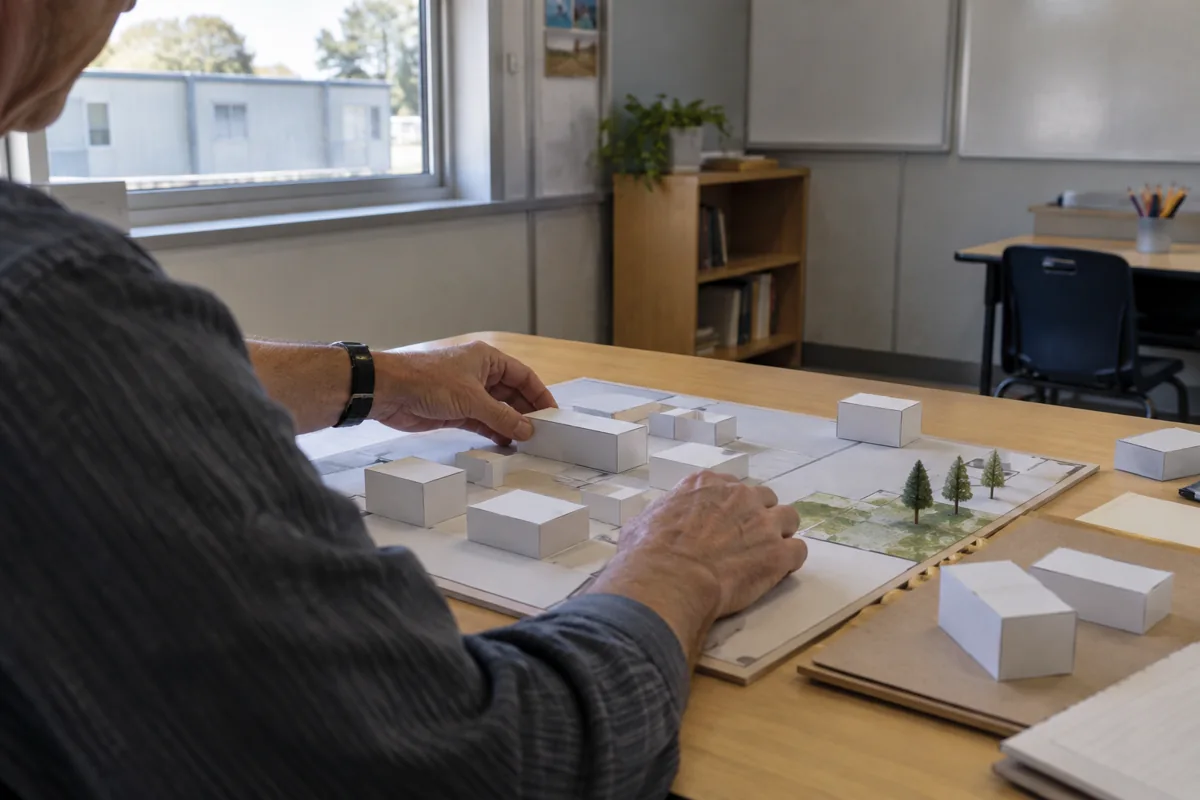
Packaging design connects protection, material use, communication, opening, storage, handling, and disposal. A Findlay modular classroom can help students move from product constraints to dielines, prototypes, label review, handling scenarios, and revision. Classroom mockups should remain clearly instructional and should not be presented as tested or approved commercial packaging.
For the wider project picture, explore Ohio modular buildings alongside your classroom space plans.
Give the product a defined journey
Teams need space to map size, fragility, orientation, user, storage, opening, reuse or disposal, and fictional transport conditions. A requirements board keeps those decisions visible beside sketches. Material samples should carry identity, thickness, source, and status rather than being treated as interchangeable craft supplies.
The modular classroom layout resource can test drawing, prototype assembly, label review, handling demonstrations, critique, and accessible circulation around projects.
Keep mockup tools controlled and proportionate
Cutting mats, rulers, folding aids, approved adhesives, and low-risk forming tools need checkout and return locations. Scrap sorting belongs near the work rather than across a busy aisle. Powered cutting, heat, chemicals, load testing, food contact, or other specialized activity requires separate qualified review and controls.
Incomplete prototypes need shelves identified by team and version. A crushed or altered sample should move to a review area so it cannot reappear as a ready presentation model.
Review the label as part of the object
Students should inspect hierarchy, legibility, instructions, accessibility, claims, required information for the fictional brief, and the effect of seams or folds. A critique should distinguish communication preference from any regulatory or legal conclusion. Private customer or student information does not belong on practice labels.
Ohio and local requirements for occupancy, accessibility, tool use, material storage, electrical work, fire and life safety, and education facilities require project-specific confirmation by qualified professionals and authorities. No package performance, shipping result, regulatory compliance, code approval, or academic outcome is implied.
Price the prototype cycle and storage
Durable tables, project shelves, sample cabinets, displays, selected tools, cleaning provisions, commissioning, and site work may be divided differently across proposals. The installed classroom cost guide provides a shared scope checklist.
Findlay buyers can request current classroom prices with class size, prototype scale, and known tools. Materials and workflows can be refined later. Ask providers to show sample issue, dieline work, assembly, label critique, damaged-model isolation, scrap sorting, and complete bench reset.
A practical final exercise places the prototype in a normal storage position, carries it along the planned classroom route, opens it, and returns every material. The objective is not a certified transit test. It is to reveal whether the room supports observation, revision, and responsible cleanup without damaging another team’s work.