
Adding a classroom can do more than accommodate another class. It may let your school return a borrowed room to the purpose it was meant to serve. Request modular classroom prices for Rochester and describe both sides of the project: the teaching space you need and the school resource you want back.
For the wider project picture, explore New York modular buildings alongside your classroom space plans.
Identify what the borrowed room stopped providing
Perhaps an ordinary class has taken over a resource room or a space intended for group activities. Start with what now happens there and what has been displaced. This gives the school a useful measure of the project beyond simply adding another room to a floor plan.
Be clear about the intended return. If the existing space will resume its original use, identify any furniture or setup it needs. If its role has changed, explain the current plan. A new classroom alone does not automatically restore a service that no longer has the resources or arrangements to operate.
Keep the capacity calculation honest. Moving a class out of one room into another does not necessarily create an additional class group. The benefit may be recovering valuable support space, and that can be a sound reason for the purchase without exaggerating the number of new teaching places.
Give the moving class a complete arrangement
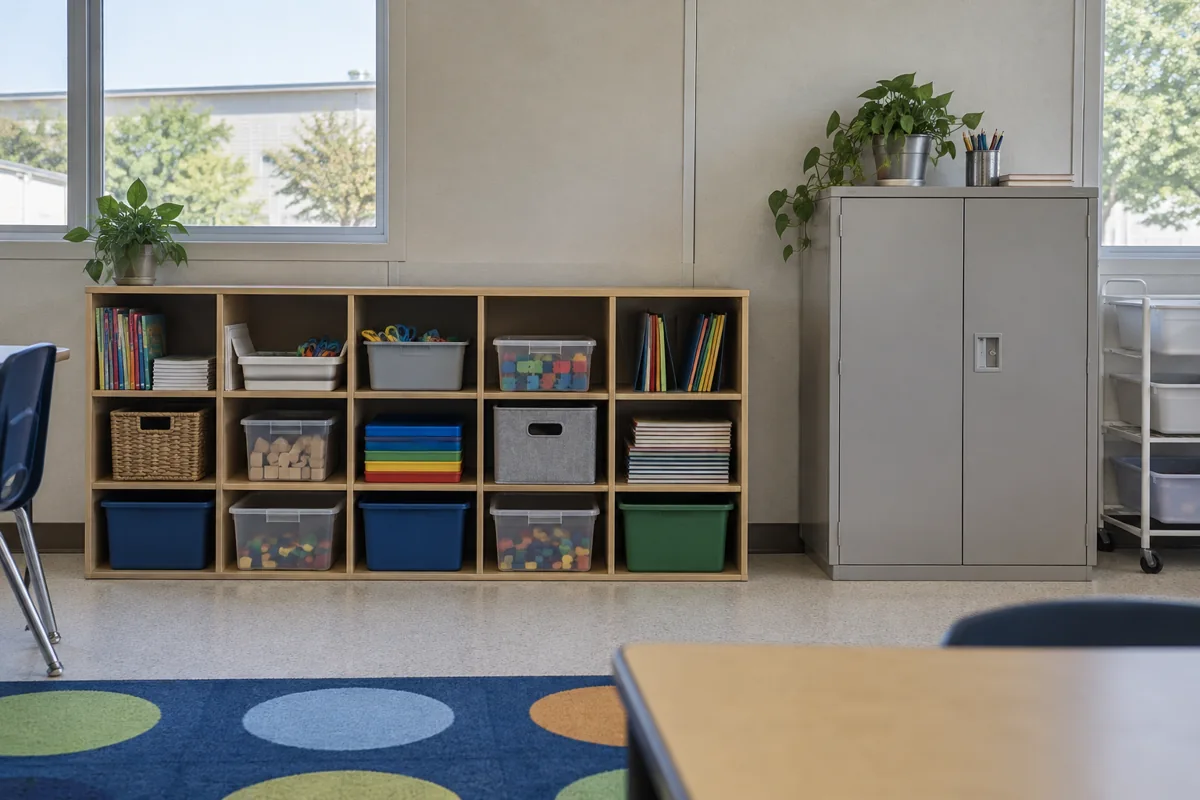
Develop the new classroom layout around its actual instruction. Check which furnishings belong to the class and which belong to the borrowed room. Resources cannot quietly be counted in both locations after the move.
A useful example is a storage cabinet currently shared by the class and the room's former activity. Decide where it will go and how the other use will be served. That practical decision may affect the new classroom offer or a separate school purchase, so it belongs in the budget conversation.
Review the furnished room with teaching staff. They may have adapted their lessons around the borrowed space's limitations; ask what the new room genuinely needs rather than carrying every workaround into its design. Relevant building requirements still need project-specific assessment.
Evaluate the two spaces together
Your New York school can compare modular classroom buildings while keeping the transition visible. Establish when resources move, who arranges them and what needs to happen before the recovered space can be used as intended. Avoid assuming both rooms become ready at the same moment.
Use the building cost guide to organize wider questions, including school purchases outside the building contract. An offer should be compared on its actual scope, not credited with work the school still needs to arrange separately.
The strongest price is one that supports a clear result. By describing the class move and the recovered school function together, you can judge the investment against the useful space it creates—not just the dimensions of the new building.