
A social-research classroom may support question design, source review, approved interviews, data organization, interpretation, discussion, and presentation. An East Lansing modular classroom should make those stages visible while protecting records and participants under institutional policy. The room itself cannot validate a study or guarantee a research outcome.
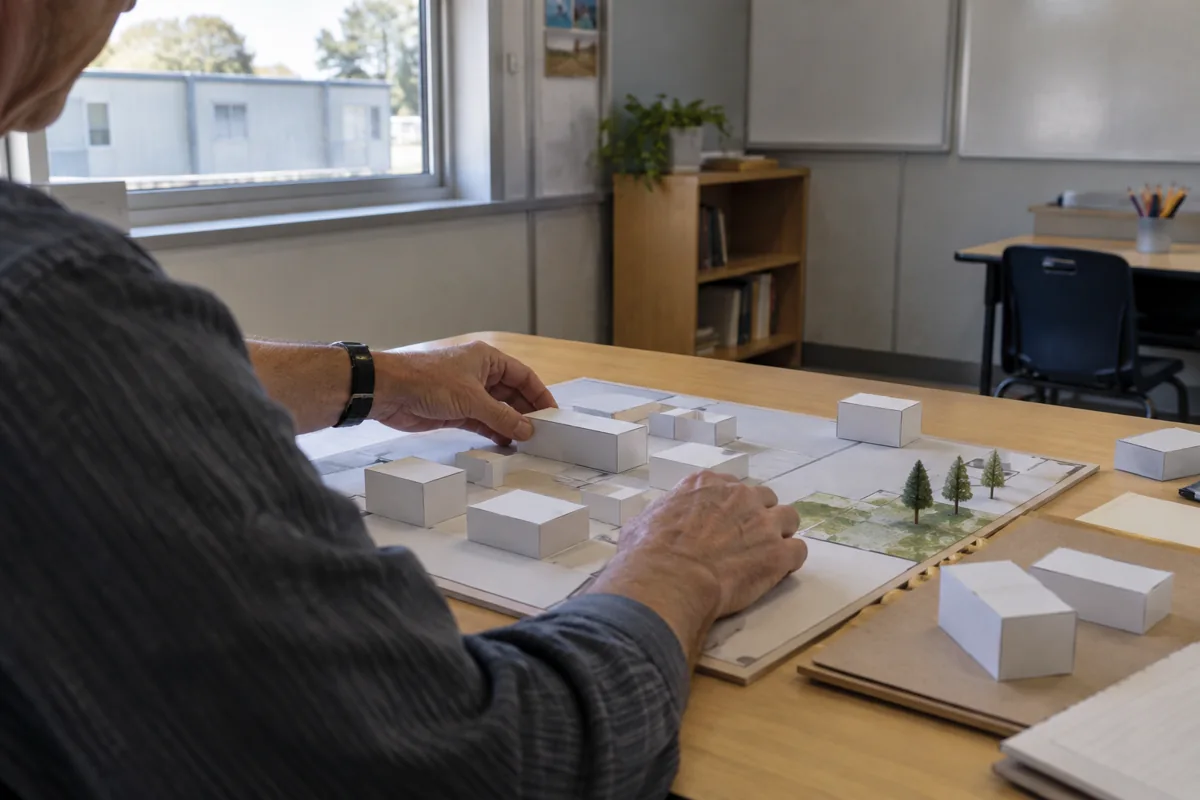
For the wider project picture, explore Michigan modular buildings alongside your classroom space plans.
Move from individual evidence to group interpretation
Place seminar tables, quiet reading positions, accessible seats, shared displays, writable surfaces, and instructor movement at occupied scale. Learners need to compare evidence without exposing another team’s private notes or covering the only discussion wall.
The classroom layout resource can help test furniture and circulation. The verified course should determine whether interviews, surveys, archival sources, or public datasets are used.
Protect interviews, records, and devices
A small interview room may help only when its visibility, acoustics, access, and consent procedures suit the project. Secure paper records, devices, recordings where approved, and staff materials separately from public reference resources. Provide a review point that does not face the doorway.
File handling, retention, privacy, and disposal remain owner responsibilities. A project identifier should connect physical notes, digital files, and presentation material through closeout.
Make presentation and critique part of the method
Students should be able to show a claim, supporting evidence, limits, and alternative interpretation on a shared display. Provide room for questions without dismantling research tables. Materials awaiting revision need a defined home rather than an open wall.
Source-review materials need a clean preparation point and a return sequence. Books, printed records, recordings where approved, and devices should not become anonymous items scattered among team tables.
Plan for a method that changes mid-project. A team may revise its question, abandon a source, or need another round of review; storage and displays should preserve the decision trail without publishing unfinished claims.
At closeout, distinguish reusable classroom resources from project records, confidential material, and work selected for presentation. Each category needs an owner-defined destination.
Michigan and local requirements for occupancy, accessibility, privacy, technology, fire and life safety, and education facilities require project-specific confirmation by qualified professionals and authorities. No research approval or result is implied.
Compare prices for the complete research cycle
Furniture, interview space, acoustic treatment where selected, technology, secure records, displays, commissioning, owner software, and site work may cross budgets. Use the complete modular cost guide.
East Lansing buyers can request current classroom prices with enrollment, teaching formats, and known technology. Research procedures can follow. Ask providers to show simultaneous source review, interview, discussion, and secure project closeout.