
Language learning moves among listening, speaking, reading and small-group practice. A Waltham modular classroom should let those activities happen without one conversation overwhelming the next or technology consuming the teaching space.
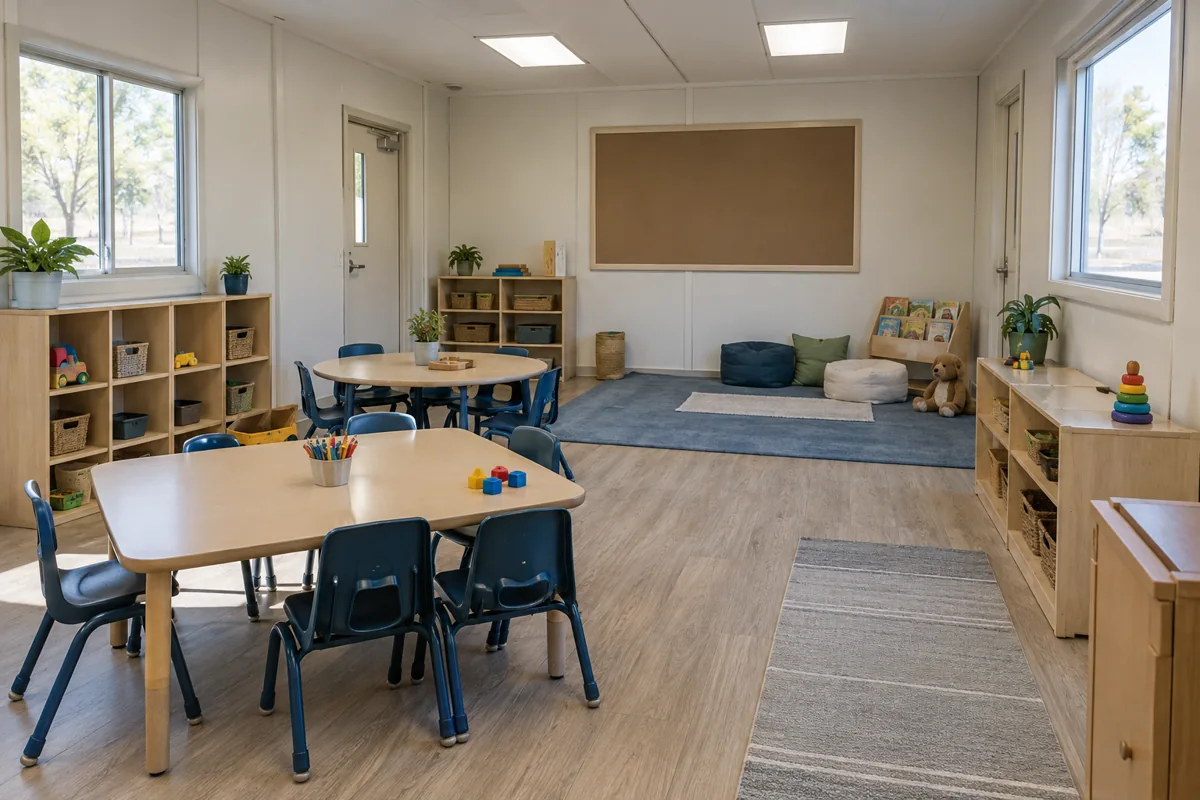
For the wider project picture, explore Massachusetts modular buildings alongside your classroom space plans.
Arrange the room around spoken practice
Place pairs, small groups and whole-class instruction on the plan at the same time. Students need to see the teacher and one another, while aisles remain open for feedback. Accessible seating should be integrated into every learning format.
Massachusetts requirements, conditions on the Waltham campus and the actual language program all need qualified review. Educators can use the classroom layout guide to compare open instruction with quieter practice areas.
Provide a short presentation zone and writable surfaces visible without glare. Personal belongings belong outside conversation circles. If the room supports several languages or grade levels, each group needs protected material storage.
Control sound and shared technology
Room finishes, partitions, doors and mechanical noise affect listening accuracy. Qualified designers should consider the entire acoustic environment. A headset cannot compensate for persistent background sound or poor speech clarity.
Store microphones, headsets and adapters in labeled charging positions, with a return bin for faults. The modular classroom guide provides wider context for education-space planning.
A small recording position may help students review speech, but it requires privacy and simple controls. Do not call it a studio unless the room is professionally designed for that use. Protect cables from aisles and secure student recordings under school policy.
Teachers should also test the room during a realistic lesson change. Headsets must return to known positions, worksheets need a distribution point, and one group may need to continue speaking while another prepares to listen. A dedicated troubleshooting surface keeps faulty equipment away from ready sets. If interpretation or remote participation is part of the program, identify who controls the connection, where that person sits and how private conversations are protected. These operating details affect cabinet capacity, outlet placement and staff movement.
Compare the learning room and equipment separately
Request inclusion for partitions, acoustic work, doors, lighting, power, data, climate systems, accessibility features and fitted storage. Headsets, computers, microphones, tables and curriculum stay owner-furnished unless specified.
Use the installed classroom cost guide to combine factory scope with freight, supports, utilities, campus preparation, entrances, placement and handoff. Network service beyond the room connection needs clear responsibility.
When Waltham educators can run instruction, conversation and listening practice without competing sound or missing equipment, they can compare modular classroom prices from a complete brief. The room succeeds when students spend more time using the language than managing the setup.