
Music rehearsal, visual art, and general instruction ask very different things of a room. Combining them under a broad “flex space” label can produce a building that is flexible on paper but frustrating in daily use. For a Weymouth Town project, the better approach is to identify which activities can share space, which must be separated, and which building features make those choices workable.
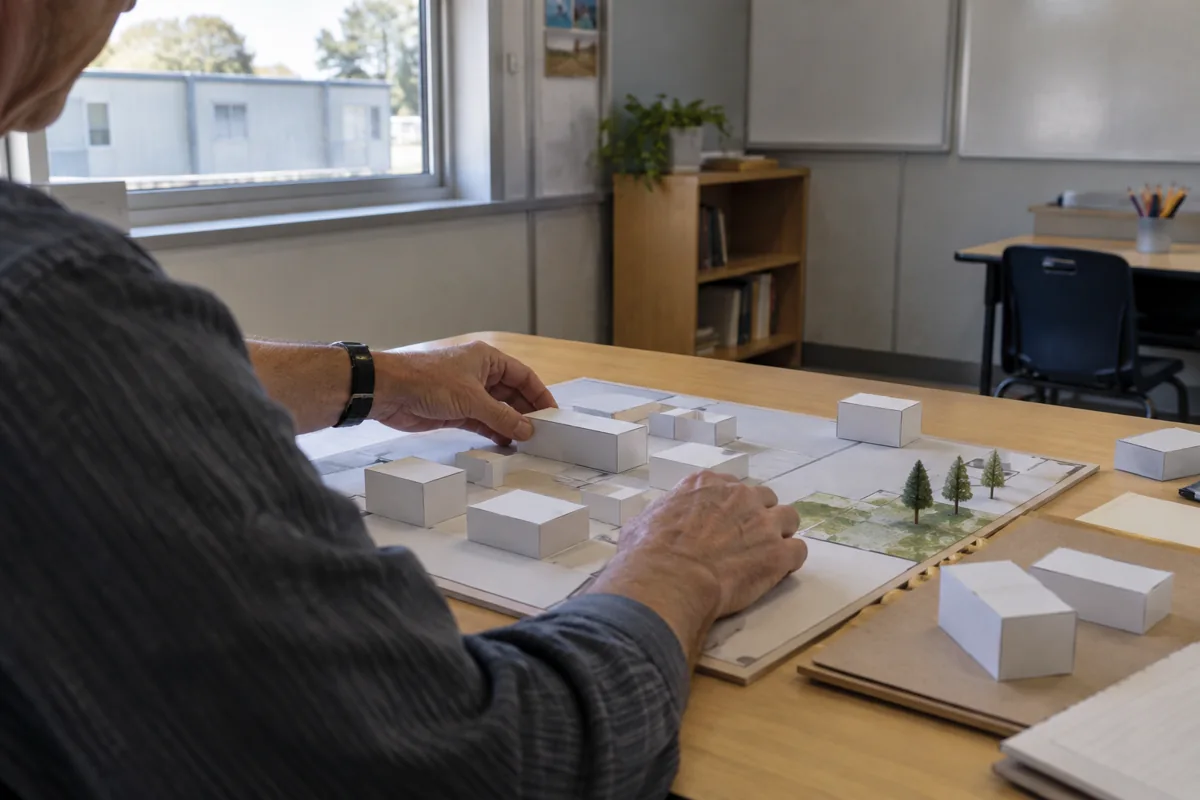
For the wider project picture, explore Massachusetts modular buildings alongside your classroom space plans.
Separate sound, water, and storage problems
A music room needs enough volume and acoustic control for the group it serves, plus instrument storage that does not constrict circulation. An art room may need sinks, durable finishes, drying space, material storage, and a cleanup route. Neither program benefits when its most important functions are reduced to movable furniture. Write a short activity profile for each room and identify the noise, mess, equipment, and preparation it creates.
Adjacency matters as much as room size. Loud practice beside testing or intervention can disrupt both activities, while an art delivery route through a carpeted academic corridor creates avoidable maintenance. Compare possible groupings with the modular classroom layout guide, then ask the design team to show how walls, doors, vestibules, and storage locations respond to the activity profiles.
Decide what “shared use” really means
A room can support several programs when changeover is realistic. Estimate the time required to move instruments, protect unfinished artwork, rearrange furniture, or clean surfaces before the next class. If every transition depends on an empty storage room and extra staff time, the plan may be shifting space savings into operating costs. Dedicated support space can make a shared room more useful than a larger open area with nowhere to reset.
Also consider evening performances, community programs, or staff events only if they are part of the actual brief. Those uses may change access control, restroom availability, parking coordination, and separation from the rest of the school. Qualified professionals and the responsible authorities must confirm the Massachusetts and local requirements for the selected site and use.
Ask prices to show the performance choices
Acoustic assemblies, specialty ventilation, casework, plumbing, resilient finishes, and equipment supports can disappear inside broad proposal descriptions. Use the modular building cost guide to list these features separately from foundations, freight, installation, utilities, technology, and site work. Require substitutions to state which performance requirement changes, not merely how much the number falls.
Weymouth Town buyers can compare current classroom prices with the program uses and space problems they already know. Providers can help discuss open questions about adjacency, storage, and changeovers as the scope develops. A useful proposal will make it possible to imagine Tuesday’s class schedule—not just admire an uncluttered floor plan.