
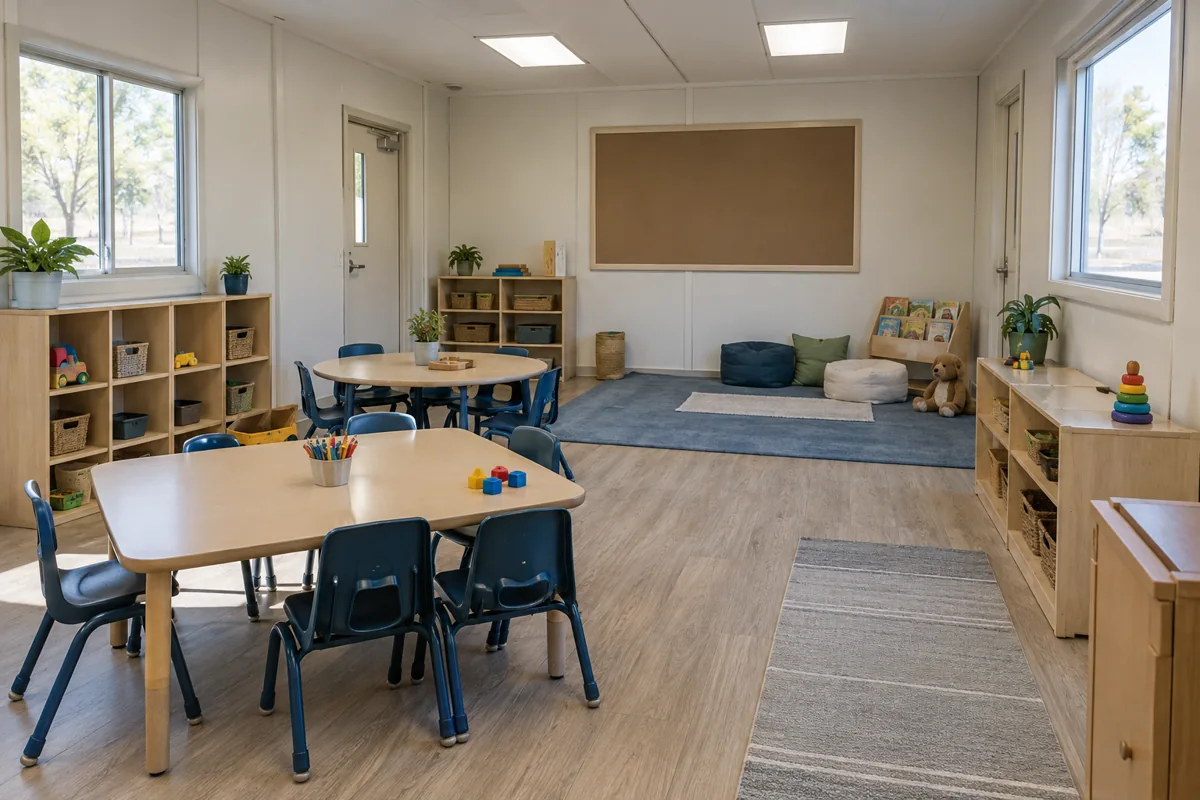
Give independent study a proper place without turning a straightforward classroom purchase into an overcomplicated fit-out. Get modular classroom prices for Boston around the way students work and seek help. A supervised study room may need a different arrangement from a teacher-led classroom, but that doesn't automatically mean enclosed booths, extensive partitions or equipment the school won't use.
For the wider project picture, explore Massachusetts modular buildings alongside your classroom space plans.
Decide how students get help
Picture a student reaching a point where guidance is needed. Does the supervising adult go to the student, or does the student approach a designated place? Can that happen without disrupting others? Describing this simple interaction gives the provider a more useful brief than asking for a quiet room with a certain number of desks.
Explain the school's supervision needs too, while leaving the relevant design and safeguarding assessments to the appropriate people. A drawing can show positions and routes, but furniture placed in neat rows doesn't prove that supervision works. Staff should review how the proposed arrangement supports their responsibilities before it is accepted.
Choose separation for a reason
Some learners may benefit from a defined work position, while others need a surface for spreading out materials. Identify those actual uses before selecting partitions or fixed furnishings. If the school wants acoustic or other performance, ask how it will be specified and assessed rather than assuming a screen or wall delivers it.
With classroom design options, consider whether an ordinary furnished room can meet the brief. Unnecessary fixed divisions can make later adjustment harder and may introduce other design considerations. The aim isn't the fewest features at any cost; it's the right features for the learning activity.
Account for the resources students bring
Books, devices and other materials need usable positions without occupying circulation space. Tell the provider which resources are supplied by your Massachusetts school and whether students normally bring their own. Relevant power or connection provisions should be agreed with the right technical advice, not left as an assumption about a modern building.
Price the selected modular learning space with included furnishings and provisions identified. Then let staff review a typical study period against that proposal. The worthwhile test is whether students can settle into work and get help when needed—not whether an illustration looks impressively specialized. That keeps the buying decision connected to education and the budget connected to something the school can use.