
Health-science theory may combine terminology, diagrams, teaching models, fictional cases, team explanation, and knowledge checks. A Lawrence modular classroom can support that work without being represented as a clinic, treatment area, or substitute for any required specialist laboratory. The verified program determines equipment and supervision.
For the wider project picture, explore Indiana modular buildings alongside your classroom space plans.
Keep observation close to explanation
Students may need to see a model or diagram, compare it with a text, and explain a relationship to their group. Use tables and a shared demonstration position that preserve sightlines without passing delicate resources across crowded rows. Accessible learners need equivalent viewing and participation.
The classroom planning guide can help test direct instruction, small-group review, demonstration, and assessment layouts before furniture is selected.
Give fictional cases an unmistakable identity
Practice records and scenarios should be clearly marked as instructional and contain no real patient information. Assign each case a controlled packet or digital folder so details do not migrate into another exercise. Instructor keys and assessed work require separate storage.
If students use owner devices or accounts, define access, display, printing, retention, and deletion rules. The room can support privacy practices, but it cannot certify that a course or record system meets a particular professional requirement.
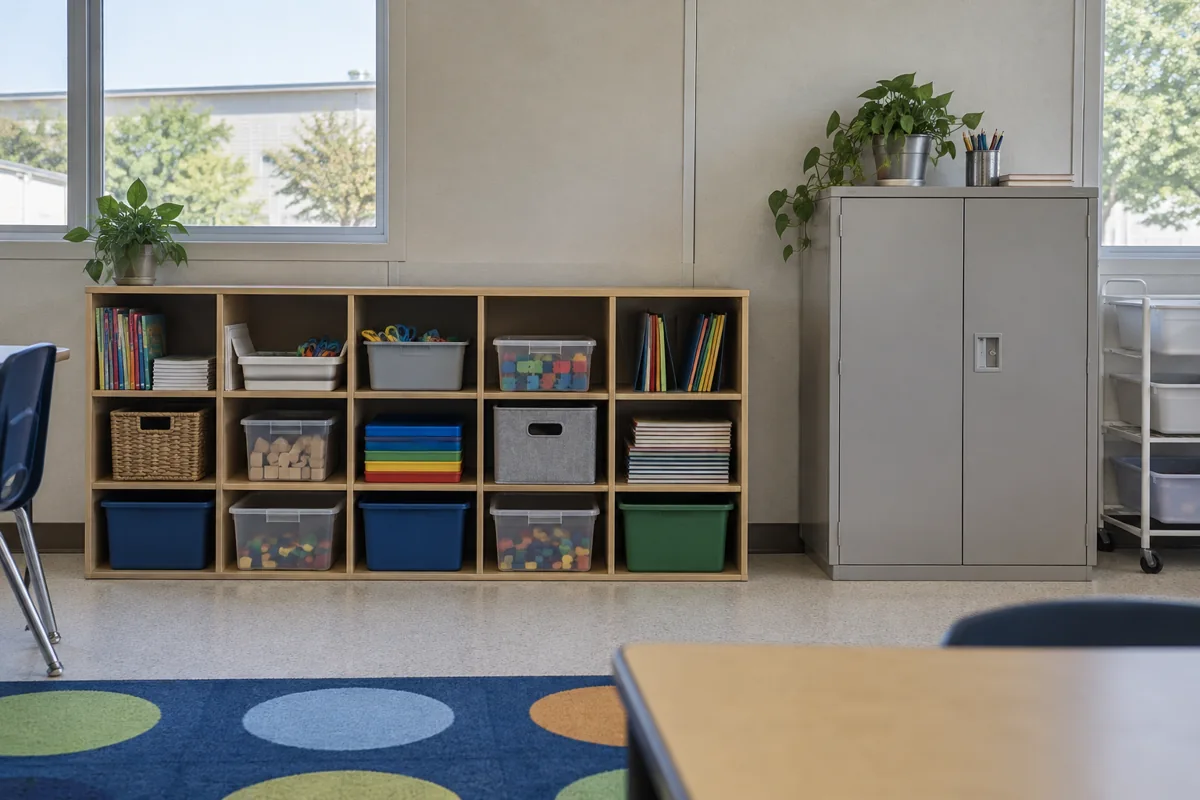
Return models in a ready condition
Teaching models, charts, reference sets, and measurement tools need labelled homes, condition checks, and a place for items awaiting cleaning or repair. Ready stock should never be mixed with questionable material. Any activity involving controlled substances, clinical procedures, or specialist utilities requires separately verified scope.
Indiana and local requirements for occupancy, accessibility, sanitation, storage, technology, fire and life safety, and education facilities require project-specific confirmation by qualified professionals and authorities. No clinical, credential, or learning outcome is implied.
Compare classroom prices apart from specialist systems
Furniture, displays, model storage, technology, durable surfaces, secure records, commissioning, owner resources, and site work may cross budgets. Use the complete classroom cost guide to keep categories visible.
Lawrence buyers can request current classroom prices with enrollment, theory activities, and known resources. Details can follow. Ask providers to identify ordinary teaching infrastructure separately from owner equipment or any specialist training system.
Before the next group enters, reconcile models, reference cards, fictional files, and assessment materials. A visible ready shelf and a separate review shelf make status clear. That small distinction reduces improvised storage and supports a reliable lesson start without making claims about clinical readiness.