
Meteorology instruction becomes more rigorous when every forecast can be traced to time-stamped observations, maps, assumptions, and later verification. An Urbana modular classroom can bring those elements together without resembling an official warning center. Educational displays and predictions should be labeled clearly and never replace authoritative weather information.
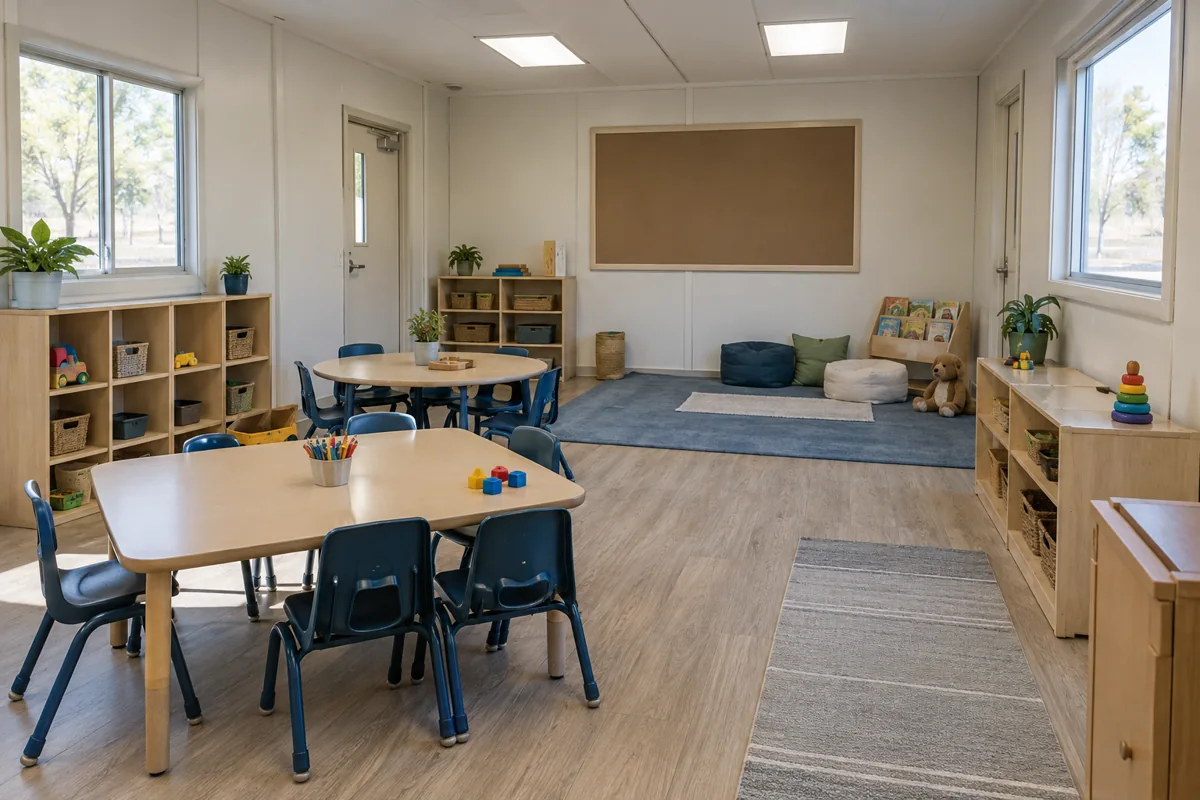
For the wider project picture, explore Illinois modular buildings alongside your classroom space plans.
Anchor every map to a valid time
Observation boards should show source, issue time, measurement units, and whether a value is observed, estimated, or modeled. Large displays need enough resolution and viewing distance for fronts, pressure, precipitation, and other selected layers. Teams also need table space to annotate a map without covering the legend.
The modular classroom layout resource can compare map briefings, team analysis, individual forecast writing, model discussions, verification review, and accessible routes.
Compare models without choosing by appearance
Students should record model name, run time, forecast period, selected variable, and known limitation before comparing outputs. A multi-panel review surface helps the class spot agreement and divergence. Older runs need an archive position so they cannot be mistaken for current classroom evidence.
Network interruptions require a planned offline dataset or printed case. That fallback keeps the lesson focused on reasoning rather than encouraging students to use an unverified image from an unknown source.
Make verification part of the forecast
A classroom forecast should state location, period, variables, confidence or uncertainty, and the evidence used. After the period passes, teams compare predictions with verified observations and classify the error. Assessment records remain protected even when the forecast products are shared for critique.
Illinois and local requirements for occupancy, accessibility, electrical and data work, displays, fire and life safety, and education facilities require project-specific confirmation by qualified professionals and authorities. No forecast accuracy, emergency authority, operational reliability, code approval, or academic outcome is implied.
Price the map-to-verification workflow
Displays, data connections, workstations, writable surfaces, selected power backup, furniture, commissioning, and site work may be divided differently across bids. The installed classroom cost guide helps align scope.
You can request current classroom prices with enrollment, teaching formats, and known data tools. More detail can follow after the first comparison. Ask providers to demonstrate observation intake, map briefing, model comparison, forecast issue, archive control, and later verification review.
Test the room with two similar maps from different valid times. Learners should be able to identify the current case, preserve the earlier run, explain uncertainty, and avoid presenting either display as an official advisory. The final reset should retain the learning record while removing anything that could mislead the next class about present conditions.