
Replace teaching space with a classroom that supports the next stage of use. Get modular classroom prices for Springfield and explain which features should carry forward and which parts of the old arrangement need reconsidering. A replacement purchase is a chance to choose deliberately, not simply reproduce every existing furniture position.
For the wider project picture, explore Illinois modular buildings alongside your classroom space plans.
Keep the teaching strengths in the brief
Ask staff what works well in the current room. Identify useful access to materials, teaching positions and resources that should remain available. Describe their purpose so another layout can be judged fairly rather than dismissed for looking different.
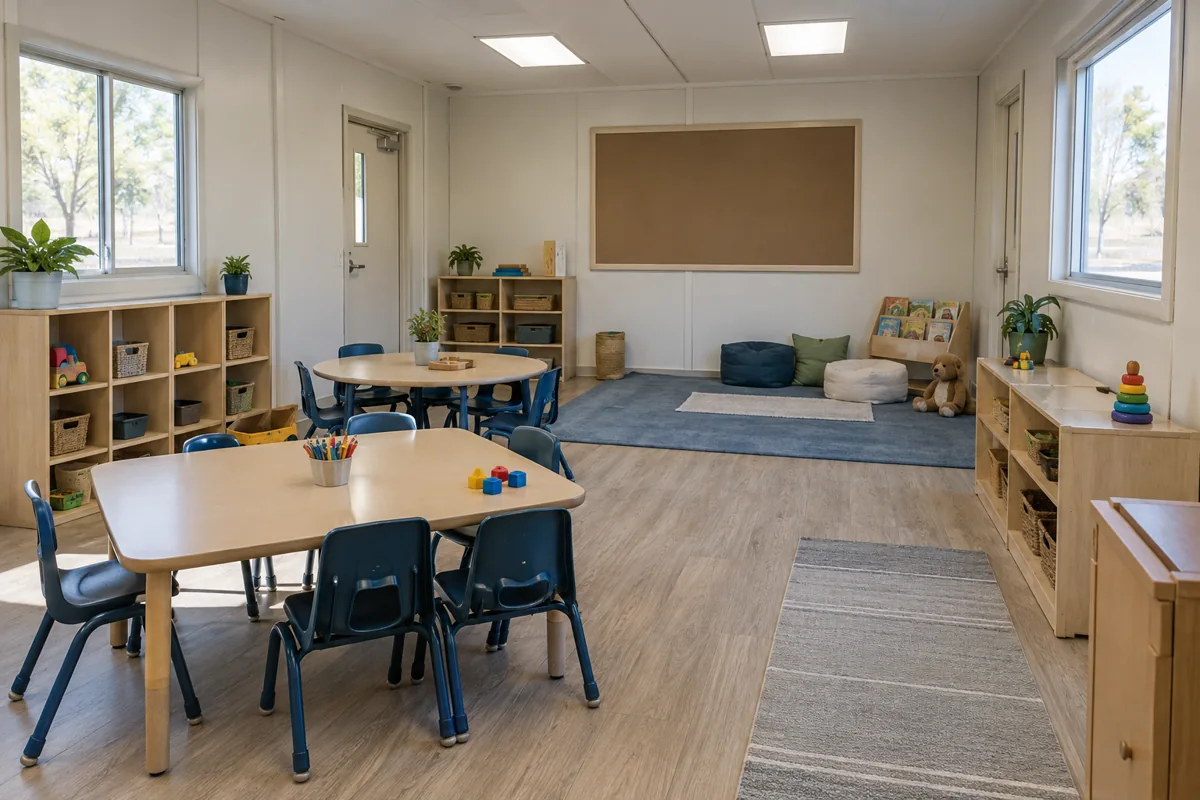
Review classroom layout choices with significant furniture represented. If an item is being reused, confirm its dimensions and availability. Familiarity with the old room doesn't establish that the same arrangement fits the proposed replacement.
For example, a resource may occupy an awkward corner only because there was no other place for it. The new plan can address its actual use without preserving that compromise. Ask providers about alternatives that serve the lesson instead of specifying the corner as a requirement.
Connect reused resources to the transition
Identify what remains in use until the class moves. An item can belong in the final setup without being available early for installation. Keep that dependency visible to the people arranging the transition.
Your Illinois school can compare modular classroom options with supplied fittings and school resources distinguished. A new fitting might replace an existing item, or it might duplicate it. Consider the useful arrangement before deciding either reuse or replacement is automatically economical.
For installed equipment, ask the appropriate parties about moving and setup responsibilities. Ownership of the resource doesn't mean its transfer is simple or cost-free. Obtain information specific to the item and project.
Make sure discarded resources have not left a teaching need unanswered. If the school chooses not to move something, explain how its function is handled in the replacement room.
Let staff review the intended first-day resources, not only the eventual setup. If something arrives separately or remains in use elsewhere, the team needs a workable interim arrangement rather than an unexplained gap.
Compare the whole replacement scope
Use the building cost guide to frame questions about supporting work and separate purchases. Confirm the actual responsibilities outside the building offer rather than allowing them to disappear between departments.
Keep the selected plan and price current as decisions develop. If furniture or supplied features change, ask whether the proposal needs updating. An early figure should not silently become the price for a different classroom.
Choose replacement space that preserves useful teaching provision and addresses practical limitations honestly. That gives competitive prices a clear purpose: obtaining a room the class can use well, with its resources and remaining work understood before the school proceeds.