
A clothing or household-supply ministry needs orderly receiving, sorting, storage and guest service. When every step shares one open room, boxes and carts can quickly replace dignity and clear movement. A modular church building in Titusville can separate the workflow while keeping volunteers connected.
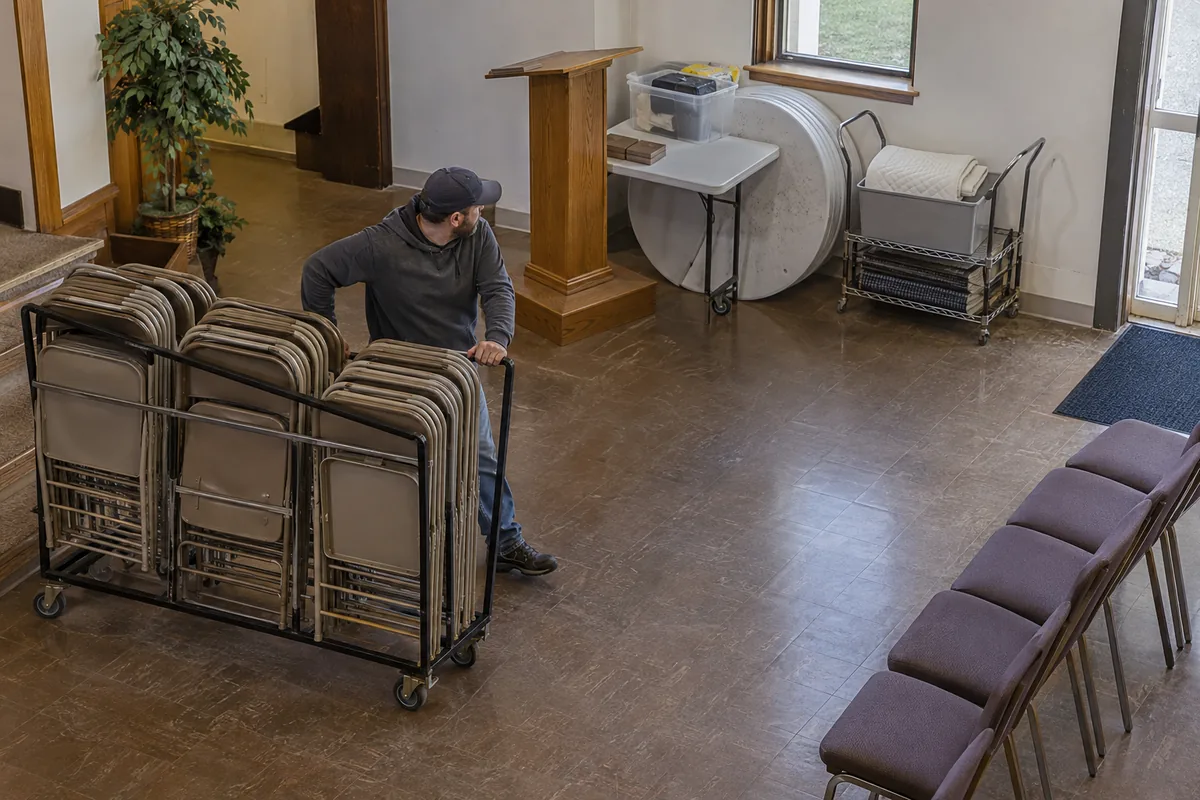
For the wider project picture, explore Florida modular buildings alongside your church space plans.
Map donations before distribution
Follow incoming items from vehicle arrival through inspection, sorting, temporary holding and shelf placement. Measure cartons, racks, bins and carts at working size. Florida requirements and the specific Titusville property need qualified project evaluation.
Place receiving near storage without routing deliveries through the guest entrance. Create a defined location for items that need cleaning, repair or removal so exceptions do not block aisles.
Record peak donation and distribution periods separately. Capacity that works during quiet sorting may fail when both workflows happen at once.
Observe one complete sorting shift. Note where volunteers wait for racks, labels, carts or decisions. A second worktable or better staging position may improve throughput more than simply adding shelves.
Organize inventory by turnover and handling needs. Frequently requested items belong within practical reach, while seasonal or reserve goods can occupy a less convenient zone without narrowing main aisles.
Create a dignified guest route
Trace check-in, waiting, selection, private questions and departure. Preserve accessible circulation while racks, tables and people are present. A discreet room may support fitting or conversation when the ministry program calls for it.
Give volunteers clear stations and a handoff point between shifts. Secure records, keys, cleaning materials and restricted supplies separately from general inventory.
Write the closing sequence for unfinished sorting, guest records, waste, equipment and final doors. Different teams should be able to leave the building in the same orderly condition.
Provide a small exception zone for unmatched items, damaged goods or donations awaiting a decision. Without it, uncertain inventory quickly spreads into ready storage.
The modular community building guide provides public-use context. The planning resources can help leaders document inventory and service flow.
Compare distribution-ready pricing
Ask providers to describe exterior doors, partitions, storage support, counters, finishes, lighting, power, environmental systems and accessibility. Apply the modular cost planning guide to transport, site supports, utility work, installation, entrances and restoration.
List racks, shelving, carts and loose tables outside the proposal when necessary. After Titusville’s receiving and guest routes are written, request modular church building prices. Compare how well the options support inventory control, volunteer work and respectful service.