
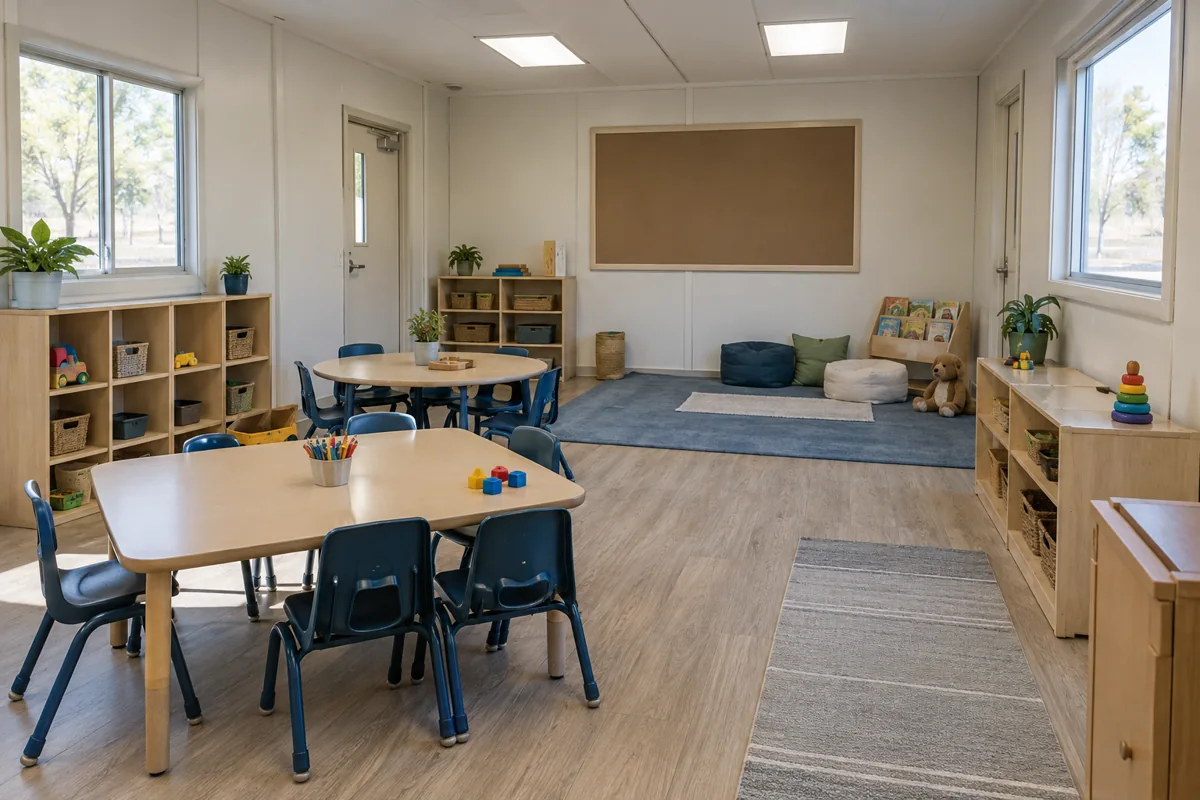
Family literacy programs may bring adults and children into the same learning environment for separate instruction and shared activities. A room designed only for children can be uncomfortable for adults; a standard adult classroom may leave young learners without appropriate furniture, movement, or supervision. A Watsonville modular plan should support both groups and the transition between them.
For the wider project picture, explore California modular buildings alongside your classroom space plans.
Schedule separate and shared learning at once
Map a representative session from arrival through adult instruction, child activity, joint reading or practice, breaks, and departure. Identify when sound separation is needed and when visual connection supports supervision. A smaller adjacent room, interior glazing, or carefully placed zones may work better than one undivided space.
Place adult and child furniture at scale, including mobility devices, bags, strollers, teaching carts, and accessible routes where relevant. The classroom design guide can help compare relationships, but the actual program schedule must test them.
Plan how facilitators communicate across the two groups. Interior visibility may help staff coordinate, but sound transfer can undermine simultaneous lessons. Doors, glazing, room proportions, and equipment placement should be evaluated together rather than choosing an open or closed arrangement by habit.
Technology should serve both independent and shared activities. Displays, audio, charging, and connectivity may need more than one teaching position, yet controls should remain simple for rotating facilitators. Store portable devices where staff can issue and collect them without interrupting the other group.
Give arrival, belongings, and materials real space
Families may arrive together and need a clear check-in point without interrupting a class already underway. Provide organized storage for personal belongings, literacy materials, devices, and staff resources. Adult records or private conversations require different control from children’s books and take-home materials.
California and local requirements for occupancy, accessibility, supervision, restrooms, life safety, and education or community use require confirmation by qualified professionals and authorities. Program administrators remain responsible for staffing, privacy, and child-participation policies.
Price the simultaneous program
Acoustic partitions, child- and adult-scale furniture, secure storage, technology, check-in features, restrooms, after-hours controls, and site access may be divided across budgets. Organize them with the complete modular cost guide.
Once Watsonville decision-makers can run a full session on the plan, they can request current classroom prices. Ask providers to show where one group learns while the other is active and how they come together. That test keeps family literacy from becoming two compromised classrooms sharing a single room number.