
If a school needs classrooms during renovation or a temporary enrollment shift, the planned term should shape the first price discussion. Request portable classroom prices for Temecula with the expected start, end and instructional use. “Temporary” can mean a single term or several years; the distinction affects what features and site work are sensible to compare.
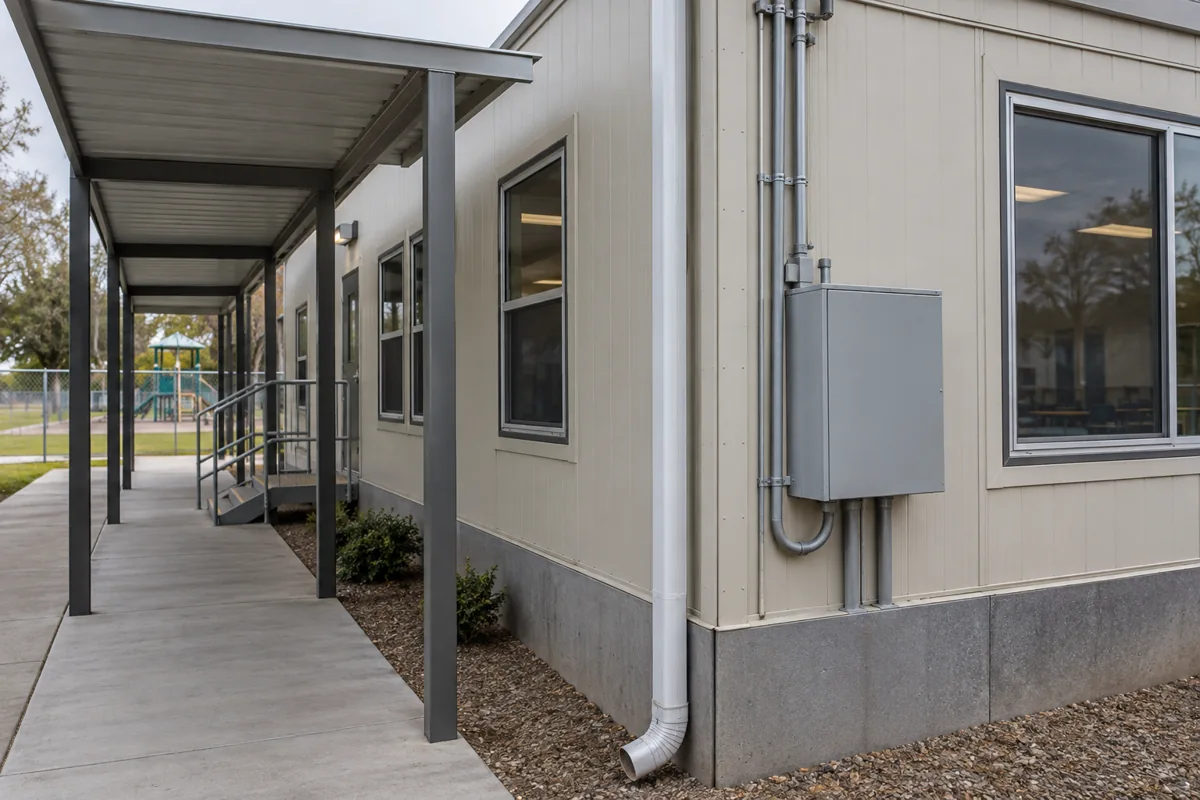
For the wider project picture, explore California modular buildings alongside your classroom space plans.
Define what temporary means for the school
Write down the event that creates the need and the condition that ends it. Is the room a bridge until another space reopens, or will it remain in use while the school evaluates future capacity? Name the grades or programs involved and any date when they must be ready. This avoids treating a temporary building as an unspecified short-term fix.
List the basic classroom functions that must continue: instruction, storage, accessible circulation, staff workspace and technology. Separate these from items that can be borrowed or shared. If furniture or equipment is assigned to another room during part of the day, note that dependency. A low-cost plan is not useful if it assumes resources the school cannot reliably provide.
California site, safety, access and utility decisions belong with qualified professionals. A project brief can explain the use and timing, but it cannot confirm a particular location’s suitability or approval status.
Compare portable and modular options by the job
Review portable classroom options alongside modular classrooms in light of expected duration, relocation plans and daily use. Ask what happens at the end of the term, including disconnecting services, removing the building or preparing the site for another use. Do not assume that portability makes those tasks automatic or cost-free.
Consider the instructional schedule over the full period. A room used only for a short bridge may prioritize a quick, clear setup; a multi-year need deserves attention to storage, technology, staff access and how students move between campus functions. Make those differences explicit instead of asking bidders to infer them from the word “portable.”
Keep the full term in the comparison
Ask providers to identify delivery, foundation, utilities, installation and end-of-term responsibilities. The cost planning guide can help organize project scope. Request prices using the same start date, use period, room program and site assumptions.
That gives Temecula decision-makers a fair comparison between temporary capacity and a longer-lived classroom need, with both the opening plan and the eventual closeout considered.