
Find classroom space that keeps teaching materials useful without filling the room with unnecessary storage. Request modular classroom prices for Inglewood and explain which resources the class uses regularly. A clear materials plan helps the school compare the working room, not just a building footprint with cupboards added afterward.
For the wider project picture, explore California modular buildings alongside your classroom space plans.
Decide what belongs close to instruction
Ask staff which items are used during a normal lesson and which are needed only occasionally. Daily resources may need a convenient position, while other supplies may have a suitable shared arrangement. Confirm that arrangement instead of assuming anything omitted from the new room can be stored somewhere else.
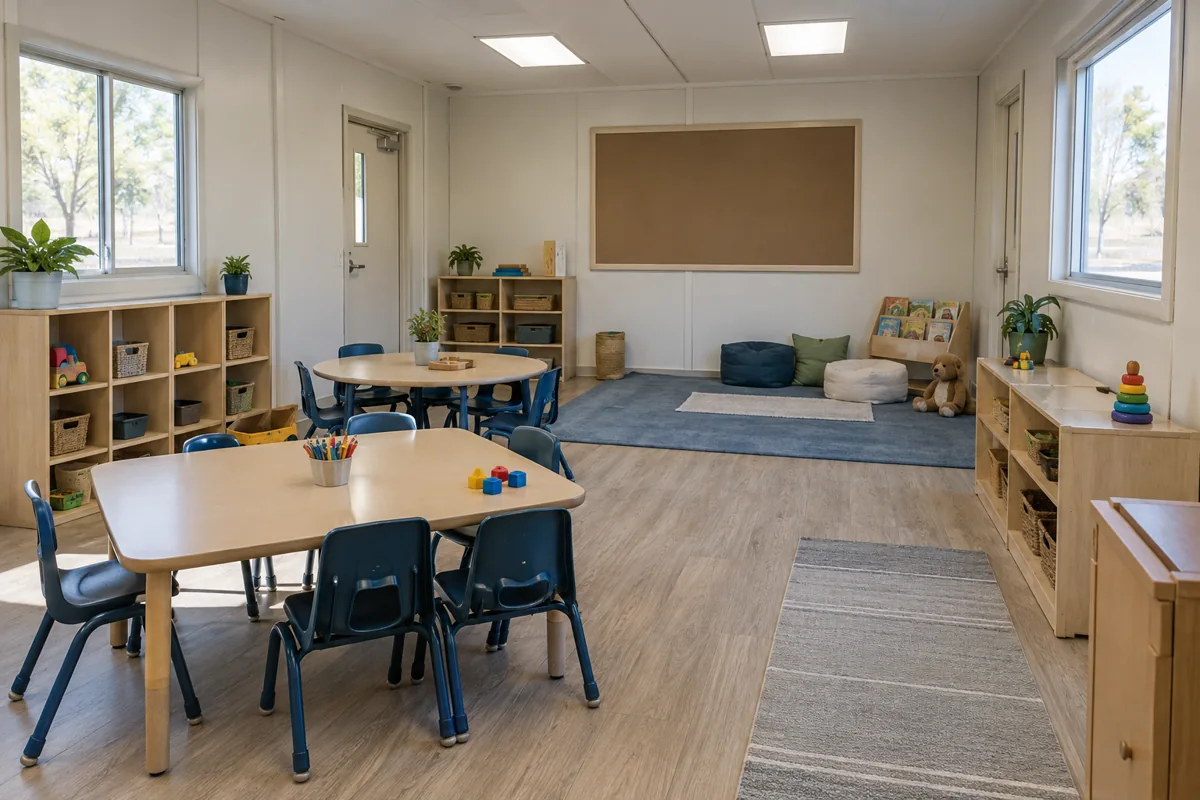
Use classroom layout choices with significant furniture shown. A storage feature should be considered alongside the teaching area it serves. Its purpose matters as much as its apparent capacity.
For example, materials used at several tables might travel with the activity. A movable unit could be practical, but it also needs a position between uses. Include that ordinary detail rather than crediting the arrangement with flexibility while leaving the resource in an undefined corner.
Compare the furnished room in use
Ask staff to review access to materials while furniture is occupied, not only in an empty plan. The practical question is whether the proposed arrangement supports the lesson. Relevant technical and access requirements still need appropriate assessment by the project parties.
Your California school can compare modular classroom options with supplied fittings distinguished from school-owned items. Existing storage may be useful, but check its dimensions, condition and availability before building the plan around it.
An alternative fitting may free a useful teaching position or simply duplicate another resource. Ask what changes for the class. More storage is not automatically more value, and less storage is not automatically an economical choice if it pushes necessary purchases outside the offer.
If different groups share the room, discuss which materials stay and which travel with each group. A common resource may need a handover, while separate materials may need distinct provision. Make that decision before selecting the final arrangement.
Keep the resources in the price comparison
Confirm included features and remaining school purchases. The building cost guide helps frame wider questions about supporting work, but actual project information should establish the figures and responsibilities.
Keep the selected plan current when furniture decisions change. A substituted item may affect the useful arrangement that originally appealed to staff.
Choose classroom space with a clear place for the resources that matter. That gives competitive prices a practical purpose: a room that supports everyday instruction without unnecessary fittings or essential materials left out of the decision.