
Ground instruction combines charts, weather information, calculations, communication practice, scenario decisions, and debriefing. A San Bruno modular classroom should let learners connect those pieces without being represented as an operational control room or an approved flight-training device installation. Training scenarios must remain clearly fictional and supervised.
For the wider project picture, explore California modular buildings alongside your classroom space plans.
Build briefings around shared evidence
Large charts and route worksheets need tables that stay readable beside calculators and reference material. A front display can support weather interpretation and instructor modeling, while side surfaces hold the assumptions that govern the exercise. Glare control matters when fine symbols and changing digital layers are under review.
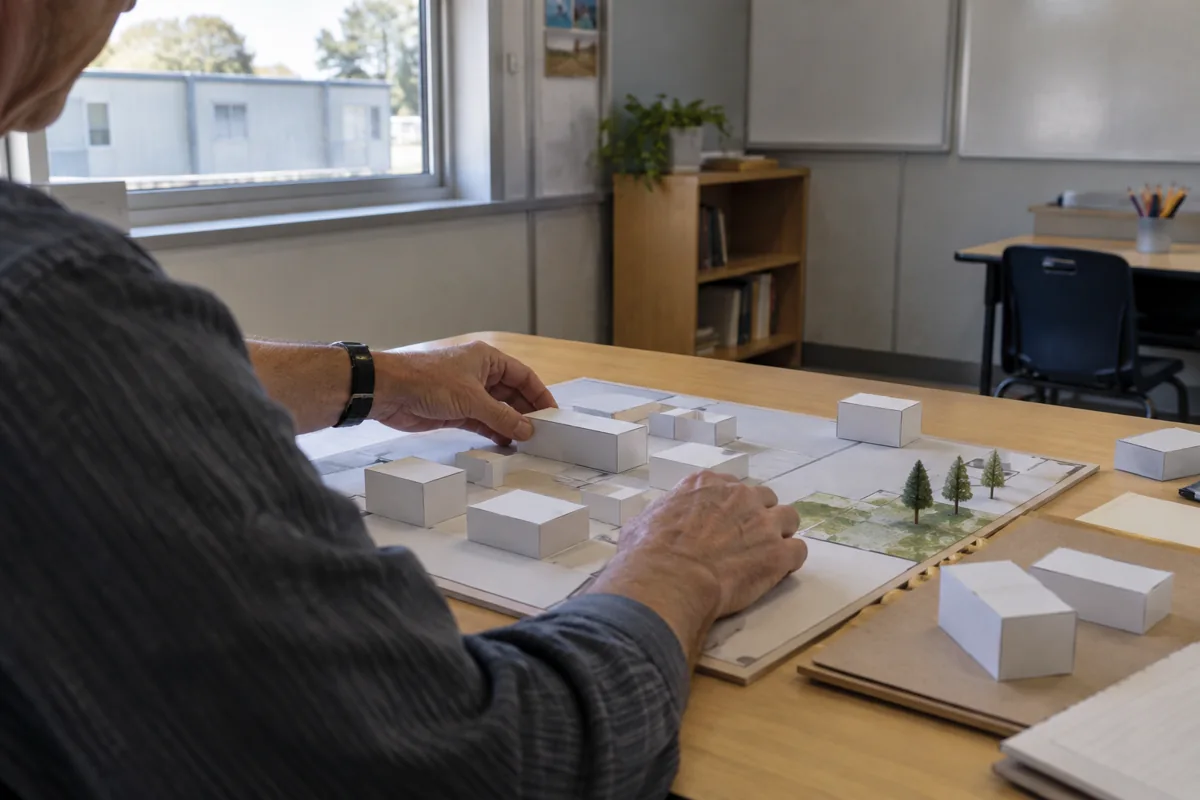
The modular classroom layout resource can test briefing orientation, team planning, communication practice, desktop training positions, debriefing, and accessible paths.
Keep practice communications contained
Headsets and simulated radio exercises should be organized so several learners can rehearse without drowning out the active briefing. Numbered sets, cleaning procedures, charging or battery status, and a fault bin make equipment readiness visible. Practice identifiers and frequencies must be controlled by the instructional program.
Displays that resemble operational systems need unmistakable training labels. The room should prevent an observer from treating a scenario, weather image, or route decision as current operational information.
Use simulation to create a better debrief
Desktop trainers can help students connect a planning choice to workload, timing, and communication, but equipment placement should preserve instructor access and an exit route. Capture only the data the lesson needs. Personal performance records require protected access and retention under owner policy.
California and local requirements for occupancy, accessibility, electrical and data work, equipment installation, acoustics where applicable, fire and life safety, and education facilities require project-specific confirmation by qualified professionals and authorities. No aviation approval, certification credit, operational accuracy, code approval, or learning outcome is implied.
Price the briefing-to-debrief sequence
Tables, chart storage, displays, network provisions, headsets, trainers, acoustic work, commissioning, and site conditions may be separated differently by bidders. The installed classroom cost guide helps reveal exclusions.
You can request current classroom prices with class size, instructional formats, and the trainers already selected. Final equipment detail can come later. Ask providers to demonstrate chart issue, group planning, communications rehearsal, trainer rotation, discrepancy review, and secure closeout.
Before acceptance, run one complete fictional lesson while another team waits to rotate in. Confirm that charts remain visible, headset noise stays manageable, a trainer fault does not stop the class, and the debrief can compare decisions without exposing another learner’s results. Then clear every scenario identifier and temporary file from view.