
Make one classroom work well for the groups that will actually share it. Get modular classroom prices for Garden Grove and explain the intended uses. Sharing can make a room valuable to the school, but the plan needs to account for furniture, resources and the change between activities—not simply add several labels to the same space.
For the wider project picture, explore California modular buildings alongside your classroom space plans.
Check the uses against the timetable
Identify which groups need the room and when. If activities overlap, they cannot both rely on the same undivided teaching space. Confirm the actual pattern before counting shared use as a solution to several simultaneous needs.
Look at the arrangements each group requires. Similar seating does not mean identical resources. One group may need materials kept ready while another requires a clear working surface. Explain those details so the provider can discuss a suitable room instead of interpreting “shared classroom” too broadly.
Keep possible future uses distinct from confirmed ones. It is reasonable to consider them, but the first purchase should support the groups the school actually intends to place there.
Make the change between sessions practical
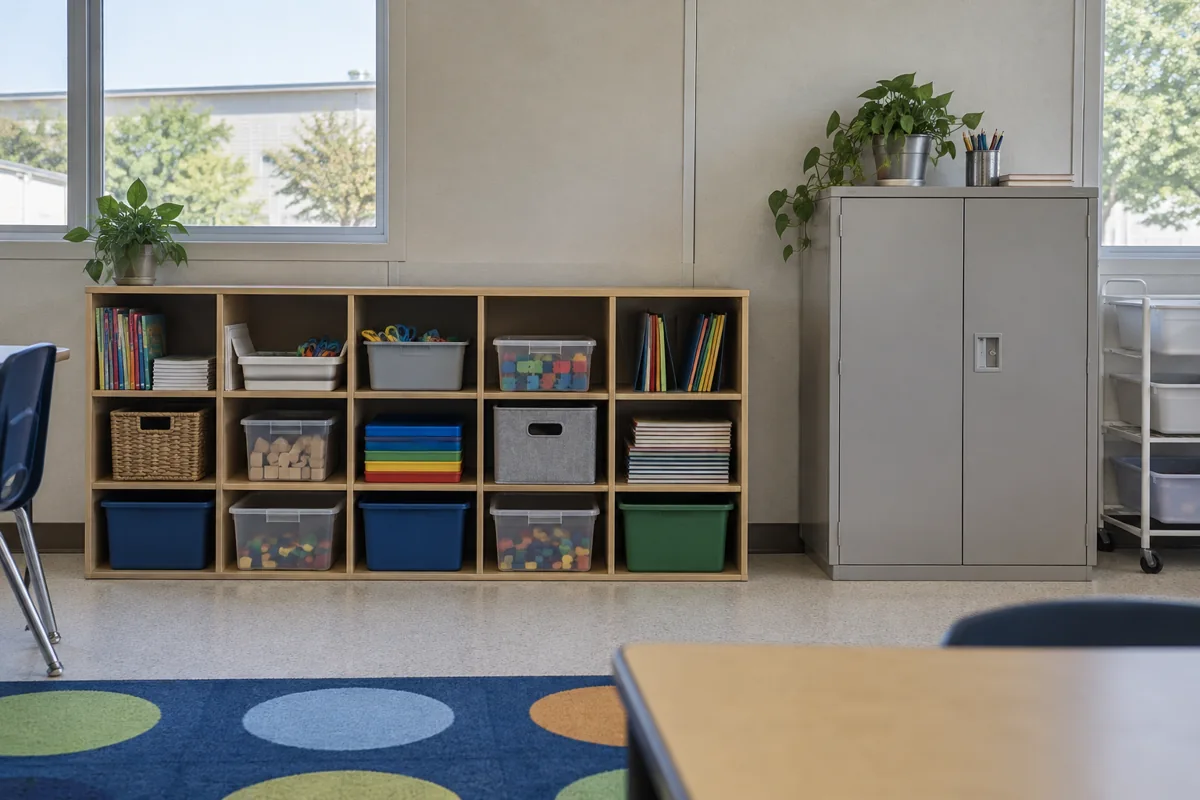
Review classroom layouts using the furniture each activity needs. Ask what moves, what stays in place and where resources are kept. A plan that works only when materials disappear between sessions has not resolved the shared use.
For example, one group's display materials may need to remain available without occupying the next group's work area. That could influence storage or the choice of furniture. The school should understand the requirement before selecting a supplied fitting that uses the same space.
Consider staff responsibility too. Someone needs to know which resources belong where and what must be reset. The building cannot solve that organizational question, but the arrangement can make the intended routine more or less practical.
Compare a furnished room, not an empty promise
Ask staff to describe the changeover once, step by step. If it involves finding another room for materials, confirm that space exists. That simple review can expose an assumption that a furnished drawing does not show.
Your California school can consider modular classroom options against the same shared-use brief. Ask providers to identify supplied features and check how school-owned resources fit with them. Do not treat an unfurnished rendering as proof that every arrangement will work.
The building cost guide can frame the wider budget, including separate school purchases. If an option requires additional furniture to make sharing practical, include that consequence rather than compare building figures alone.
Choose the classroom whose uses you can explain from one session to the next. A genuinely shared room can serve the school well, but its value comes from practical arrangements and an understood offer—not from how many programs are mentioned beside its name.