
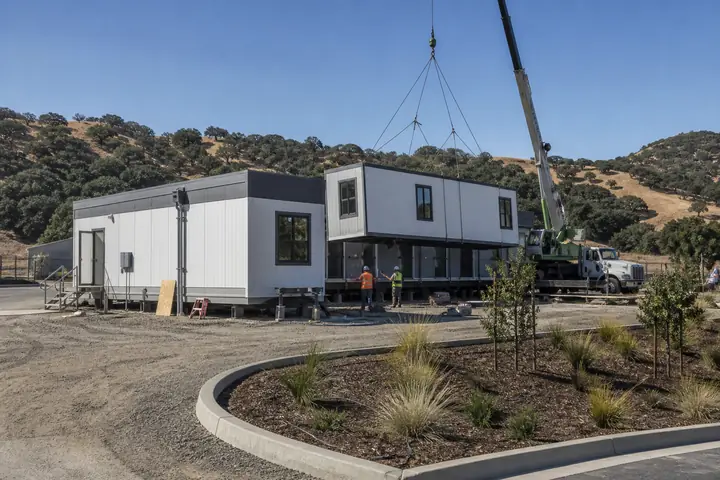
An employee health room must be easy to reach without making every visit visible to the workplace. A modular building in Aliso Viejo can create that separation when arrival, waiting, consultation and staff support are considered together. The service program should lead the plan instead of a generic office-room count.
California context frames the project, while the employer’s qualified clinical team, privacy policies and specific property establish the actual requirements.
Make arrival simple without making it public
Choose a route that employees can understand and use without crossing a busy loading or customer area. Reception should support identification and communication while protecting personal information. Keep waiting modest but workable for an early arrival, companion or mobility device.
Use modular clinic plans to test doors, casework, handwashing and equipment. The public-facing side should not become the supply route. If the service includes examinations, testing or treatment, qualified professionals must define the room and building needs.
Provide a calm location for a longer conversation or for someone who should not immediately return to work, based on the program’s procedures.
Support staff and supplies behind the visit
Protect documentation, medications or clinical supplies according to applicable policies and requirements. Staff need a private work point, waste procedures and a delivery route that does not pass through occupied waiting. Confirm equipment power, data, monitoring, refrigeration or ventilation from current specifications.
The modular medical building overview can frame product questions, but Aliso Viejo and California authorities and qualified professionals must resolve the project’s code, accessibility and clinical criteria.
Include housekeeping and service access in the workflow. A room is not ready for repeated use if routine maintenance disrupts privacy or mixes clean and used materials.
Review the plan for an employee who arrives with a mobility aid, a colleague or a personal item that cannot be left in the workplace. The check-in and consultation sequence should accommodate those circumstances without improvising storage in a clinical route. Program leaders should also decide how staff call for assistance while protecting the person’s dignity and confidential information.
Define the building handoff honestly
Ask providers to distinguish building completion from equipment installation, operational setup and any program validation. List responsibility for design, factory provisions, freight, foundations, connections, entrances, alarms, permits, testing and documents. The complete project cost guide supports that comparison.
A useful Aliso Viejo proposal will show how a person enters, receives service and leaves with dignity. It should create a suitable physical setting without implying that a modular shell alone authorizes or equips a healthcare program.