
Oregon
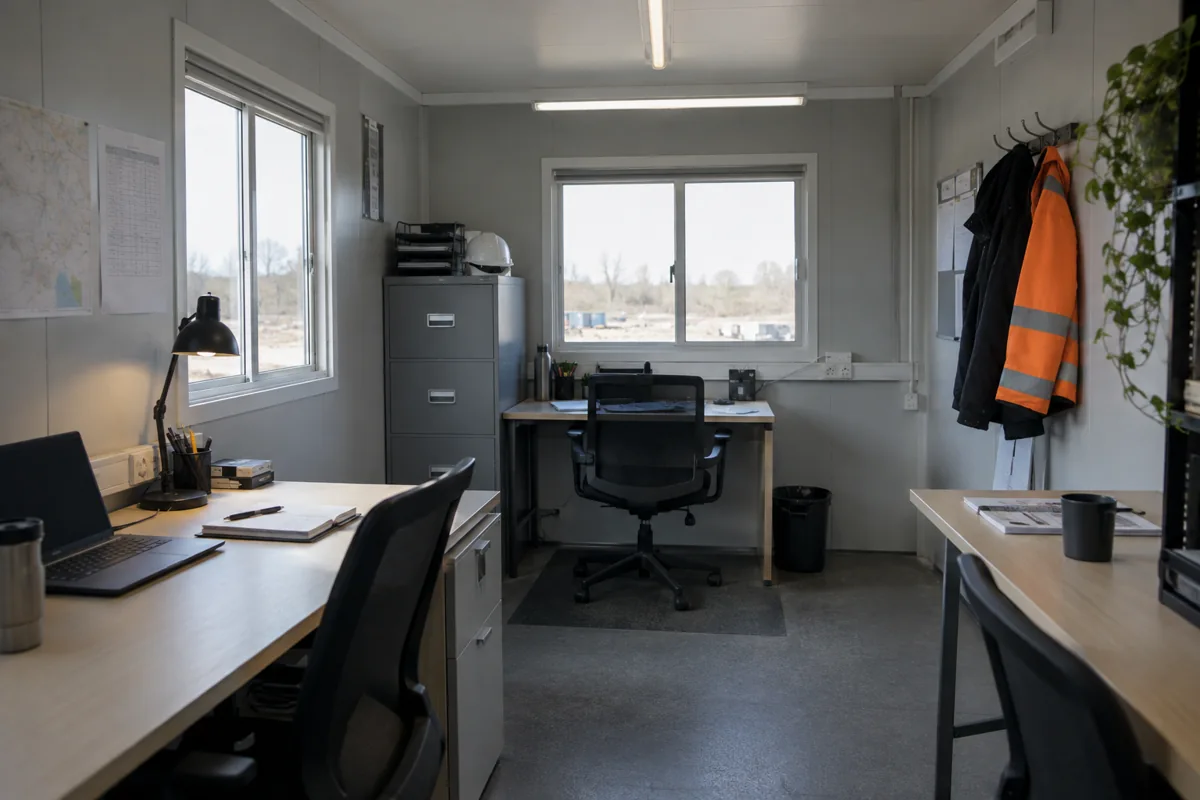
For the wider project picture, explore Oregon modular buildings alongside your office space plans.
Some organizations know they need office space but do not know whether the current property is its final home. A project portfolio may shift, a lease may end or the team may follow work to another site. An Oregon modular office decision should account for that uncertainty explicitly instead of treating relocation as either effortless or impossible.
Describe the first use and the likely second
Write the room program required now, then outline the next credible use. Which rooms would still matter? Which finishes or built-in features are tied so closely to the first assignment that they reduce flexibility later? A neutral administrative core with adaptable work areas may travel more easily than a highly specialized plan.
Do not strip the first office of what it needs merely to preserve a hypothetical future. Rank features as essential now, helpful in both uses or specific to one location. That list gives providers a rational basis for proposing alternatives.
Price relocation as a real project
A future move may involve disconnection, preparation, transport, setting, reconnection, access changes and restoration at one or both properties. Ask what can reasonably be reused and what is site-specific. Record assumptions rather than relying on the word “relocatable” as a complete cost answer.
The installed modular cost guide can be used twice: once for the first site and again for the plausible second site. Even when the later location is unknown, the exercise exposes which cost categories will return.
Compare rental and ownership on the same timeline
Rental or lease options may transfer some asset risk and fit a defined term, but extension, customization, removal and restoration still matter. Ownership may support more control or repeated use, yet the organization carries the building and future move decisions. Financing can change cash flow without changing the underlying operational fit.
Set a realistic range for the first use, identify the probability of a move and compare complete costs under each scenario. Up to 30% savings may be possible when provider offers differ, but no savings amount is guaranteed and incomplete scopes should not be ranked as equals.
Write the trigger that would cause a move or change in terms. It might be the end of a contract, loss of site access, a staffing threshold or a confirmed next property. A defined trigger helps the organization act before an extension or rushed relocation becomes the only choice.
Request prices with both scenarios visible
Send the Oregon address, current room needs, intended duration, likely change, customization priorities and available property information with a modular office price request. A strong response will explain what supports the first operation and what remains practical if the office’s next chapter begins elsewhere.