
Choose learning space that works for the equipment you need to bring inside. Get North Dakota modular classroom prices with the important furnishings and teaching items identified early. A room may have enough area yet still need careful planning for delivery, placement and future replacement of larger items.
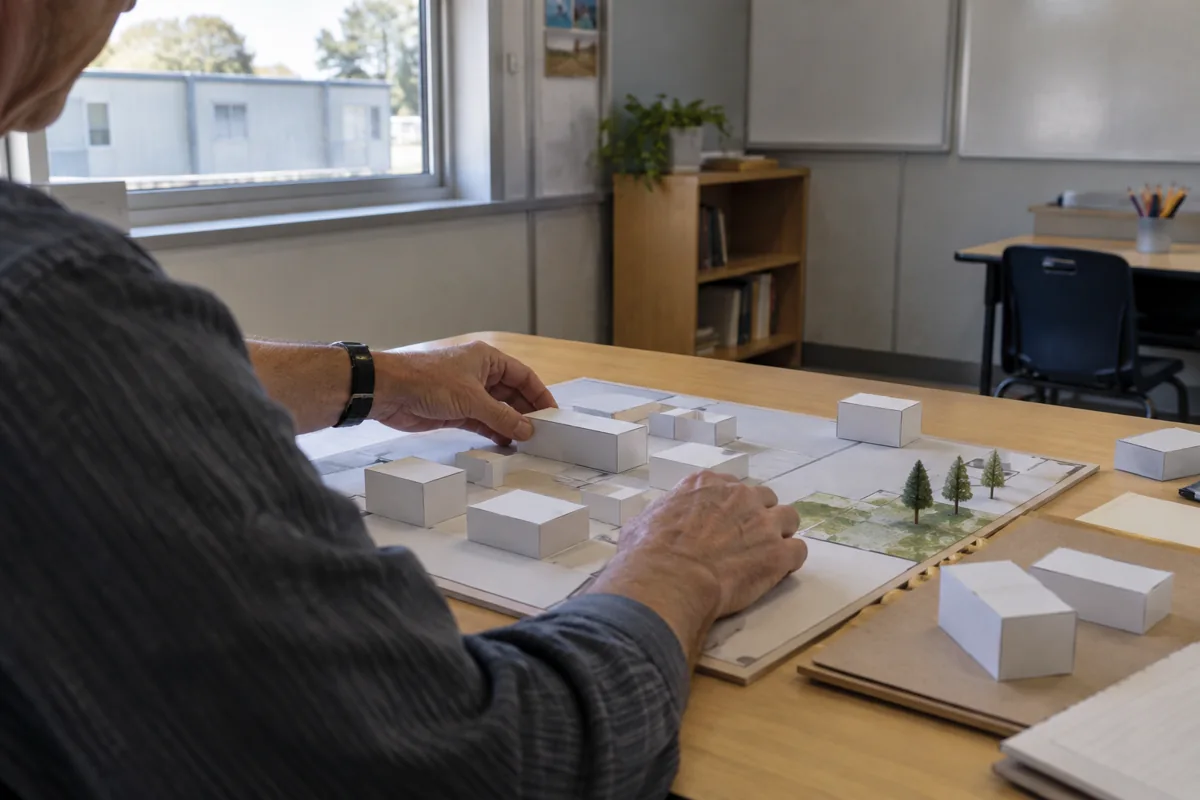
For the wider project picture, explore North Dakota modular buildings alongside your classroom space plans.
Measure the items that shape the room
Identify equipment that cannot be treated like an ordinary desk or chair. Give the project team reliable dimensions and the information it needs to assess installation and use. Include how the item is moved, assembled and serviced. Do not assume a picture or product name communicates everything needed for the building design.
Distinguish items the school already owns from ones it intends to select later. For an undecided purchase, explain what remains open and ask what information the team needs before finalizing the relevant part of the building. This avoids committing to an arrangement around an assumed item that is replaced by something materially different.
Follow the route into the teaching position
Review the proposed approach, entrance and internal route with the people responsible for the equipment. The appropriate professionals should assess physical and technical requirements. A broad description of an accessible or flexible classroom does not establish that a particular item can be installed in the intended way.
The classroom layout planning process should show the final position and the working space around it. Consider the instructor's access and the students' activity as well as the object's footprint. For a North Dakota education project, record any building-service requirements separately so they are not lost within a general furniture list.
Keep replacement and servicing in the discussion
The first installation is not the only event worth considering. Ask what happens if the equipment later needs major service or replacement. The design team can identify what the proposed arrangement permits and what would require additional work. Avoid counting on a removal route that disappears once other permanent features are installed.
When comparing modular school buildings, check that every offer uses the same equipment assumptions. If a provider suggests a different arrangement, ask the equipment supplier and teaching team to review it before treating the change as an equivalent alternative. A cheaper room that cannot support the intended activity does not answer the brief.
Keep the building and equipment decisions connected through the purchase. That gives your school a practical result: a teaching item that fits, a room that supports its use and fewer unanswered questions when the equipment arrives.