
A church building that works only under average conditions is not a complete North Dakota plan. Arrival, envelope assumptions, mechanical access, utility reliability, snow management, and local service capacity all influence whether ministry can continue through the coldest part of the year.
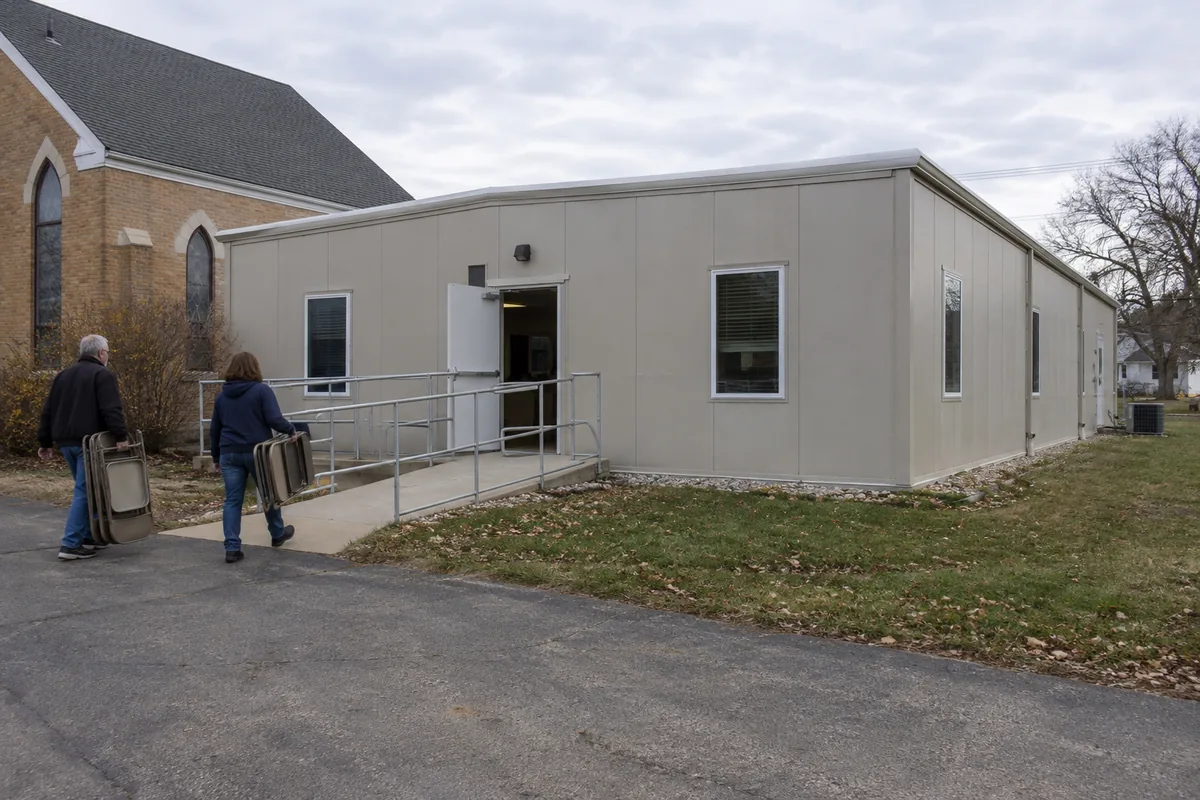
For the wider project picture, explore North Dakota modular buildings alongside your church space plans.
Plan the threshold and service spaces first
Provide a protected entrance, workable vestibule, coat and boot storage, floor protection, clear accessible travel, and a route to restrooms that does not congest check-in. Exterior lighting and wayfinding should remain visible during winter darkness and drifting snow conditions.
Mechanical and utility areas need enough space for inspection and repair. Ask where filters, controls, panels, shutoffs, and equipment are located, how technicians reach them, and what operating documentation is included. A hidden service point inside a secure classroom can create years of avoidable disruption.
Define performance without inventing specifications
The exact site and design determine wind, snow, frost, soil, foundation, energy, drainage, and utility requirements. Providers should state their criteria, calculations, assumptions, and unresolved investigations. The committee should supply occupied schedules and room uses so the design team can evaluate systems appropriately.
Inside, church floor-plan options can help separate noisy gatherings from classrooms, offices, and counseling. Part-week zoning may be valuable when small groups use only one portion of the building.
Storage and technology should be placed for winter operation too. Volunteers should not carry chairs, curriculum, or audiovisual equipment between buildings in severe conditions because the plan omitted support space. Reliable data, communication, and equipment protection belong in the room brief rather than in an informal workaround.
Compare logistics and lifecycle responsibility
Transportation distance, route access, foundations, utilities, installation, weather protection, exterior walks, site restoration, permits, finishes, and commissioning all belong beside factory scope. The installed-cost resource provides a consistent category list.
After leaders understand cold-weather operation and delivery boundaries, they can request North Dakota modular church prices. The better proposal should make winter use and maintenance understandable rather than relying on an undefined “cold-climate” label.