
A shared desk is only useful when the next person can actually use it. Federal Way businesses can get modular office prices for a furnished working arrangement, not simply enough floor area to draw several desks. If employees use the same positions at different times, the important question is what each person finds on arrival: available equipment, a clear surface and somewhere appropriate for their own belongings.
For the wider project picture, explore Washington modular buildings alongside your office space plans.
Specify what belongs to the workstation
Decide which furniture and equipment stay with the position. A shared screen or telephone should not depend on one employee bringing it back from another room. Conversely, personal items need not become permanent fixtures that everyone else works around. Record the common setup before asking how many positions fit in the building.
Discuss suitable furniture with the relevant supplier, including the adjustments different users need. The building provider may or may not supply those items. Establish the actual scope rather than assuming a reference to desks or office capacity includes a complete usable workstation.
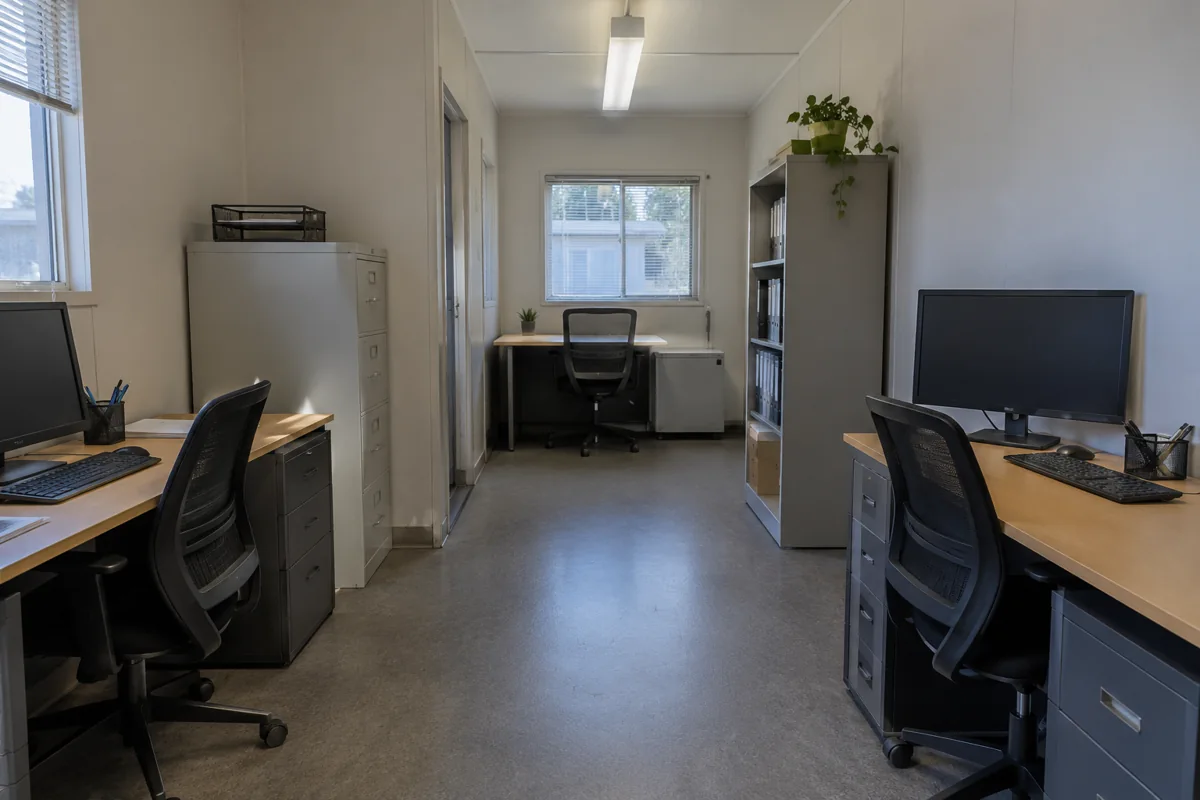
The office floor plans help you check the space around that setup. Include chairs in use, storage doors opening and the route past the desks. A position that fits only when everything is pushed neatly underneath the table isn't an honest measure of working capacity.
Give personal storage a place outside the shared surface
Coats, bags and individual working material can quickly occupy the room that another user needs. Decide which items may remain on site and where they belong. Keep shared supplies distinct from personal storage so employees do not have to search through one another's things to find ordinary equipment.
Review modular office options with those supporting needs included. You may need less additional desk area than expected and more useful storage, or the opposite. Let the agreed setup drive that choice rather than assuming every employee requires an exclusively assigned desk.
Make returning the position part of the arrangement
Agree what a ready workstation looks like: documents removed or stored appropriately, common equipment left available and the surface clear for the next person. Your own information-security procedures should govern screens and records; an office layout does not replace them. Assign responsibility for faults or missing items so a problem is not simply passed to the next user.
For the Washington location, confirm building and installation responsibilities with the provider and appropriate professionals. Use the cost planning guide to distinguish the supplied building from furniture, equipment and other separately arranged work. Comparing suitable provider offers could save up to 30% when those scopes are clear.
Ask two intended users to review the proposed workstation together. If one needs to remove the other's belongings or borrow essential equipment before starting, the sharing plan is unfinished. Resolve that practical detail before paying for another position that will inherit the same problem. The payoff is a desk ready for work, not merely a desk available by name.